
1 15 Fourier analysis techniques EMLAB Learning goals
1 15. Fourier analysis techniques EMLAB
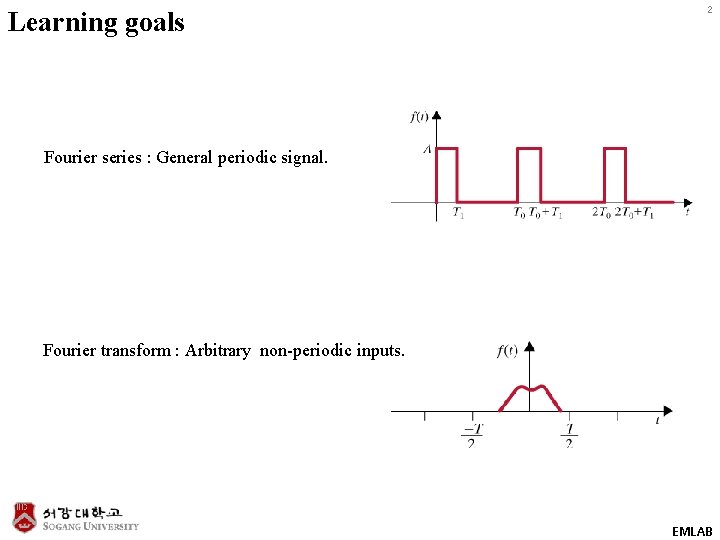
Learning goals 2 Fourier series : General periodic signal. Fourier transform : Arbitrary non-periodic inputs. EMLAB
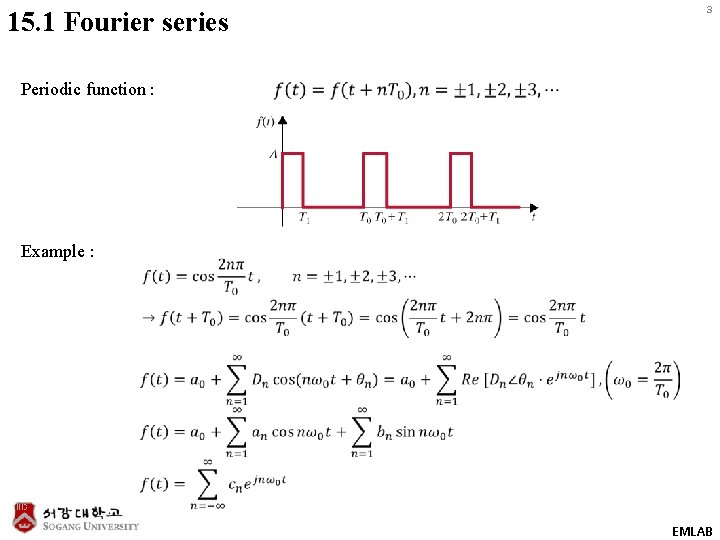
15. 1 Fourier series 3 Periodic function : Example : EMLAB
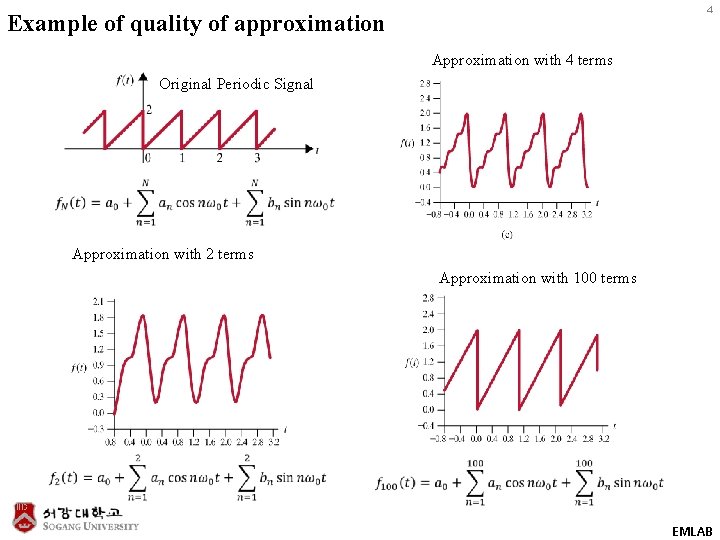
4 Example of quality of approximation Approximation with 4 terms Original Periodic Signal Approximation with 2 terms Approximation with 100 terms EMLAB
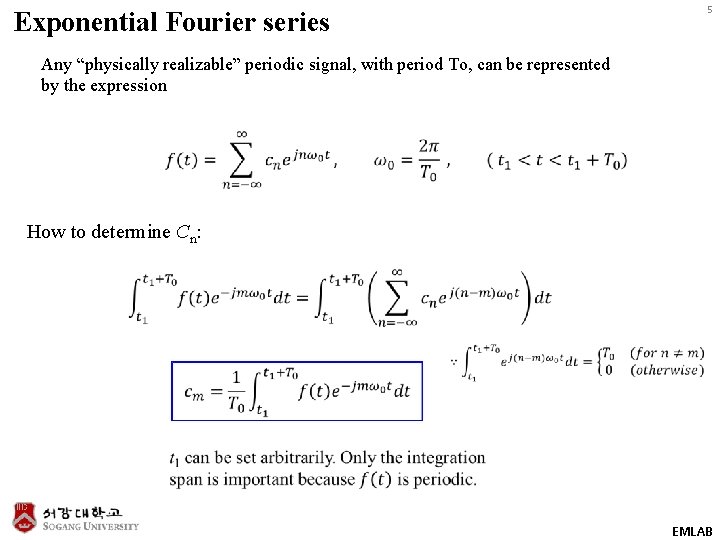
Exponential Fourier series 5 Any “physically realizable” periodic signal, with period To, can be represented by the expression How to determine Cn: EMLAB
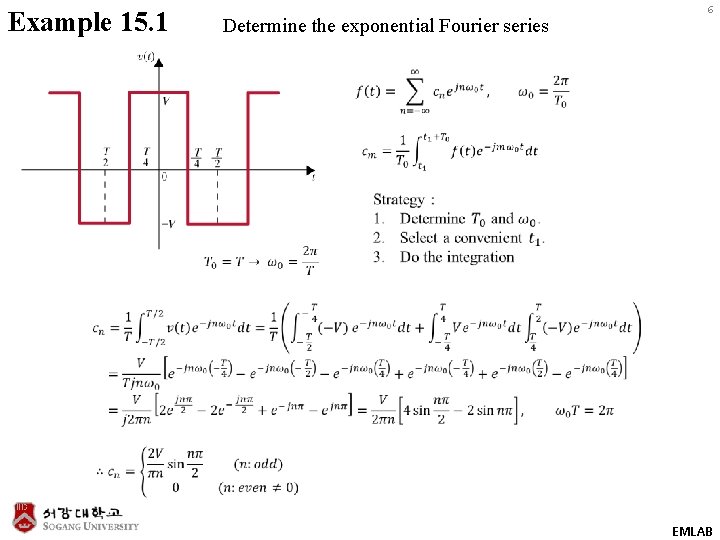
Example 15. 1 Determine the exponential Fourier series 6 EMLAB
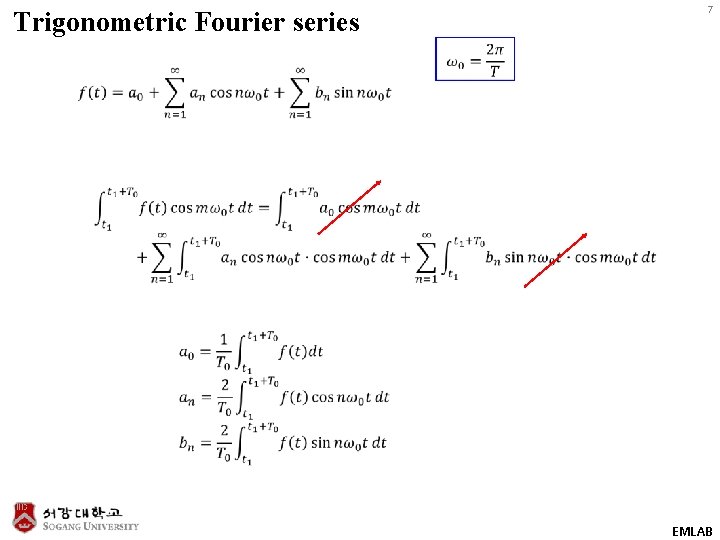
Trigonometric Fourier series 7 EMLAB
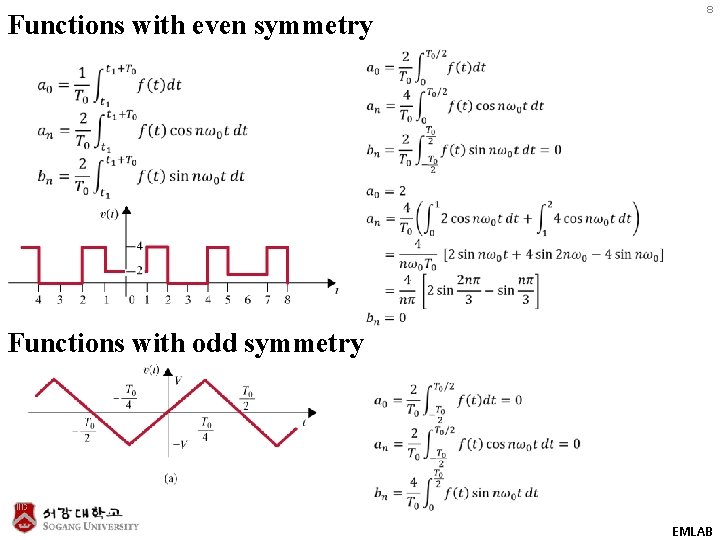
Functions with even symmetry 8 Functions with odd symmetry EMLAB
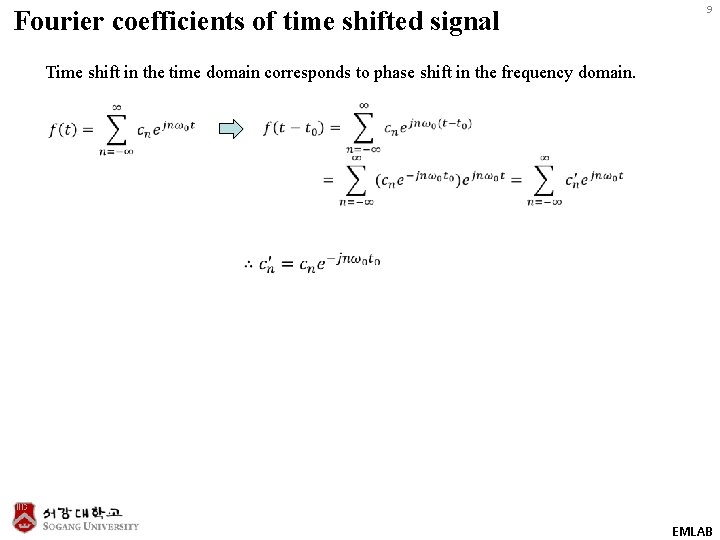
Fourier coefficients of time shifted signal 9 Time shift in the time domain corresponds to phase shift in the frequency domain. EMLAB
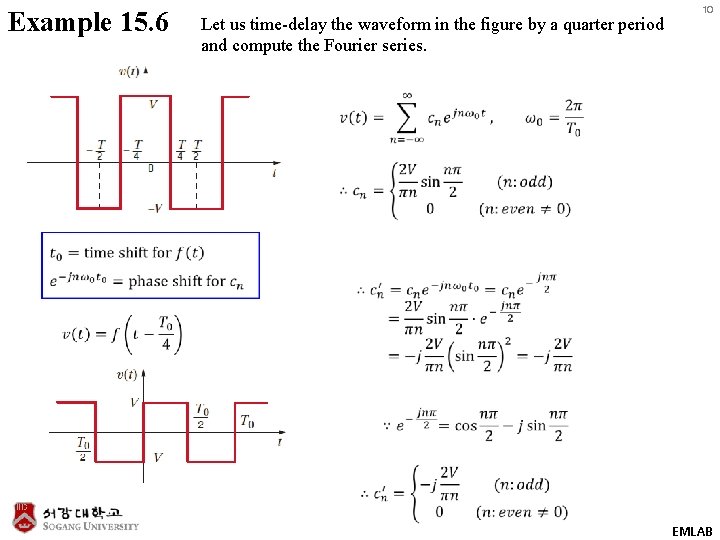
Example 15. 6 Let us time-delay the waveform in the figure by a quarter period and compute the Fourier series. 10 EMLAB
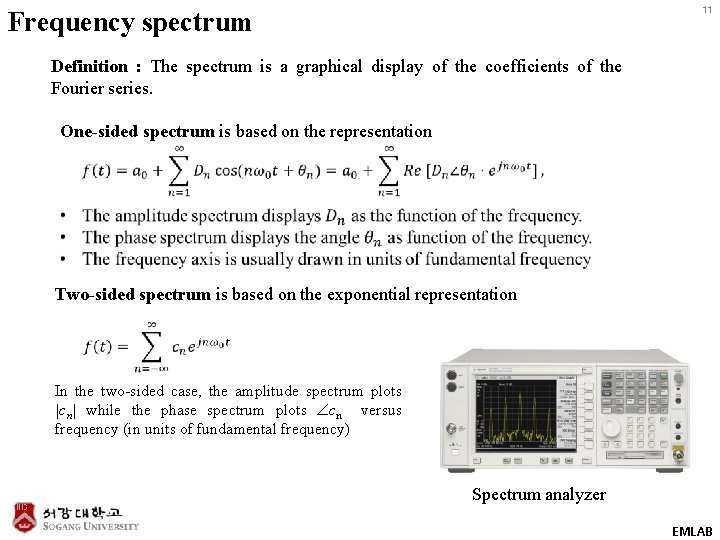
11 Frequency spectrum Definition : The spectrum is a graphical display of the coefficients of the Fourier series. One-sided spectrum is based on the representation Two-sided spectrum is based on the exponential representation In the two-sided case, the amplitude spectrum plots |cn| while the phase spectrum plots cn versus frequency (in units of fundamental frequency) Spectrum analyzer EMLAB
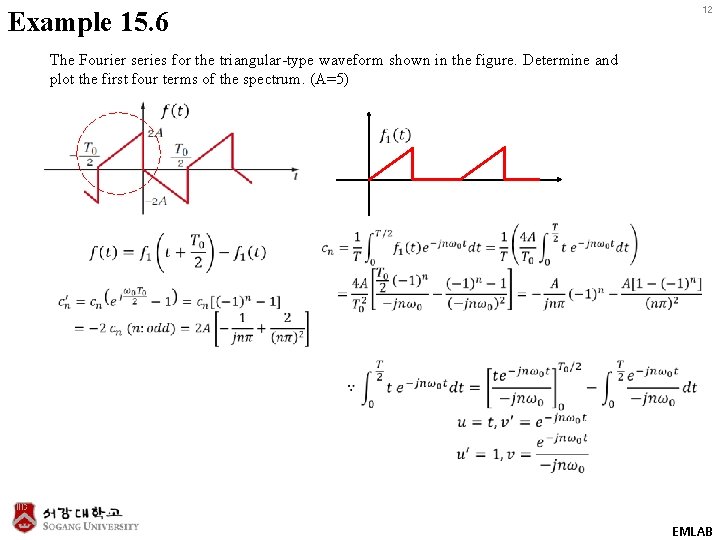
Example 15. 6 12 The Fourier series for the triangular-type waveform shown in the figure. Determine and plot the first four terms of the spectrum. (A=5) EMLAB
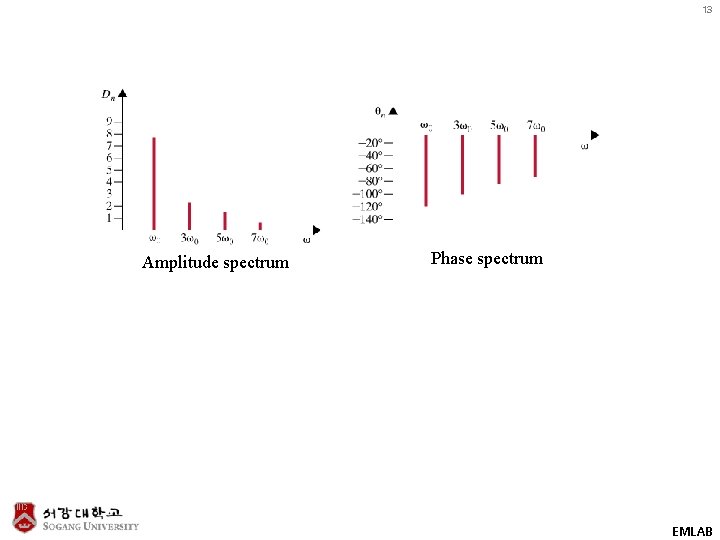
13 Amplitude spectrum Phase spectrum EMLAB
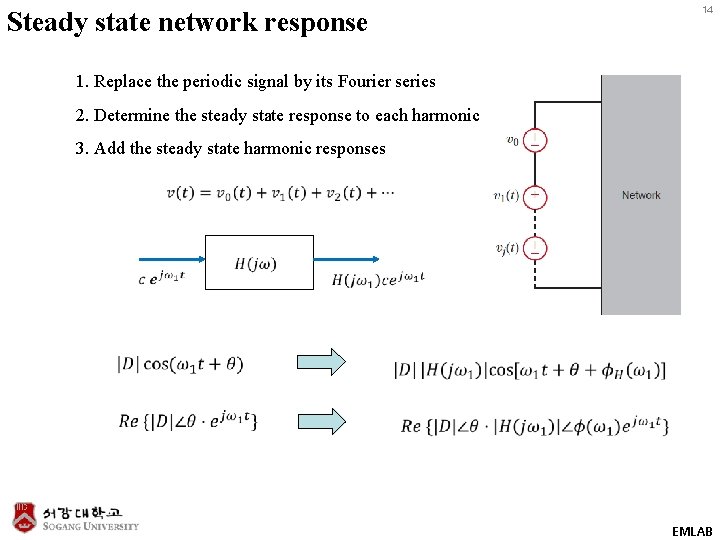
Steady state network response 14 1. Replace the periodic signal by its Fourier series 2. Determine the steady state response to each harmonic 3. Add the steady state harmonic responses EMLAB
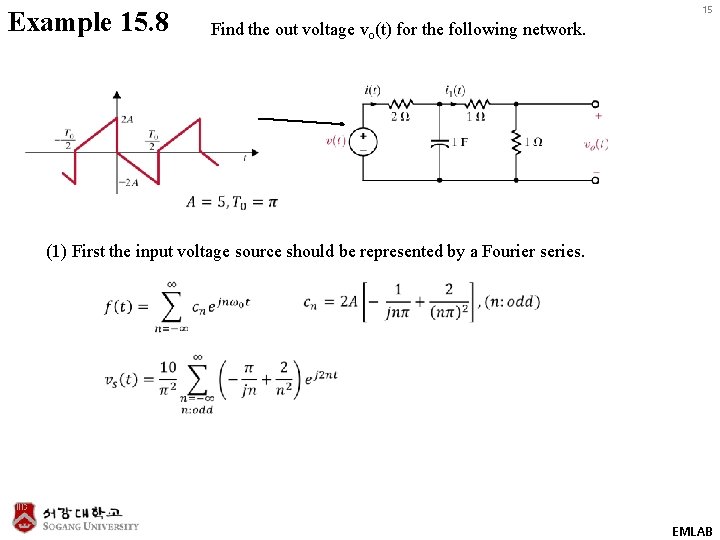
Example 15. 8 15 Find the out voltage vo(t) for the following network. (1) First the input voltage source should be represented by a Fourier series. EMLAB
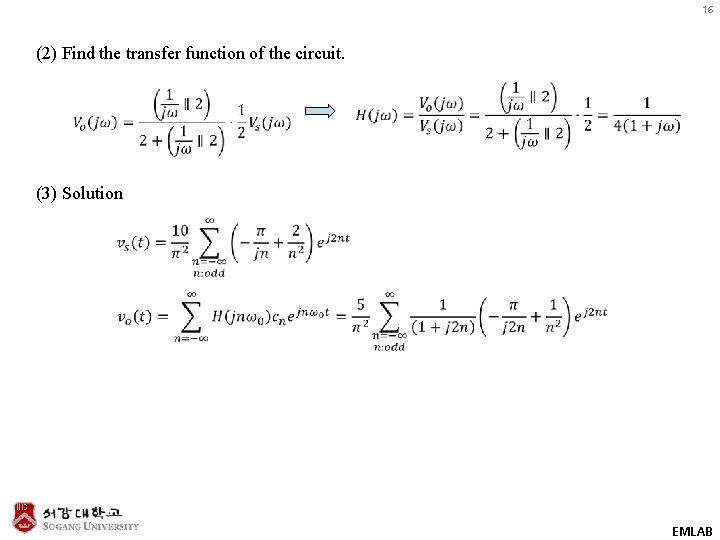
16 (2) Find the transfer function of the circuit. (3) Solution EMLAB
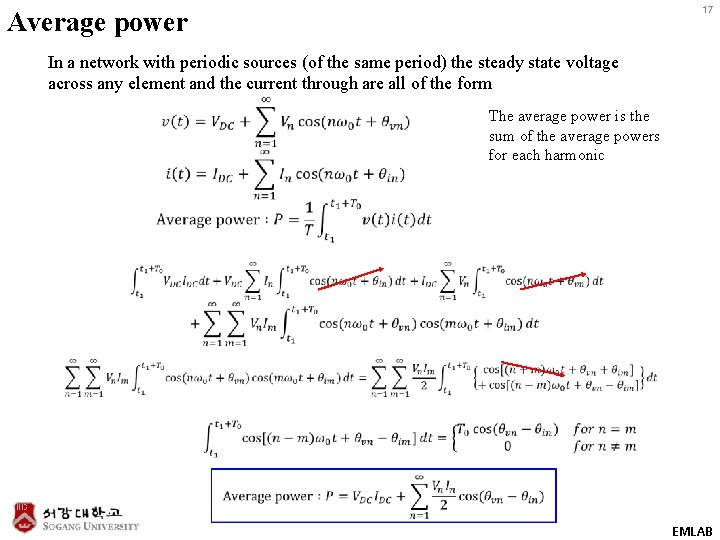
17 Average power In a network with periodic sources (of the same period) the steady state voltage across any element and the current through are all of the form The average power is the sum of the average powers for each harmonic EMLAB
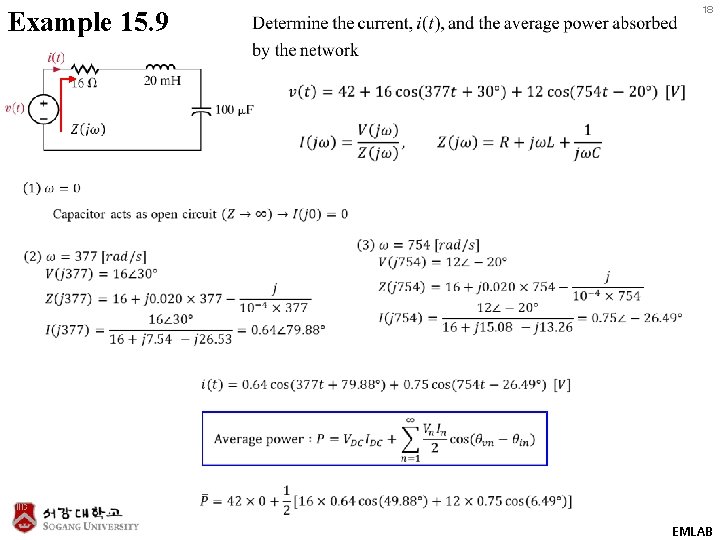
Example 15. 9 18 EMLAB
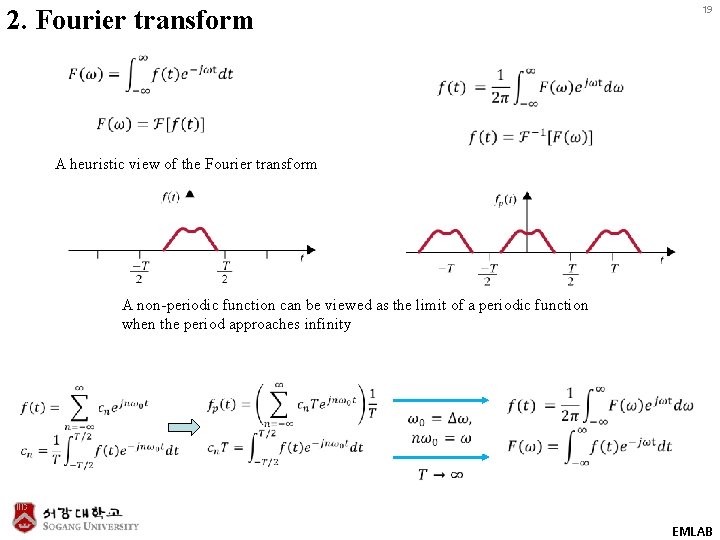
2. Fourier transform 19 A heuristic view of the Fourier transform A non-periodic function can be viewed as the limit of a periodic function when the period approaches infinity EMLAB
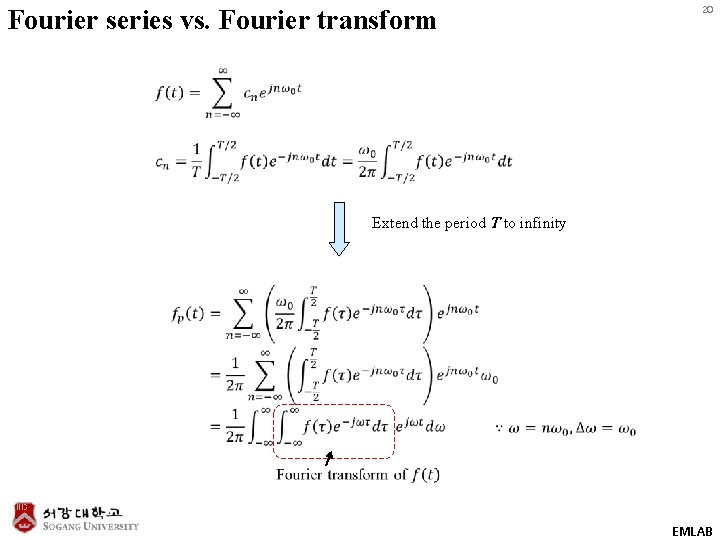
Fourier series vs. Fourier transform 20 Extend the period T to infinity EMLAB
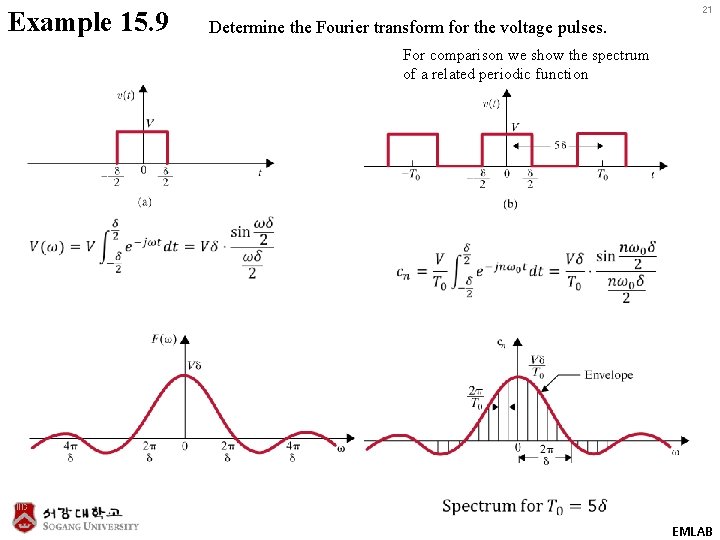
Example 15. 9 21 Determine the Fourier transform for the voltage pulses. For comparison we show the spectrum of a related periodic function EMLAB
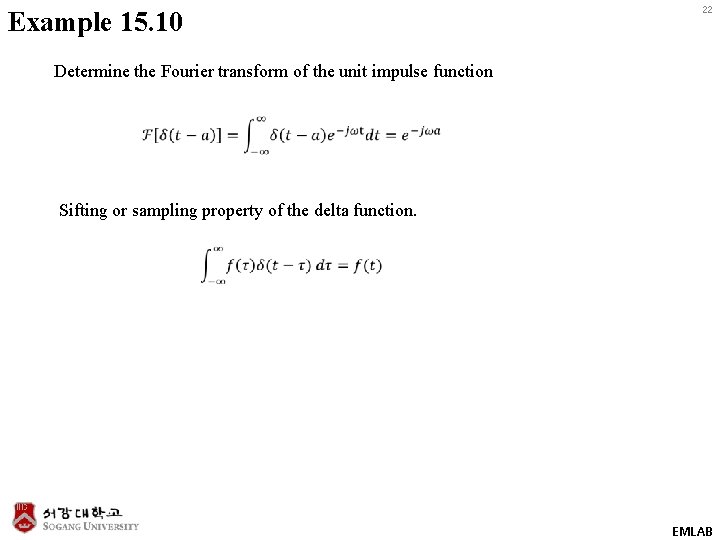
Example 15. 10 22 Determine the Fourier transform of the unit impulse function Sifting or sampling property of the delta function. EMLAB
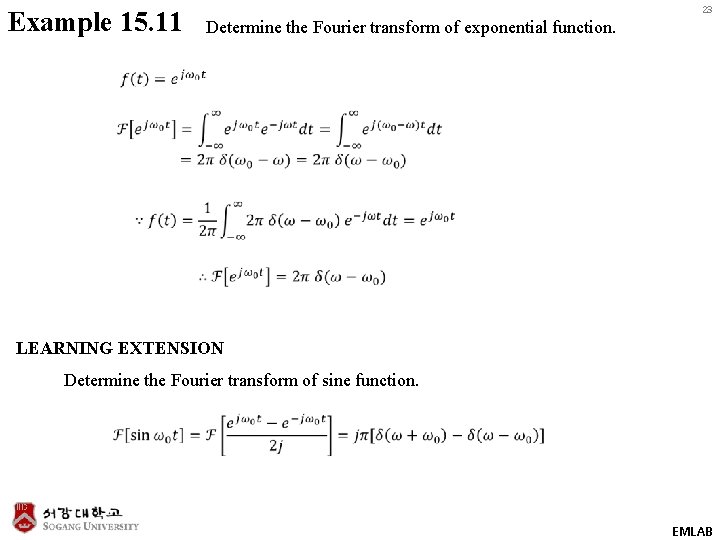
Example 15. 11 23 Determine the Fourier transform of exponential function. LEARNING EXTENSION Determine the Fourier transform of sine function. EMLAB
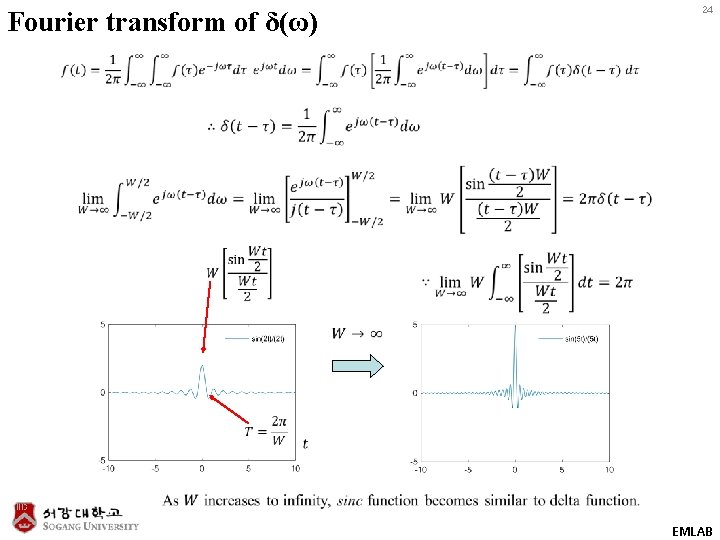
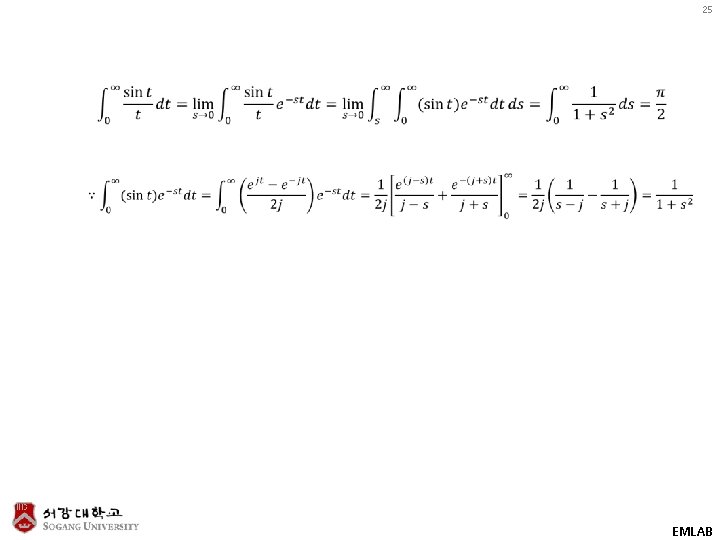
Fourier transform of δ(ω) 24 EMLAB
25 EMLAB
26 EMLAB
27 EMLAB
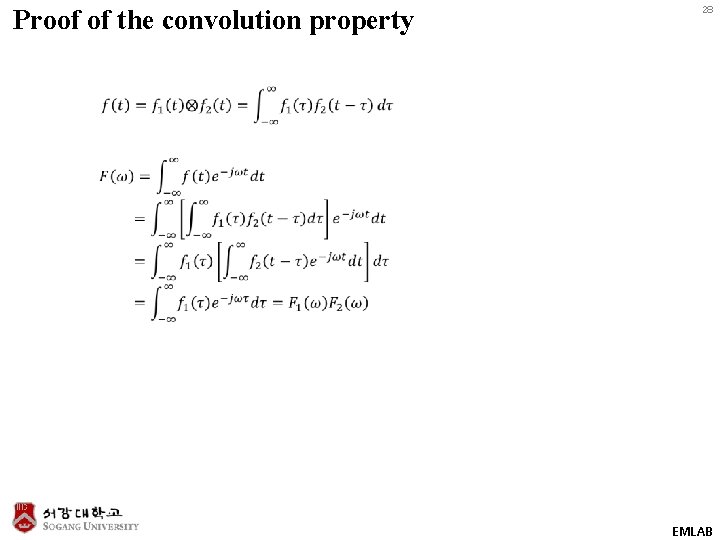
Proof of the convolution property 28 EMLAB
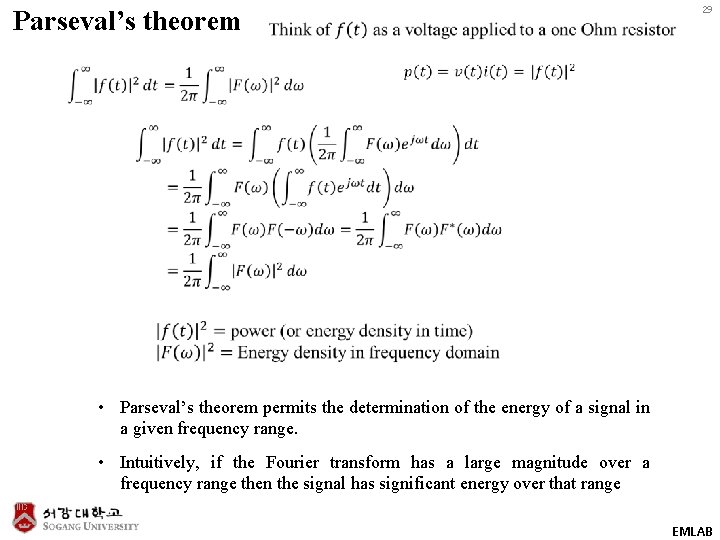
Parseval’s theorem 29 • Parseval’s theorem permits the determination of the energy of a signal in a given frequency range. • Intuitively, if the Fourier transform has a large magnitude over a frequency range then the signal has significant energy over that range EMLAB
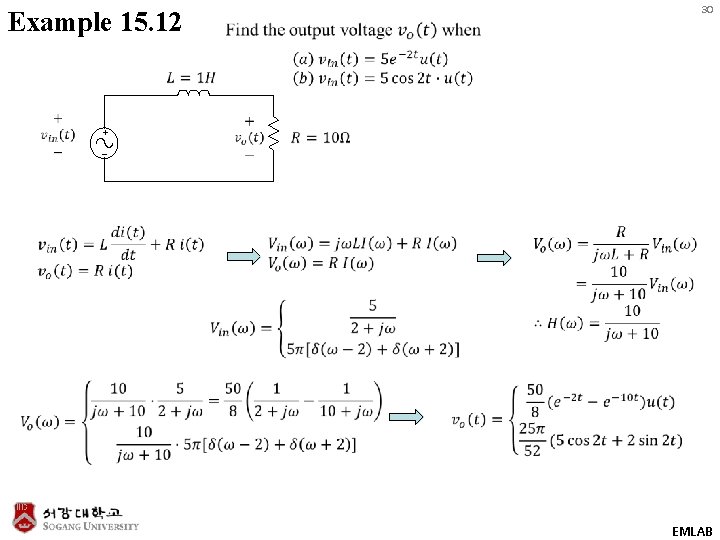
Example 15. 12 30 EMLAB
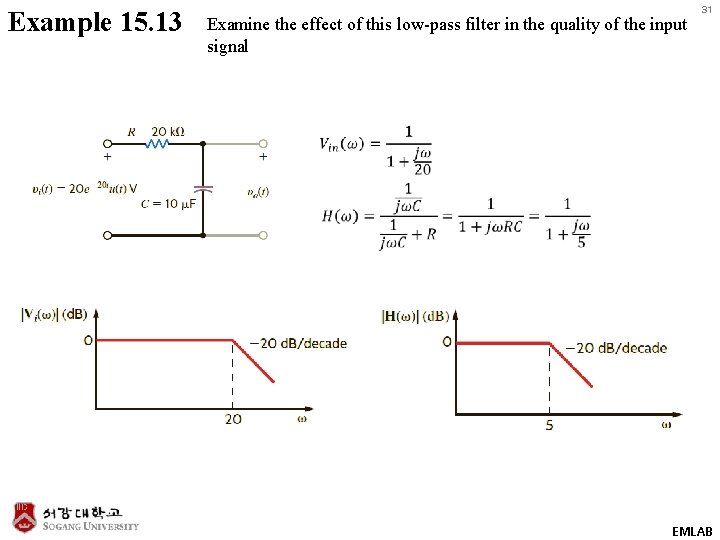
Example 15. 13 Examine the effect of this low-pass filter in the quality of the input signal 31 EMLAB
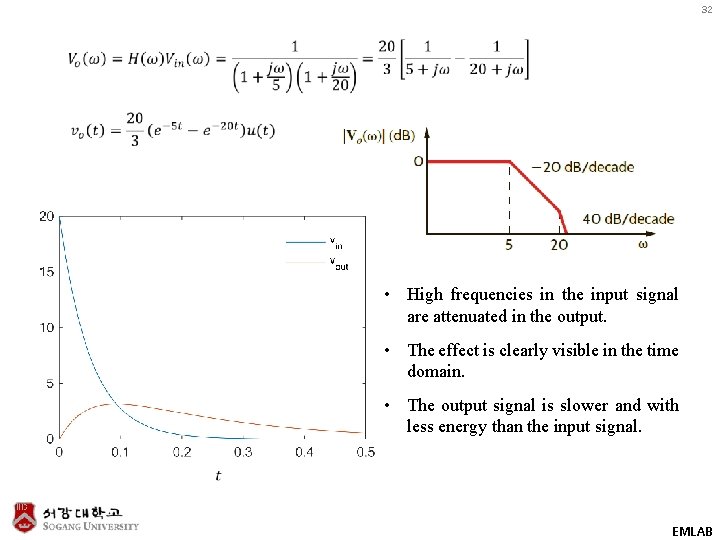
32 • High frequencies in the input signal are attenuated in the output. • The effect is clearly visible in the time domain. • The output signal is slower and with less energy than the input signal. EMLAB

Effect of ideal filters 33 Effect of band-pass filter Effect of low-pass filter Effect of band-stop filter Effect of high-pass filter EMLAB
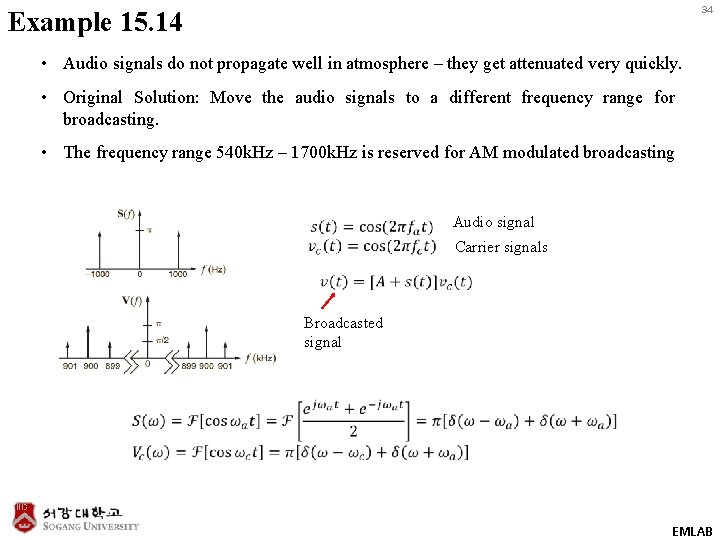
34 Example 15. 14 • Audio signals do not propagate well in atmosphere – they get attenuated very quickly. • Original Solution: Move the audio signals to a different frequency range for broadcasting. • The frequency range 540 k. Hz – 1700 k. Hz is reserved for AM modulated broadcasting Audio signal Carrier signals Broadcasted signal EMLAB
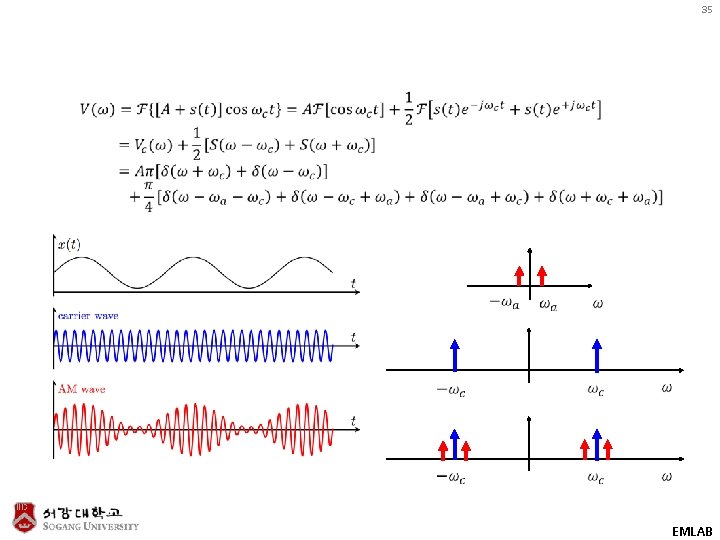
35 EMLAB
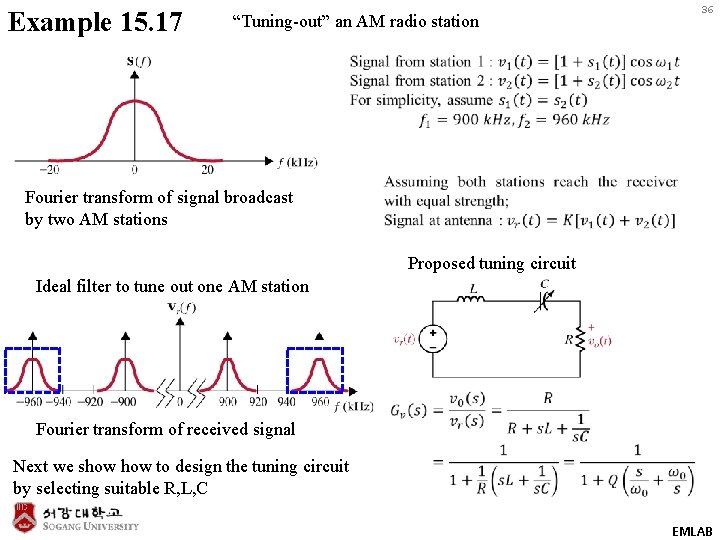
Example 15. 17 “Tuning-out” an AM radio station 36 Fourier transform of signal broadcast by two AM stations Proposed tuning circuit Ideal filter to tune out one AM station Fourier transform of received signal Next we show to design the tuning circuit by selecting suitable R, L, C EMLAB
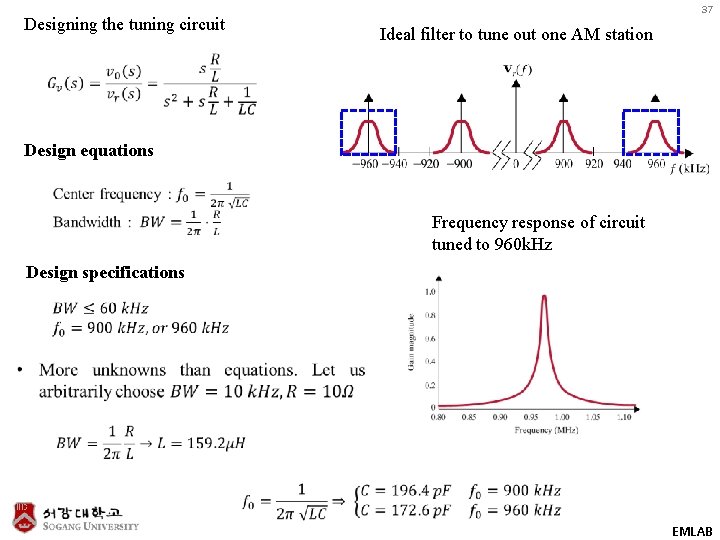
Designing the tuning circuit 37 Ideal filter to tune out one AM station Design equations Frequency response of circuit tuned to 960 k. Hz Design specifications EMLAB
- Slides: 37