
1 1 Patterns and Expressions Algebra 2 1
1 -1 Patterns and Expressions Algebra 2 1
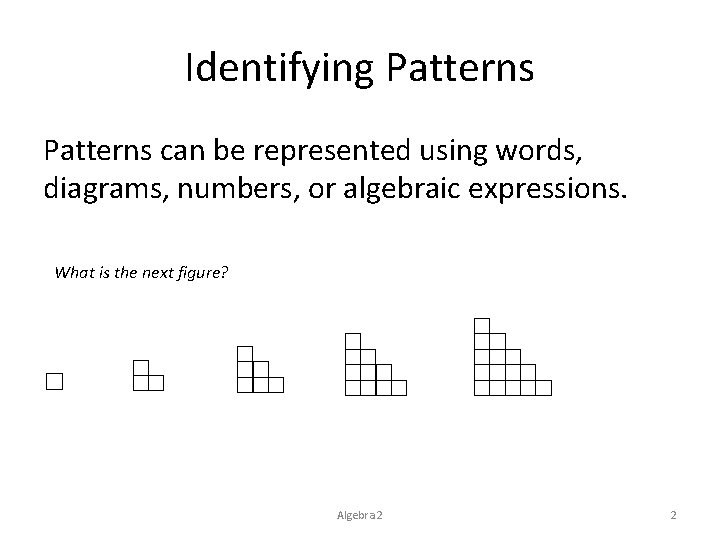
Identifying Patterns can be represented using words, diagrams, numbers, or algebraic expressions. What is the next figure? Algebra 2 2
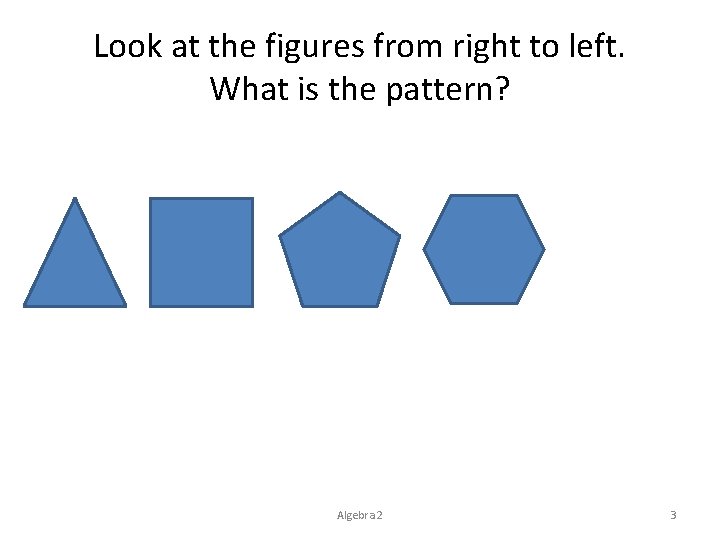
Look at the figures from right to left. What is the pattern? Algebra 2 3
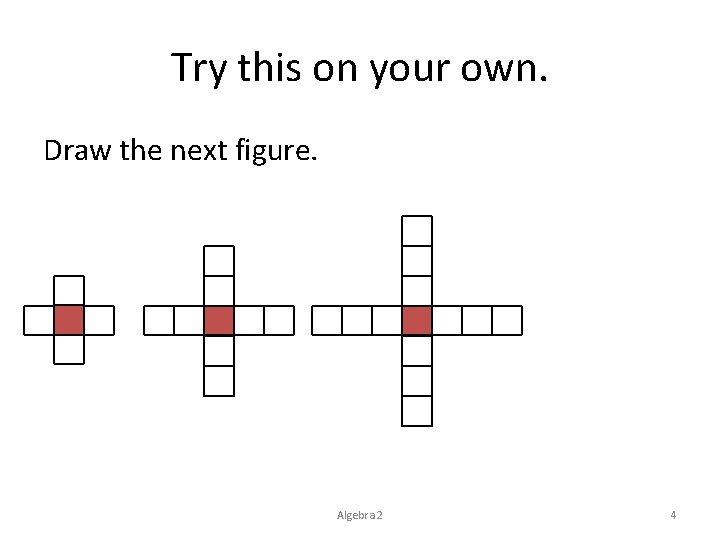
Try this on your own. Draw the next figure. Algebra 2 4
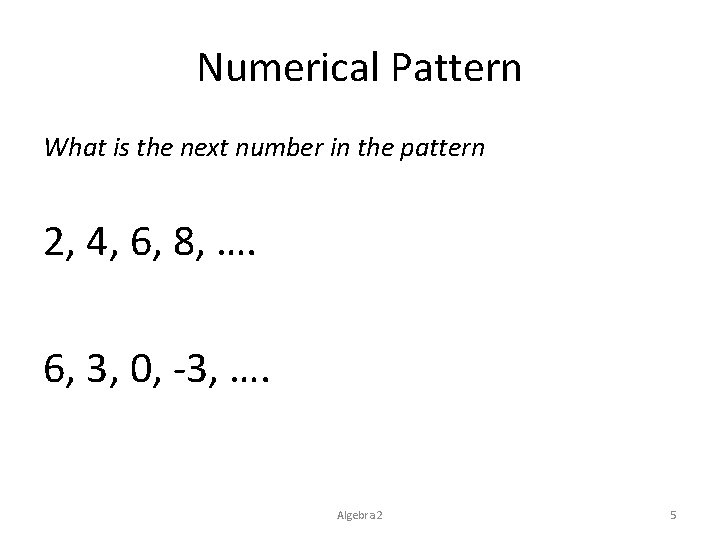
Numerical Pattern What is the next number in the pattern 2, 4, 6, 8, …. 6, 3, 0, -3, …. Algebra 2 5
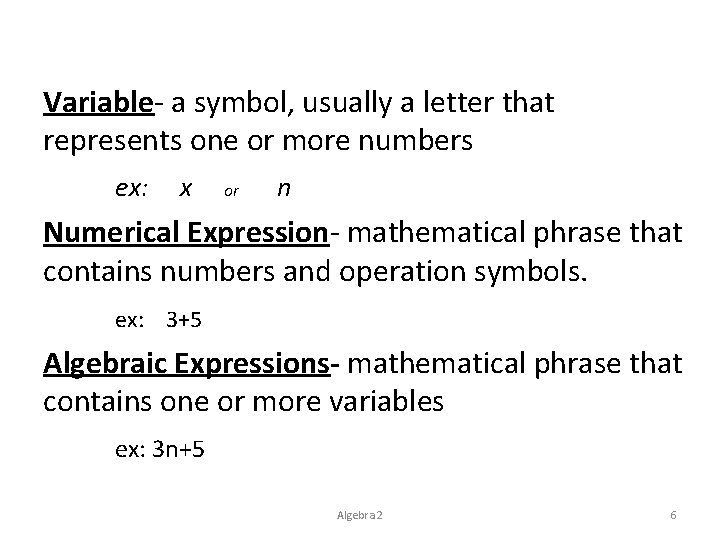
Variable- a symbol, usually a letter that represents one or more numbers ex: x or n Numerical Expression- mathematical phrase that contains numbers and operation symbols. ex: 3+5 Algebraic Expressions- mathematical phrase that contains one or more variables ex: 3 n+5 Algebra 2 6

Using Tables to help identify patterns Input Process Column Output 1 0 2 1 3 2 4 3 5 n Algebra 2 7
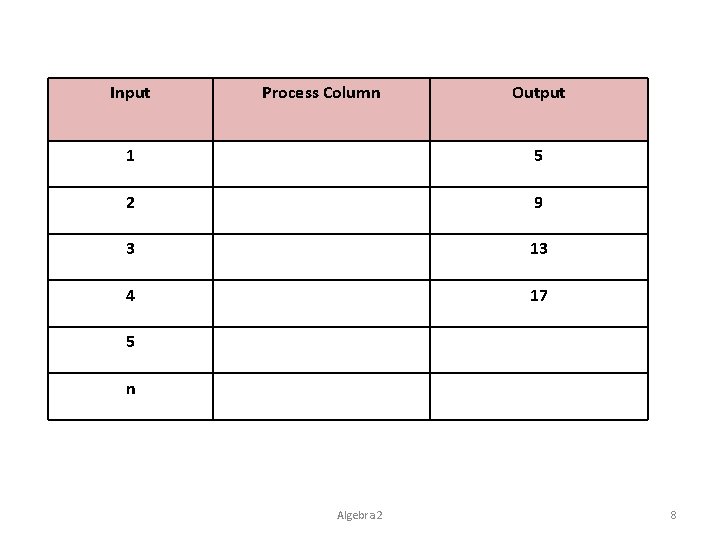
Input Process Column Output 1 5 2 9 3 13 4 17 5 n Algebra 2 8
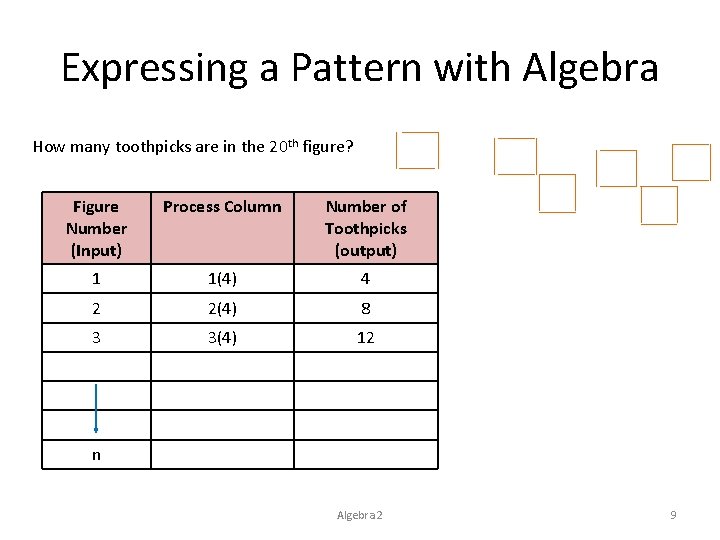
Expressing a Pattern with Algebra How many toothpicks are in the 20 th figure? Figure Number (Input) Process Column Number of Toothpicks (output) 1 1(4) 4 2 2(4) 8 3 3(4) 12 n Algebra 2 9
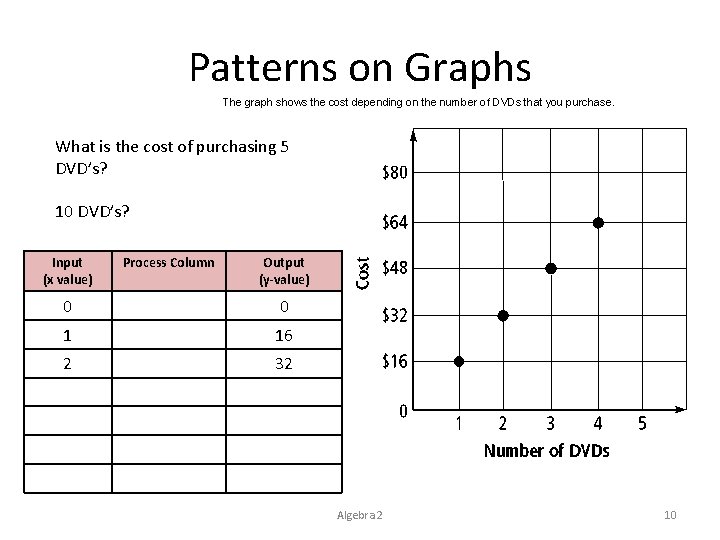
Patterns on Graphs The graph shows the cost depending on the number of DVDs that you purchase. What is the cost of purchasing 5 DVD’s? 10 DVD’s? Input (x value) Process Column Output (y-value) 0 0 1 16 2 32 Algebra 2 10
Section 1 -1 Overview • Patterns- look at the figures or numbers from left to right and identify the pattern. • Variables are used in math to represent an unknown number in equations and inequalities. • Using Input/Output tables can help you find patterns. Algebra 2 11

Warm Up •
Section 1 -2 Properties of Real Numbers
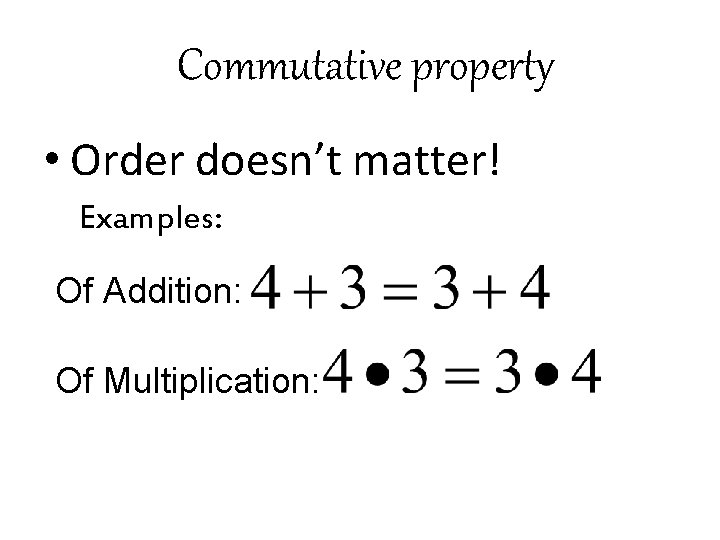
Commutative property • Order doesn’t matter! Examples: Of Addition: Of Multiplication:
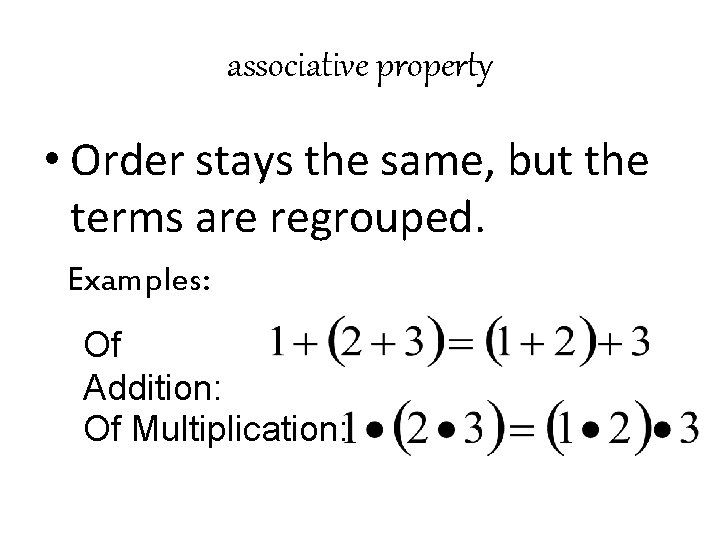
associative property • Order stays the same, but the terms are regrouped. Examples: Of Addition: Of Multiplication:
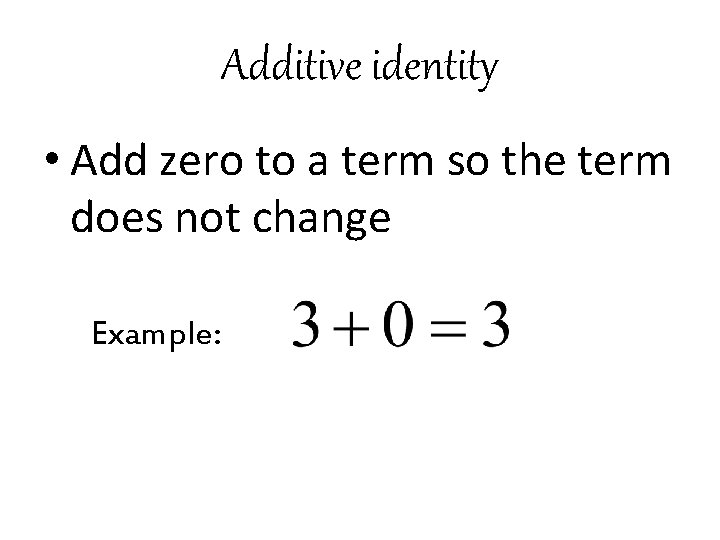
Additive identity • Add zero to a term so the term does not change Example:
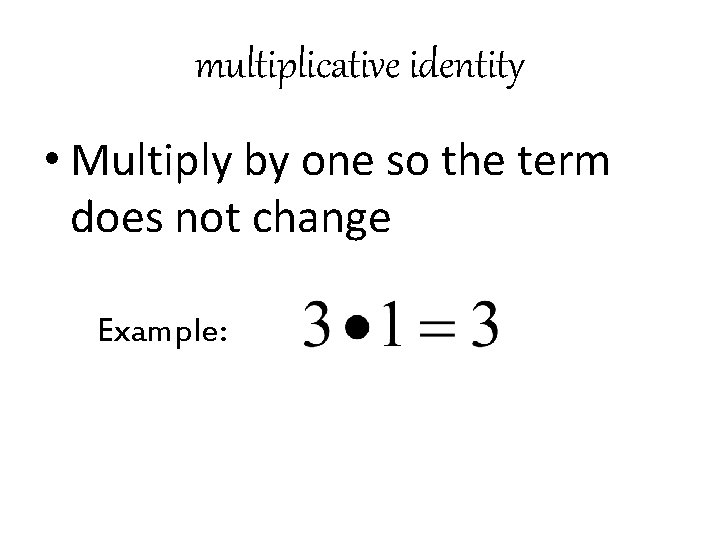
multiplicative identity • Multiply by one so the term does not change Example:
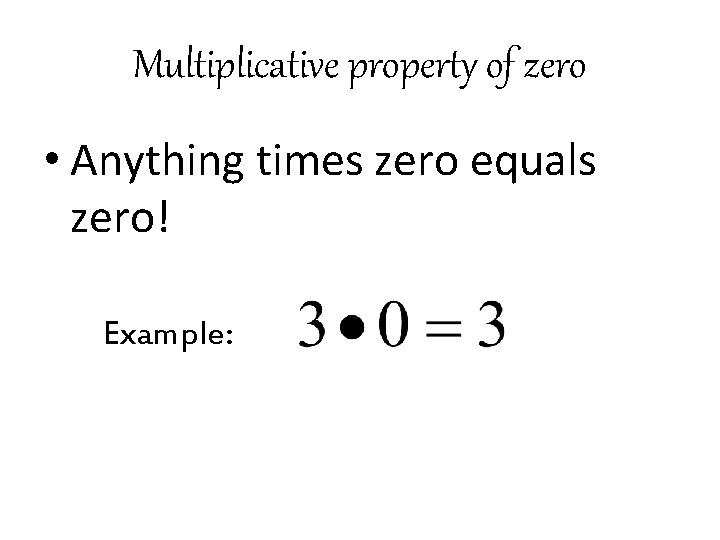
Multiplicative property of zero • Anything times zero equals zero! Example:
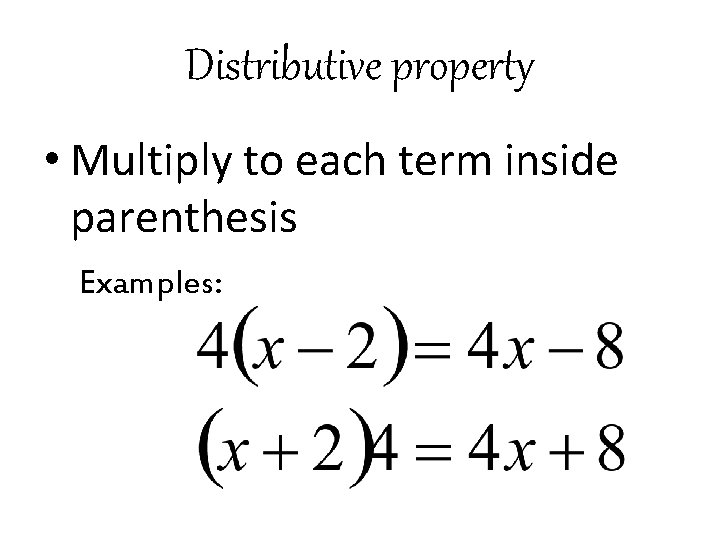
Distributive property • Multiply to each term inside parenthesis Examples:
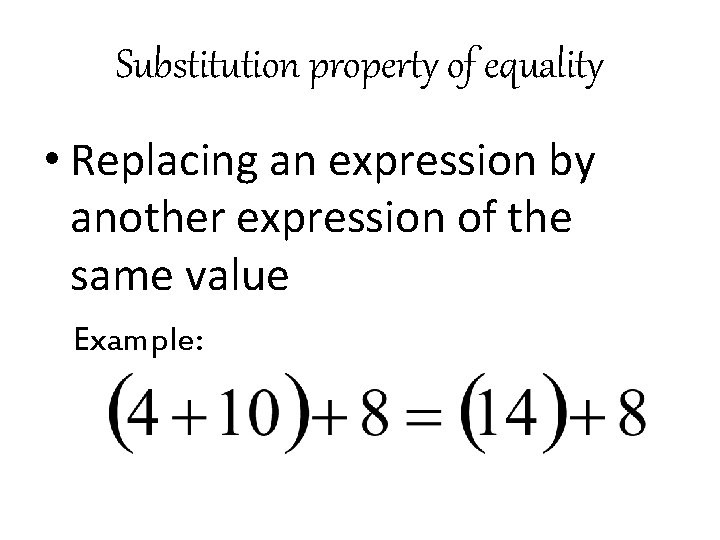
Substitution property of equality • Replacing an expression by another expression of the same value Example:
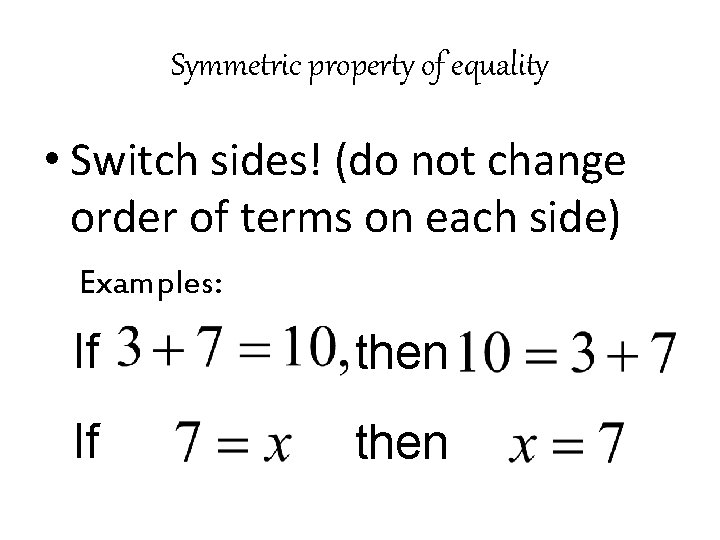
Symmetric property of equality • Switch sides! (do not change order of terms on each side) Examples: If then
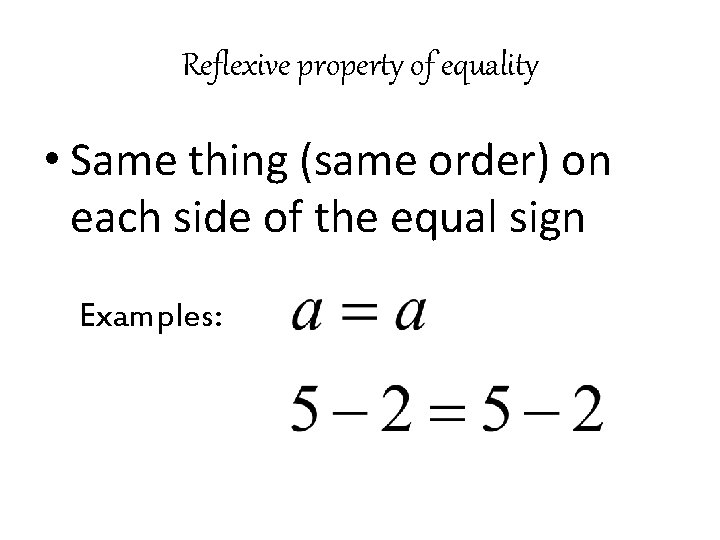
Reflexive property of equality • Same thing (same order) on each side of the equal sign Examples:
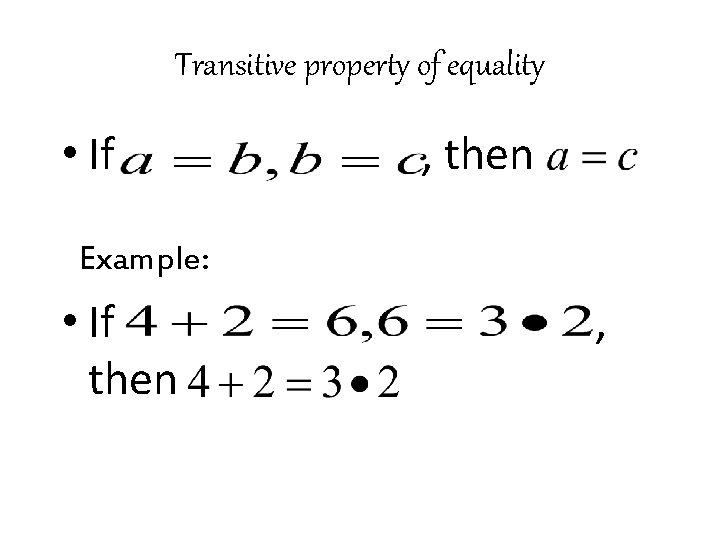
Transitive property of equality • If , then Example: • If then ,
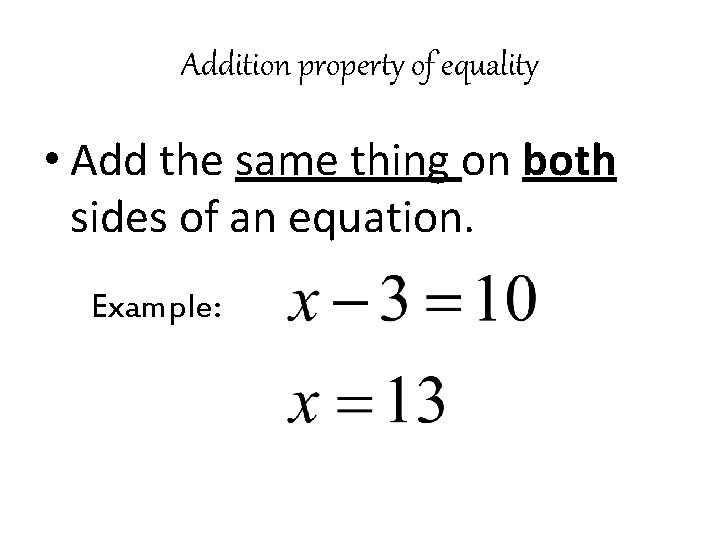
Addition property of equality • Add the same thing on both sides of an equation. Example:
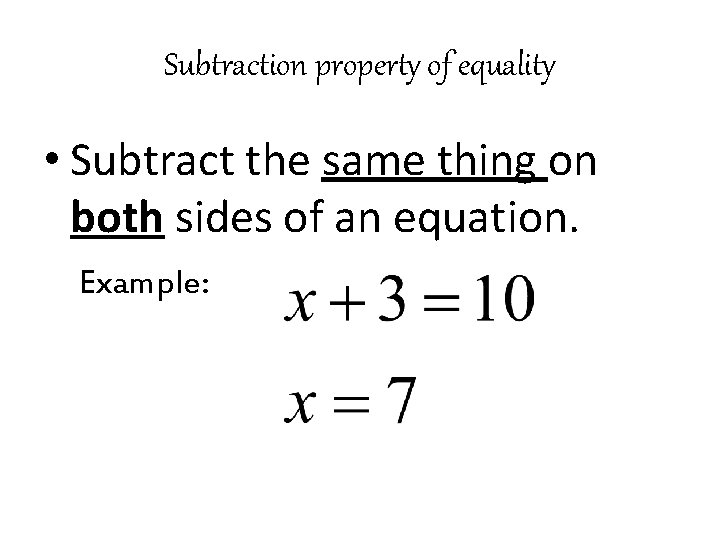
Subtraction property of equality • Subtract the same thing on both sides of an equation. Example:
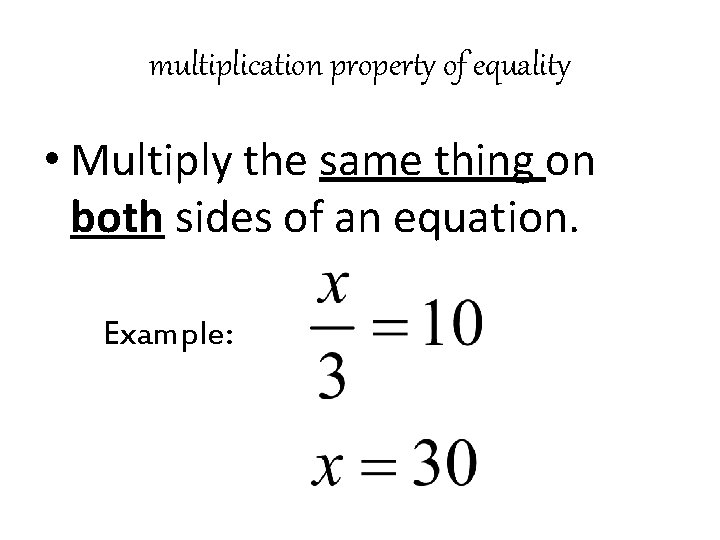
multiplication property of equality • Multiply the same thing on both sides of an equation. Example:
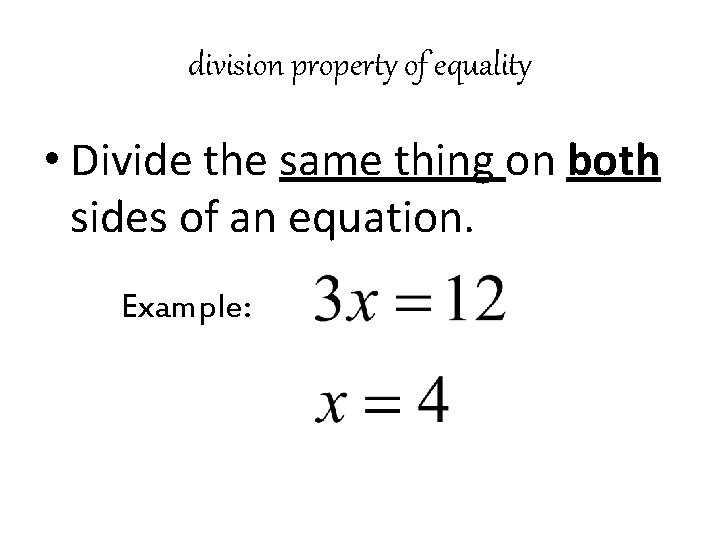
division property of equality • Divide the same thing on both sides of an equation. Example:
1 -3 Algebraic Expressions
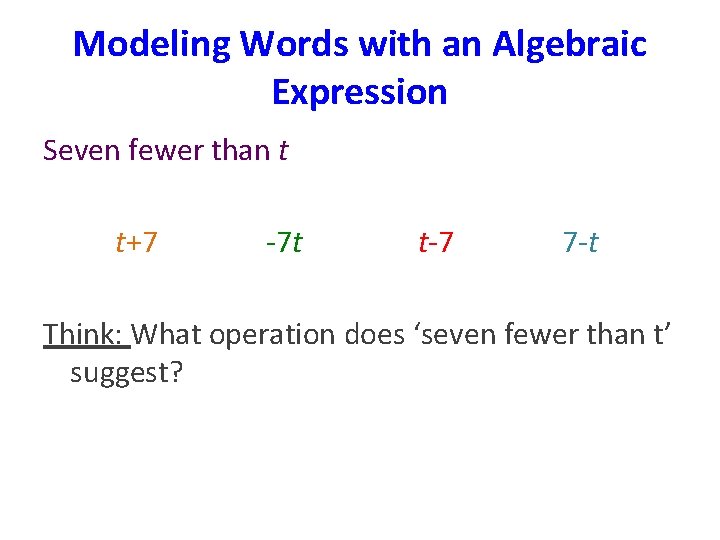
Modeling Words with an Algebraic Expression Seven fewer than t t+7 -7 t t-7 7 -t Think: What operation does ‘seven fewer than t’ suggest?
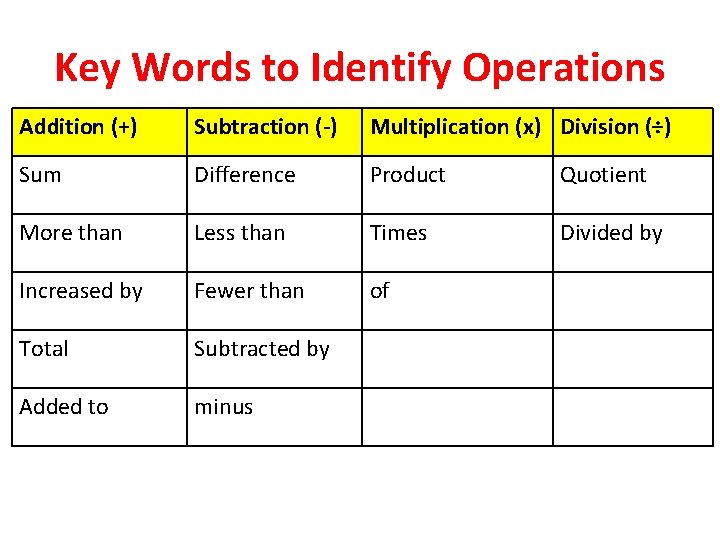
Key Words to Identify Operations Addition (+) Subtraction (-) Multiplication (x) Division (÷) Sum Difference Product Quotient More than Less than Times Divided by Increased by Fewer than of Total Subtracted by Added to minus
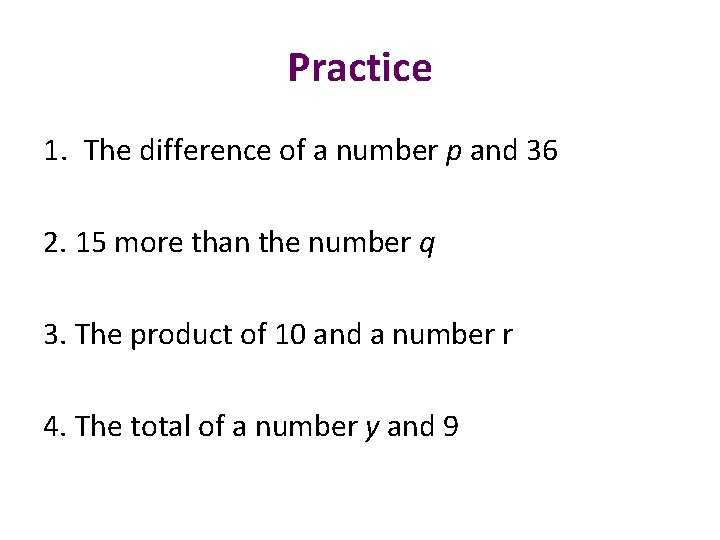
Practice 1. The difference of a number p and 36 2. 15 more than the number q 3. The product of 10 and a number r 4. The total of a number y and 9
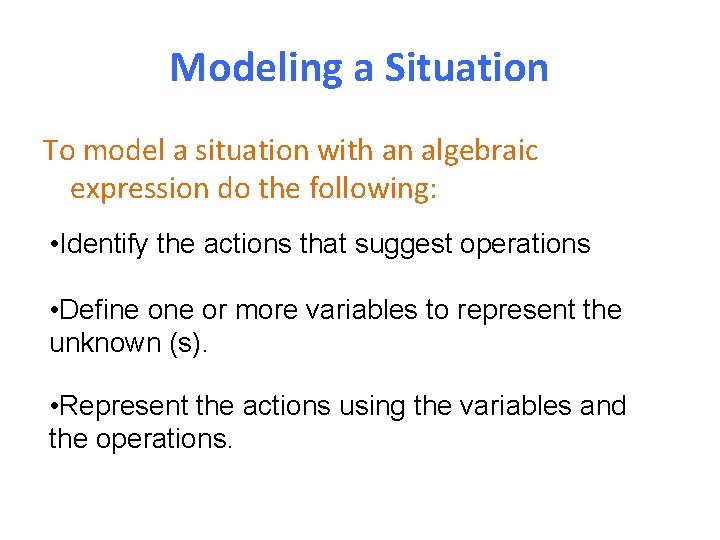
Modeling a Situation To model a situation with an algebraic expression do the following: • Identify the actions that suggest operations • Define or more variables to represent the unknown (s). • Represent the actions using the variables and the operations.
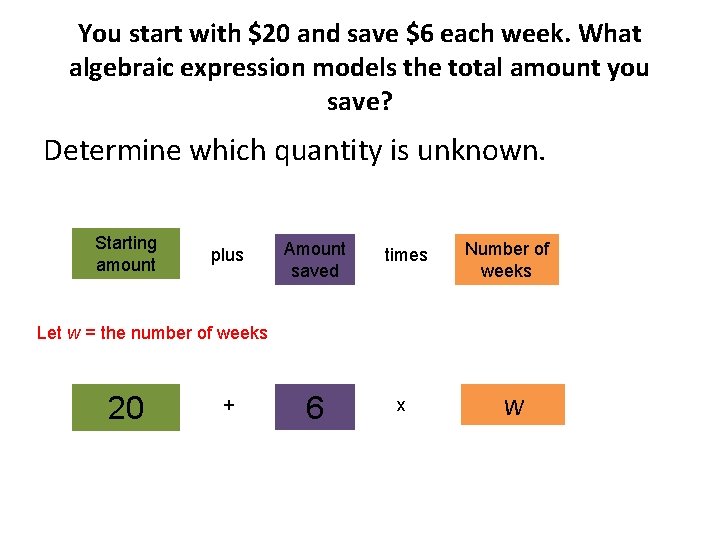
You start with $20 and save $6 each week. What algebraic expression models the total amount you save? Determine which quantity is unknown. Starting amount plus Amount saved times Number of weeks 6 x w Let w = the number of weeks 20 +
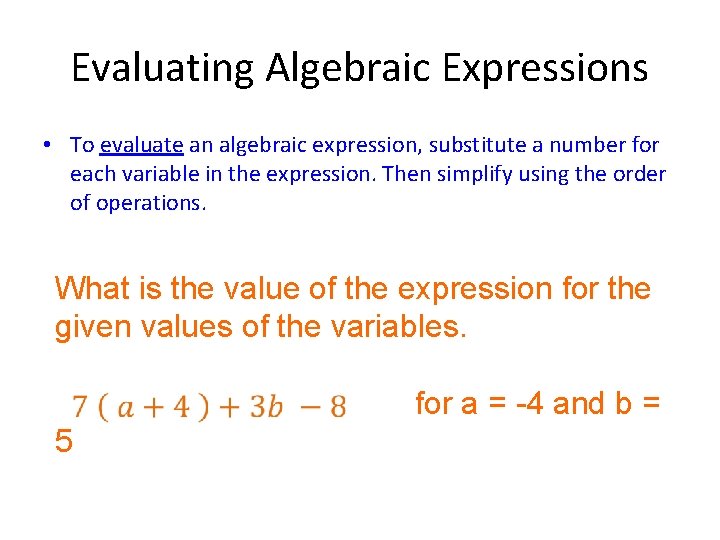
Evaluating Algebraic Expressions • To evaluate an algebraic expression, substitute a number for each variable in the expression. Then simplify using the order of operations. What is the value of the expression for the given values of the variables. 5 for a = -4 and b =
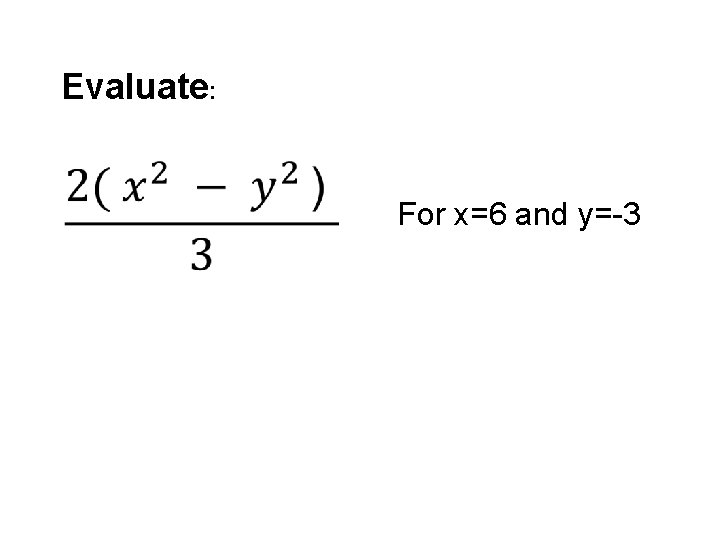
Evaluate: For x=6 and y=-3
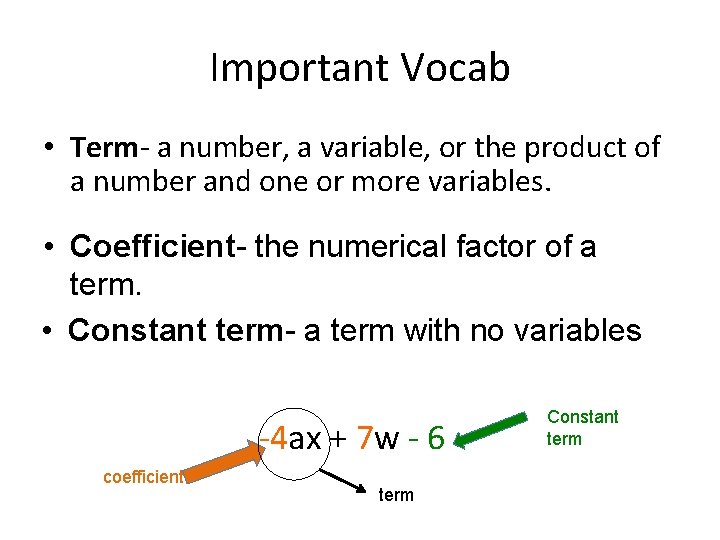
Important Vocab • Term- a number, a variable, or the product of a number and one or more variables. • Coefficient- the numerical factor of a term. • Constant term- a term with no variables coefficient -4 ax + 7 w - 6 term Constant term
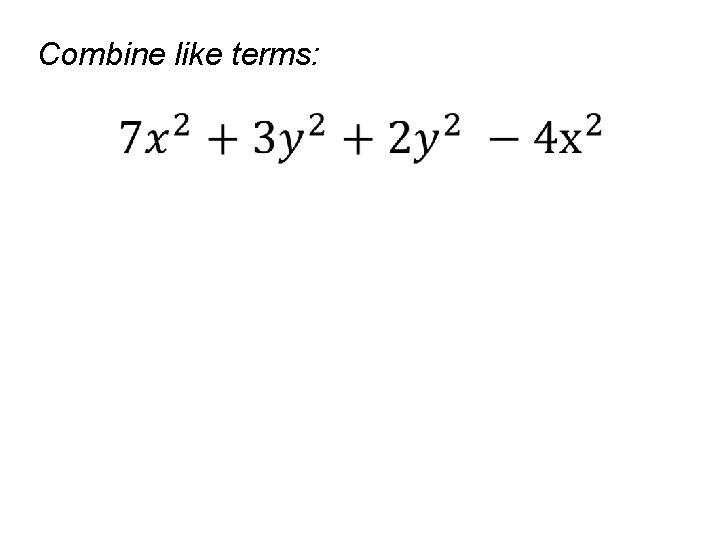
Combine like terms:
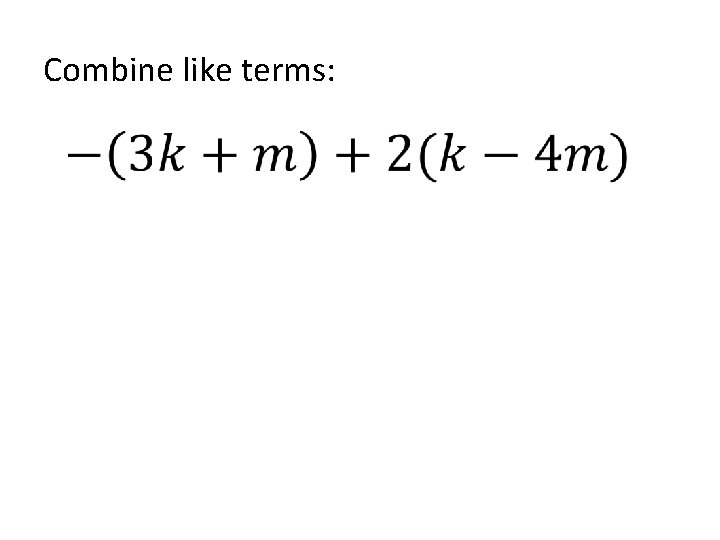
Combine like terms:
- Slides: 38