
1 1 Introduction to Biomimicry Starter activity 2015
1. 1: Introduction to Biomimicry Starter activity © 2015 AQA. Created by Teachit for AQA.
1. 1: Introduction to Biomimicry Starter 1 — Velcro survey Work in groups of 5 -6. Conduct a quick survey of your group to find out how many items each person has with them that have Velcro. Group your results into different categories e. g. shoes, bags etc. How will you record your results ? Compare how you recorded your results with other groups. • What did you find out? • What type of graph would you use to show your results? © 2015 AQA. Created by Teachit for AQA.
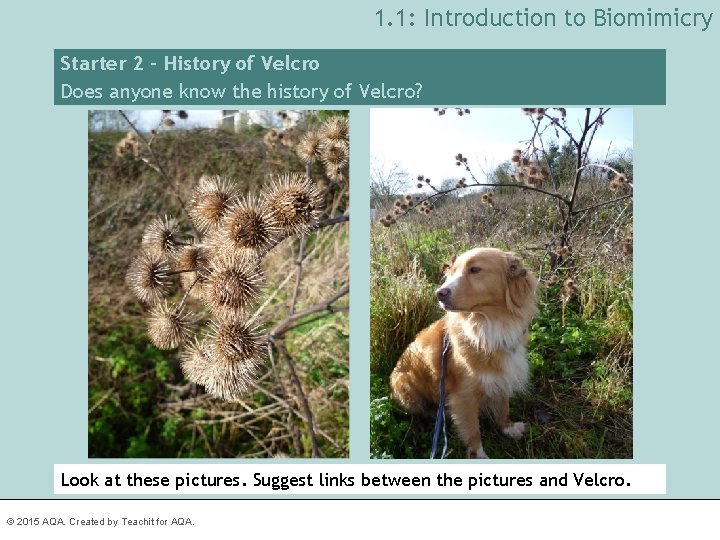
1. 1: Introduction to Biomimicry Starter 2 – History of Velcro Does anyone know the history of Velcro? Look at these pictures. Suggest links between the pictures and Velcro. © 2015 AQA. Created by Teachit for AQA.
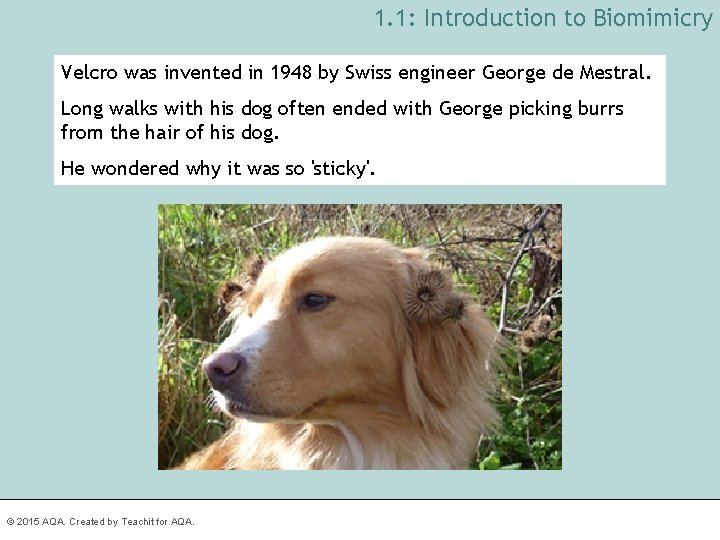
1. 1: Introduction to Biomimicry Velcro was invented in 1948 by Swiss engineer George de Mestral. Long walks with his dog often ended with George picking burrs from the hair of his dog. He wondered why it was so 'sticky'. © 2015 AQA. Created by Teachit for AQA.

1. 1: Introduction to Biomimicry Velcro is known as a 'hook and loop' fastener. It is based on the hooked spines of burdock seeds. These latch onto the fur of passing animals. The seed is dragged off the plant and dispersed. Velcro is a famous example of ‘biomimicry’. © 2015 AQA. Created by Teachit for AQA.
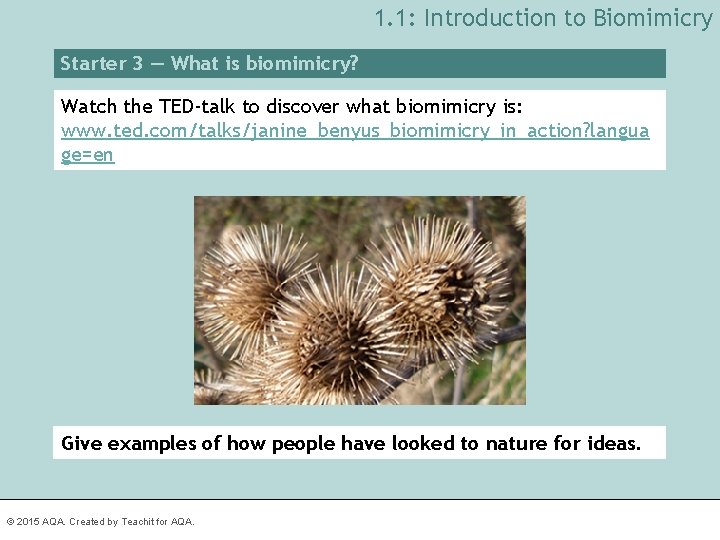
1. 1: Introduction to Biomimicry Starter 3 — What is biomimicry? Watch the TED-talk to discover what biomimicry is: www. ted. com/talks/janine_benyus_biomimicry_in_action? langua ge=en Give examples of how people have looked to nature for ideas. © 2015 AQA. Created by Teachit for AQA.
- Slides: 6