
1 1 3 A Synergistic Approach to Supervision


- Slides: 33
1 + 1 = 3: A Synergistic Approach to Supervision Capital University Bexley, Ohio Bruce Epps, Director of Academic Success Ashley Sasala, Associate Director of Academic Success
Attendees will be able to… • Learn about Academic Success at Capital University • Explain the nine components of Synergistic Supervision • Apply action suggestions and examples to implement Synergistic Supervision components • Understand the successes and challenges of a synergistic approach to supervision at Capital University • Ask questions and share ideas about synergistic supervision Learning Outcomes
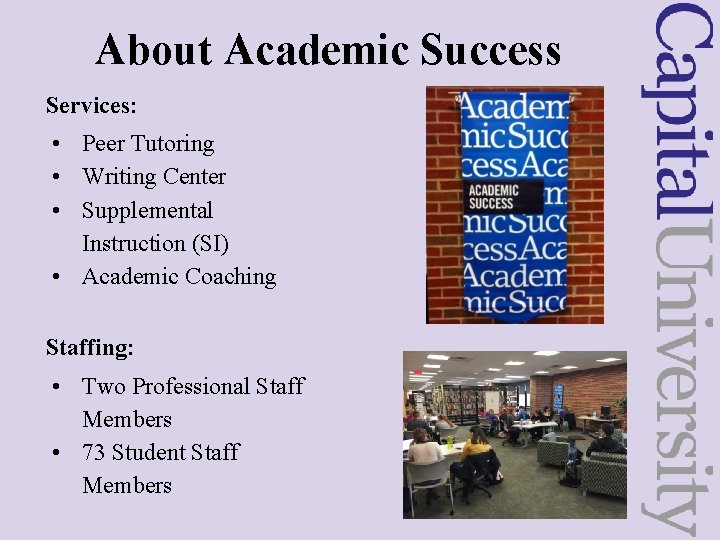
About Academic Success Services: • Peer Tutoring • Writing Center • Supplemental Instruction (SI) • Academic Coaching Staffing: • Two Professional Staff Members • 73 Student Staff Members
Presentation Agenda Part I: ● Overview of Synergistic Supervision ● Examples of implementation ● Successes and challenges; areas of growth Part II: ● Theory-to-practice workshop Part III: ● Questions and Debrief
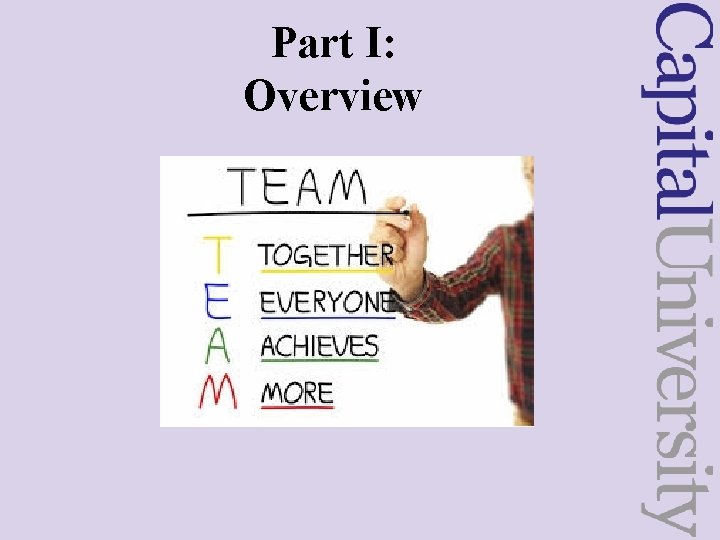
Part I: Overview
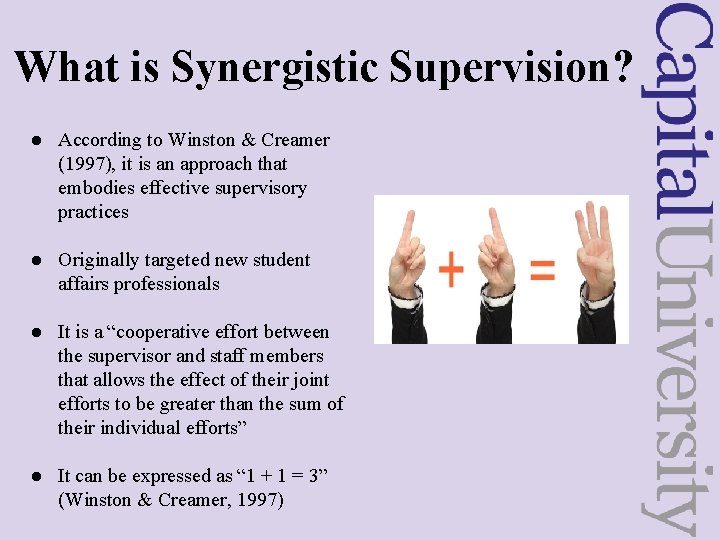
What is Synergistic Supervision? ● According to Winston & Creamer (1997), it is an approach that embodies effective supervisory practices ● Originally targeted new student affairs professionals ● It is a “cooperative effort between the supervisor and staff members that allows the effect of their joint efforts to be greater than the sum of their individual efforts” ● It can be expressed as “ 1 + 1 = 3” (Winston & Creamer, 1997)
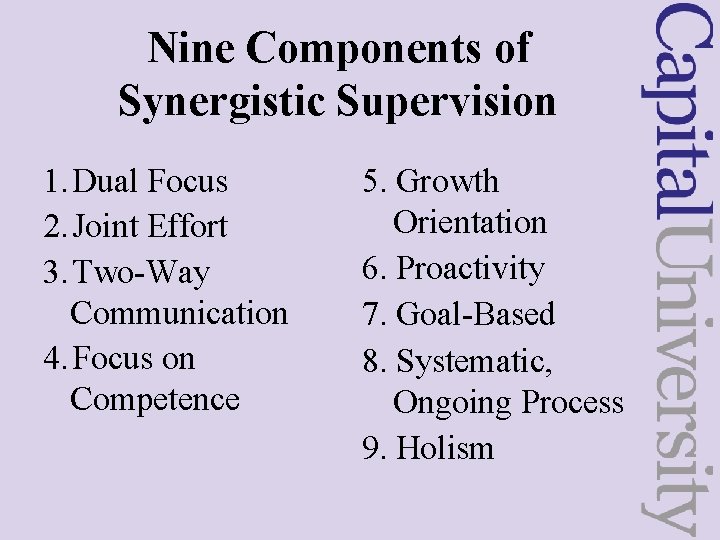
Nine Components of Synergistic Supervision 1. Dual Focus 2. Joint Effort 3. Two-Way Communication 4. Focus on Competence 5. Growth Orientation 6. Proactivity 7. Goal-Based 8. Systematic, Ongoing Process 9. Holism
1. Dual Focus • Dual focus on working toward programmatic and institutional goals while also encouraging the personal and professional development of staff • Supervisors must show concern for staff’s growth and development; they must establish a relationship of trust, openness, and mutuality
Dual Focus Considerations • Are there conversations with the staff about how their job responsibilities enhance the goals of the department, program, or even the institution? • How are the staff members challenged in their work and able to practically apply elements from their own course work? • Are the staff members able to see the connection between their work and the department and institution’s goals? • Are staff members knowledgeable about institutional and departmental policies?
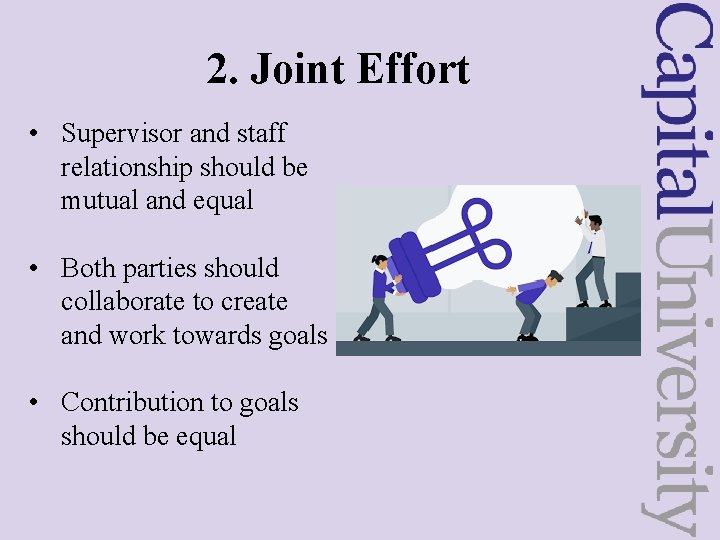
2. Joint Effort • Supervisor and staff relationship should be mutual and equal • Both parties should collaborate to create and work towards goals • Contribution to goals should be equal
Joint Effort Considerations • Are both the supervisor and staff members putting forth energy and demonstrating commitment to the professional relationship? • Does the supervisor view their role as one of a mentor or of a coach? What is the supervisor’s supervision style? Are both parties aware of this? • Are the job responsibilities and goals for the staff clearly established?
3. Two-Way Communication • Must have honest and open communication • Have to be willing to know each other on a personal level • Must know about each other’s positions • Environment should allow for feedback (provided and received)
Two-Way Communication Considerations • Is there a professional comfort level between the supervisor and staff so they can openly communicate? • Do both parties understand their expectations of each other? • In what way is trust developing? • Does the supervisor ask for feedback in helping to enhance communication? • Is the supervisor comfortable in providing feedback? Does feedback occur regularly?
4. Focus on Competence • Build knowledge and information • Teach work-related skills • Guide development of personal and professional skills • Address effective professional attitudes
Focus on Competence Considerations • Are the staff members clear on the skills needed for their positions, and is there an opportunity to develop these skills? • Are staff being coached on professional behavior and attitude? • Are staff given regular opportunities for professional development?
5. Growth Orientation • Focusing on both professional and personal growth is essential in Synergistic Supervision • Should perform assessment through supervision of current abilities • Staff members should feel more proficient as a result
Growth Orientation Considerations • Are there opportunities for the staff to reflect on their own professional growth? • Are professional development opportunities available to the staff? • Is the staff encouraged to set goals for growth and professional development, and are there systems in place for the staff to measure their growth toward those goals?
6. Proactivity • Identifying performance-related concerns early is important • Pro-acting vs. reacting • Both parties raise concerns early on
Proactivity Considerations • Are concerns addressed early on? How? • Has an atmosphere been created in which both supervisors and staff feel comfortable about raising concerns and offering feedback? • Is this atmosphere of raising concerns early on promoted as being healthy and constructive rather than as “punitive”?
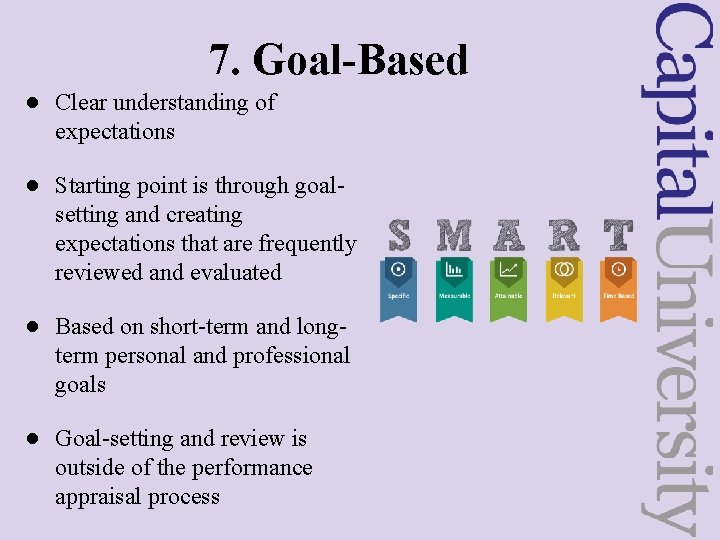
7. Goal-Based ● Clear understanding of expectations ● Starting point is through goalsetting and creating expectations that are frequently reviewed and evaluated ● Based on short-term and longterm personal and professional goals ● Goal-setting and review is outside of the performance appraisal process
Goal-Based Considerations • Are responsibilities and expectations clearly communicated to the staff? • Are there “performance indicators” or some means by which staff receive feedback regarding fulfilling responsibilities and meeting expectations? • Is the staff encouraged to set both short-term and long-term goals?
8. Systematic, Ongoing Process • Must be approached methodically • Must make time for one-on-one meetings to discuss goals, concerns, etc.
Systematic, Ongoing Process Considerations • Does the supervisor regularly meet one-on-one with their staff? • If so, are those meetings structured so that the purpose and goals of the meetings are clear to both supervisors and staff? • How prioritized are these meetings? • Do the meetings provide opportunities to discuss work experiences, personal and professional growth, and skill development?
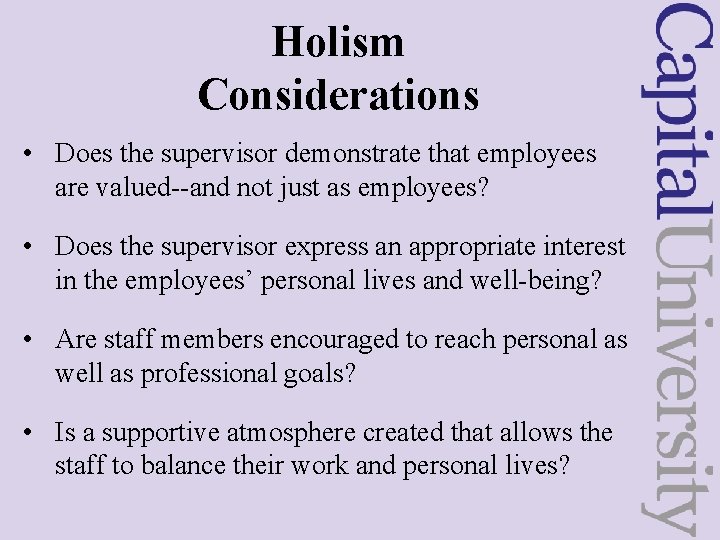
9. Holism • Support staff within both professional and personal lives • Assist with job advancement
Holism Considerations • Does the supervisor demonstrate that employees are valued--and not just as employees? • Does the supervisor express an appropriate interest in the employees’ personal lives and well-being? • Are staff members encouraged to reach personal as well as professional goals? • Is a supportive atmosphere created that allows the staff to balance their work and personal lives?
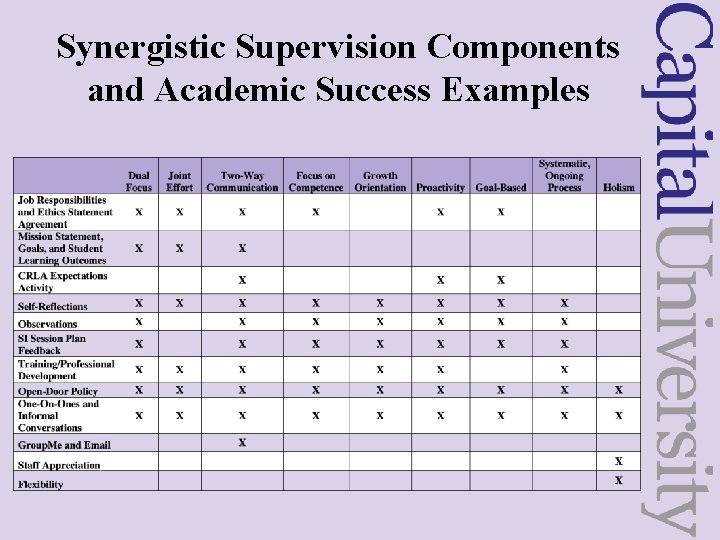
Synergistic Supervision Components and Academic Success Examples
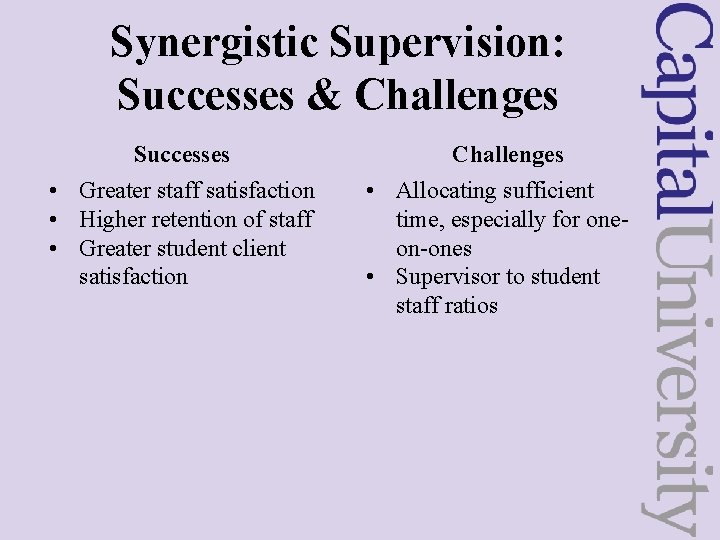
Synergistic Supervision: Successes & Challenges Successes • Greater staff satisfaction • Higher retention of staff • Greater student client satisfaction Challenges • Allocating sufficient time, especially for oneon-ones • Supervisor to student staff ratios
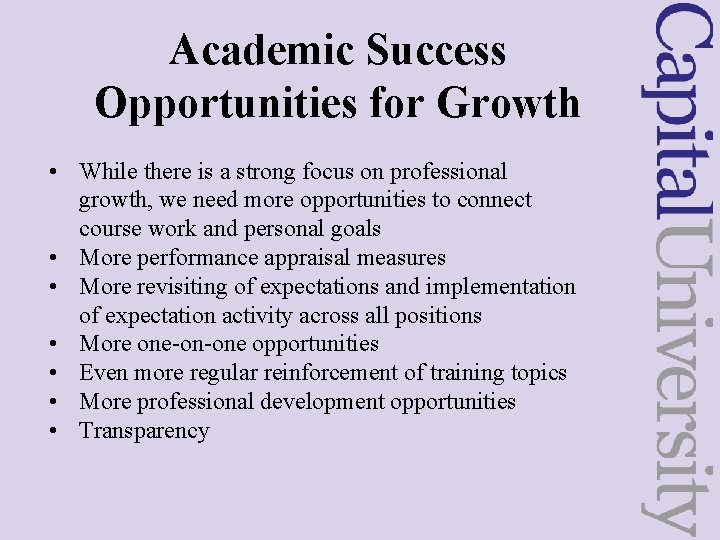
Academic Success Opportunities for Growth • While there is a strong focus on professional growth, we need more opportunities to connect course work and personal goals • More performance appraisal measures • More revisiting of expectations and implementation of expectation activity across all positions • More one-on-one opportunities • Even more regular reinforcement of training topics • More professional development opportunities • Transparency
Part II: Theory to Practice
Directions ● You will have 15 minutes in groups of 3 or 4 to begin to share examples of how you are currently implementing at least some of the nine components of Synergistic Supervision. Add these examples to your handout. ● In addition, reflect on growth opportunities and add these to your handout. ● Add your examples to the large sticky charts around the room as time permits; we will collect and send these ideas to you after the presentation.
Part III: Questions and Debrief
● What questions do you have? ● What Synergistic Supervision components are you currently implementing? What are some new ideas? ● What are some opportunities for growth moving forward?
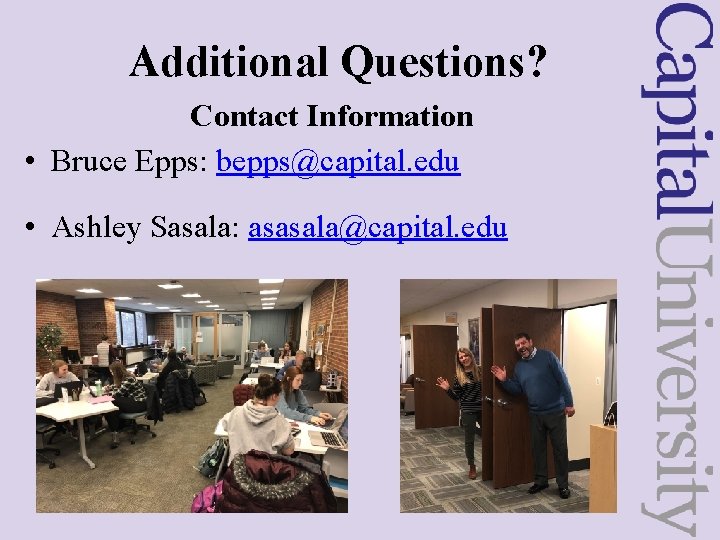
Additional Questions? Contact Information • Bruce Epps: bepps@capital. edu • Ashley Sasala: asasala@capital. edu