
1 00ECOLOGYBIO 1 INTRO Population Limiting Factors Density
1. 00_ECOLOGY_BIO 1 INTRO Population Limiting Factors (Density Dependent) Slides 123 -141
Populations • To define a population you need to know the type of individual, the time and the place e. g. all the buttercups on the sports field of our school in February, 2006.
KEY FEATURES OF POPULATIONS • Population size – Is the number of individuals in a population. – Has an important effect on the ability of the population to survive. – A small population is more likely to become extinct: • in the case of random events or natural disaster • due to inbreeding where the population is more genetically alike. Recessive traits are more likely to appear. • with reduced variability it is harder to adapt to changes.
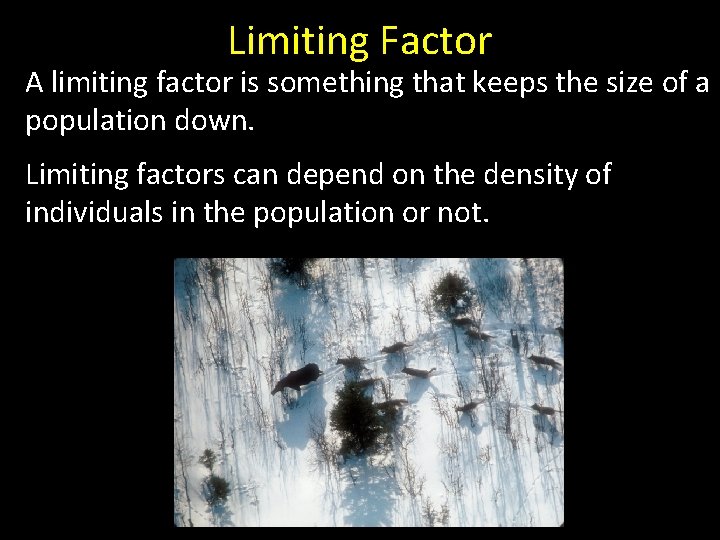
Limiting Factor A limiting factor is something that keeps the size of a population down. Limiting factors can depend on the density of individuals in the population or not.
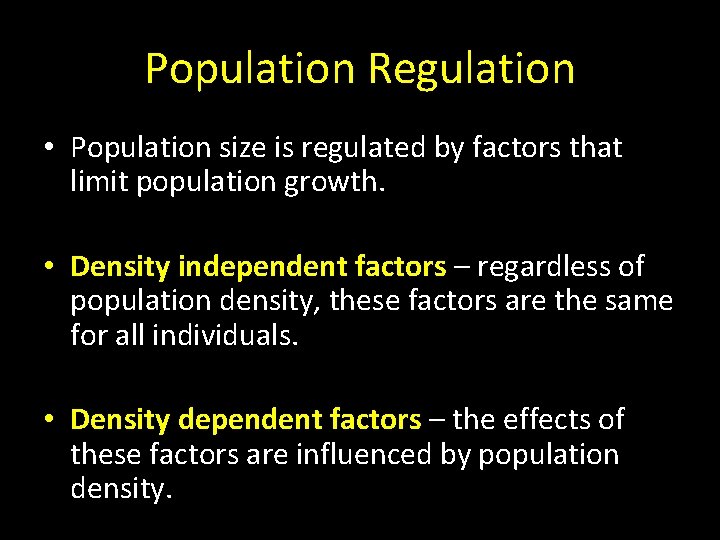
Population Regulation • Population size is regulated by factors that limit population growth. • Density independent factors – regardless of population density, these factors are the same for all individuals. • Density dependent factors – the effects of these factors are influenced by population density.
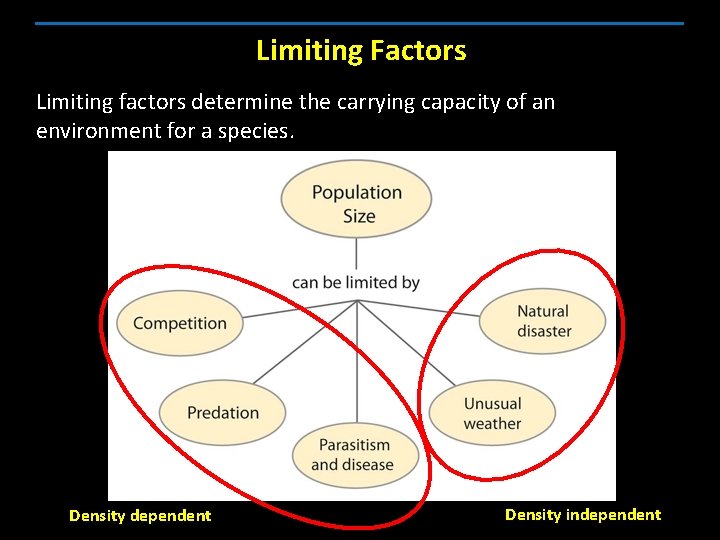
Limiting Factors Limiting factors determine the carrying capacity of an environment for a species. Density dependent Density independent
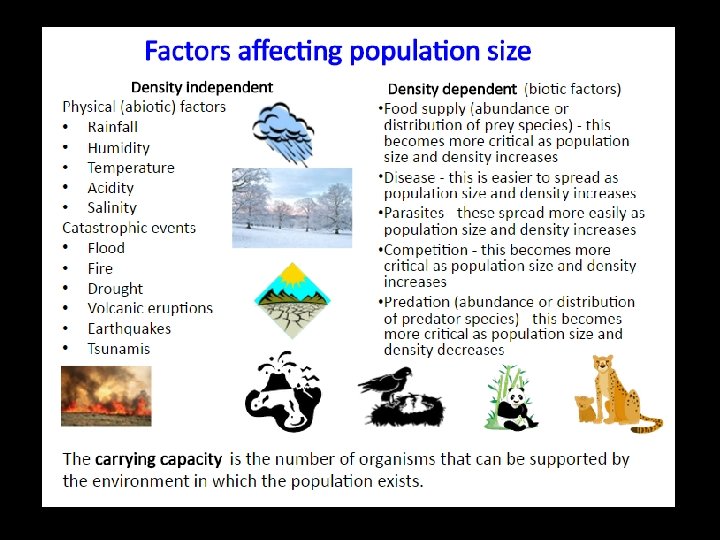

Density-Dependent Limiting Factors
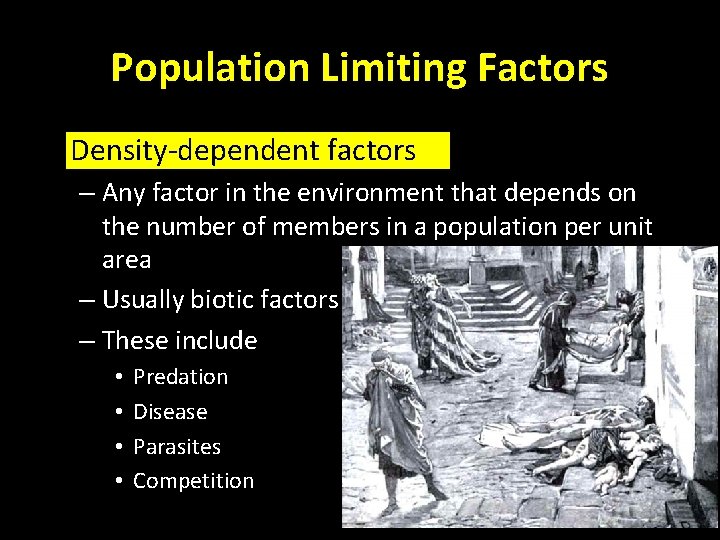
Population Ecology: Density-dependent factors Population Limiting Factors • Density-dependent factors – Any factor in the environment that depends on the number of members in a population per unit area – Usually biotic factors – These include • • Predation Disease Parasites Competition
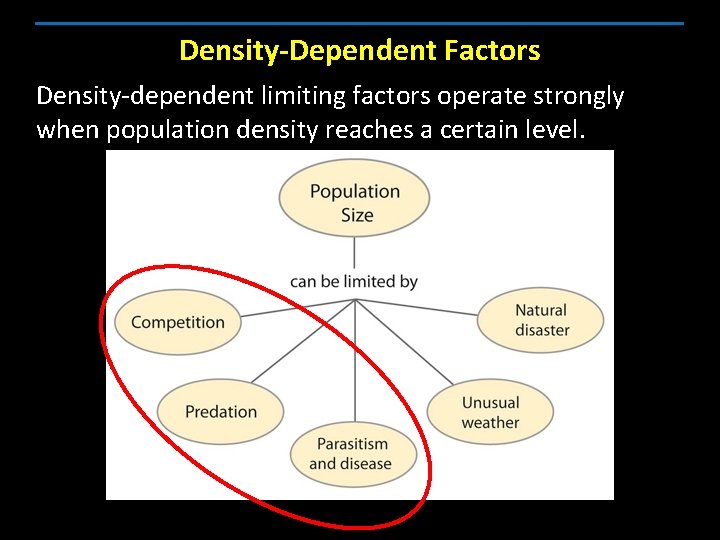
Density-Dependent Factors Density-dependent limiting factors operate strongly when population density reaches a certain level.
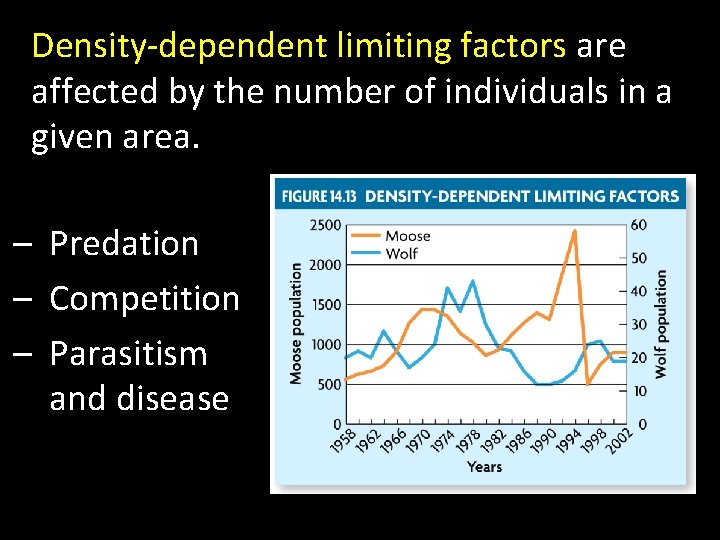
Density-dependent limiting factors are affected by the number of individuals in a given area. – Predation – Competition – Parasitism and disease
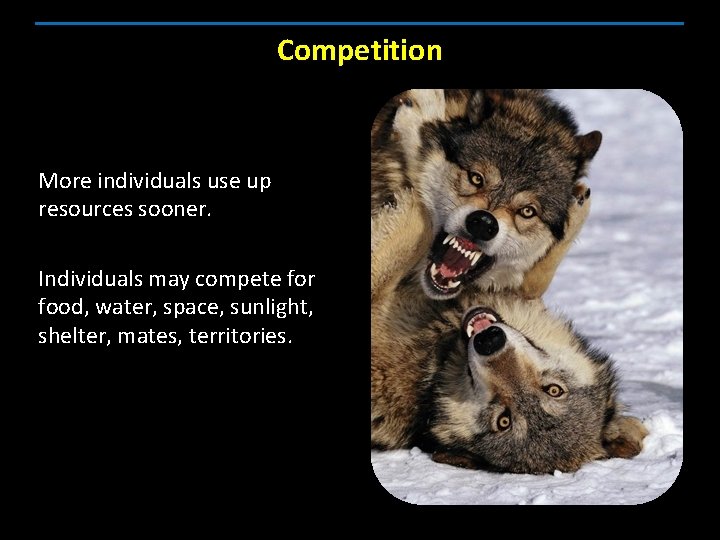
Competition More individuals use up resources sooner. Individuals may compete for food, water, space, sunlight, shelter, mates, territories.
Competition • Crowded populations mean the individuals have to compete for food, water, space, sunlight, or anything else necessary for survival and reproduction • Some may have enough to survive, but can’t raise offspring • Some may die of starvation • The more individuals in an area, the faster resources are used up • Could be between individuals of the same or different species
Predation • Predator-prey relationships tend to fluctuate (go up and down) • If there is a lot of prey, the predator can eat more, increasing the number of predators • If the prey decreases too much in population, there won’t be enough food for predators and so the population of predators decreases
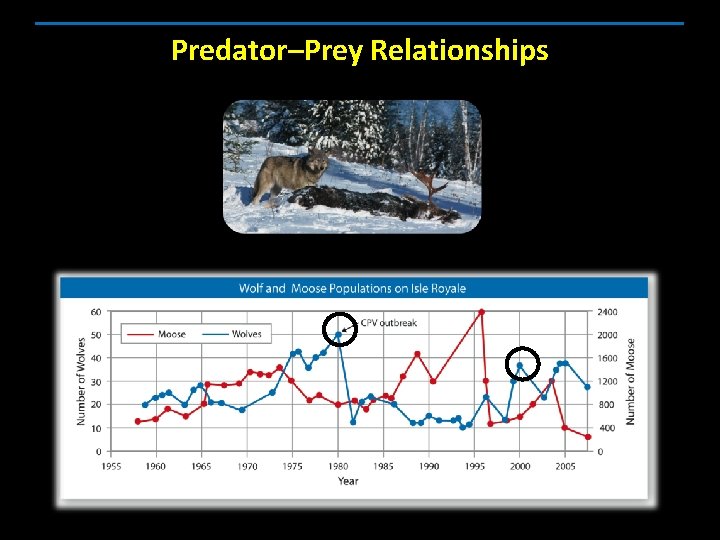
Predator–Prey Relationships
Herbivory (Predation of Plants) • Plant and herbivore populations fluctuate just like the predator and prey populations
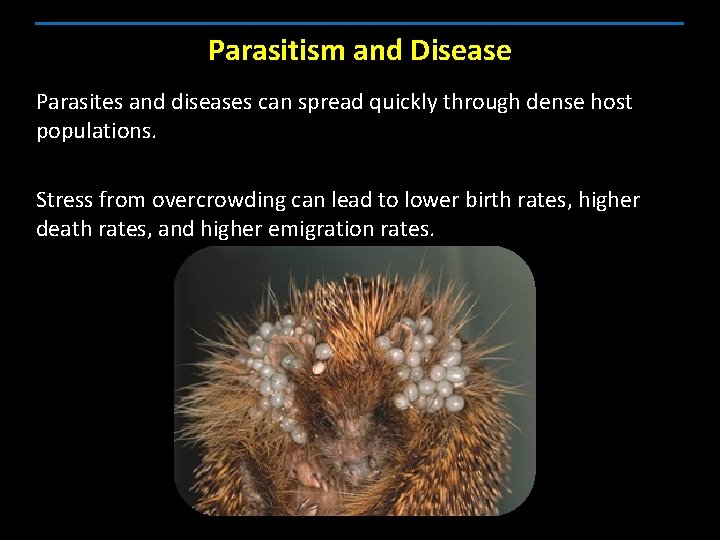
Parasitism and Disease Parasites and diseases can spread quickly through dense host populations. Stress from overcrowding can lead to lower birth rates, higher death rates, and higher emigration rates.
Parasitism and Disease • Parasites and disease causing organisms feed at the expense of the host • This can weaken or kill the host • The larger the population the easier it is for the parasite or disease to travel through hosts
Stress from Overcrowding • Some species will fight amongst each other if they are overcrowded • This fighting can cause stress leaving individuals susceptible to disease • In a few species, overcrowding can cause females to neglect or kill their own offspring
Chapter 5 Part 3 - Density-Dependent Limiting Factors https: //www. youtube. com/watch? v=HRTaf. Kd. U 44 U
- Slides: 20