
09 25 17 Catalyst Why is it important



- Slides: 17
09. 25. 17 Catalyst Why is it important that nutrients cycle?
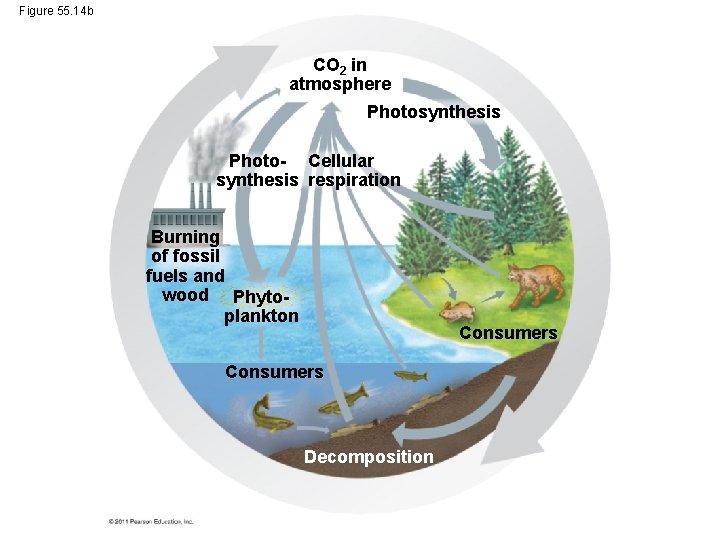
Figure 55. 14 b CO 2 in atmosphere Photosynthesis Photo- Cellular synthesis respiration Burning of fossil fuels and wood Phytoplankton Consumers Decomposition
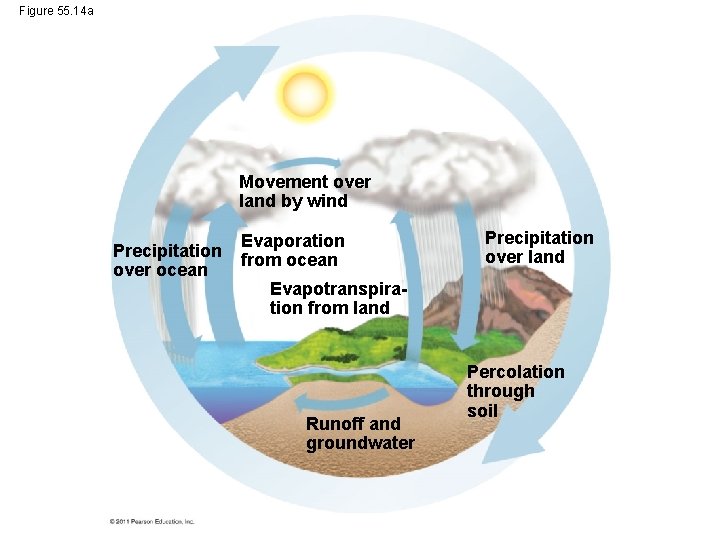
Figure 55. 14 a Movement over land by wind Precipitation over ocean Evaporation from ocean Precipitation over land Evapotranspiration from land Runoff and groundwater Percolation through soil
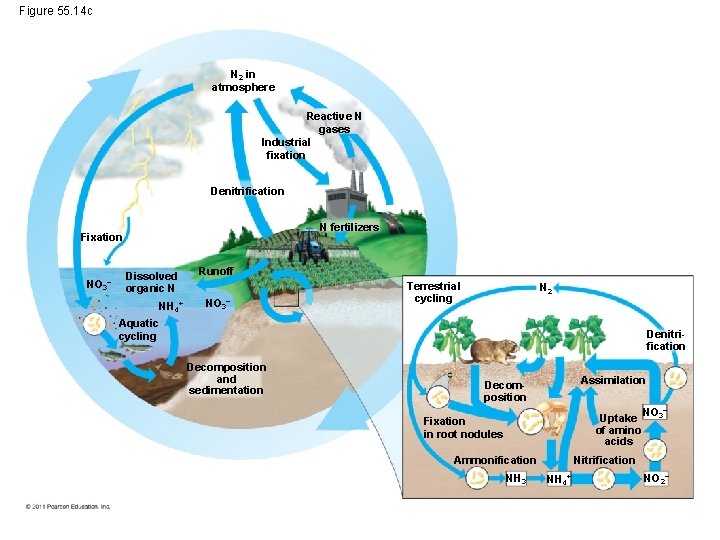
Figure 55. 14 c N 2 in atmosphere Reactive N gases Industrial fixation Denitrification N fertilizers Fixation NO 3– Dissolved organic N NH 4+ Runoff NO 3– Terrestrial cycling N 2 Aquatic cycling Denitrification Decomposition and sedimentation Assimilation Decomposition Uptake of amino acids Fixation in root nodules Ammonification NH 3 NO 3– Nitrification NH 4+ NO 2–
Today. • • Review Cycles Vocab Clip Review Begin Food Web.
Energy, Mass, and Trophic Levels • Autotrophs build molecules themselves using photosynthesis or chemosynthesis as an energy source • Heterotrophs depend on the output of other organisms © 2011 Pearson Education, Inc.
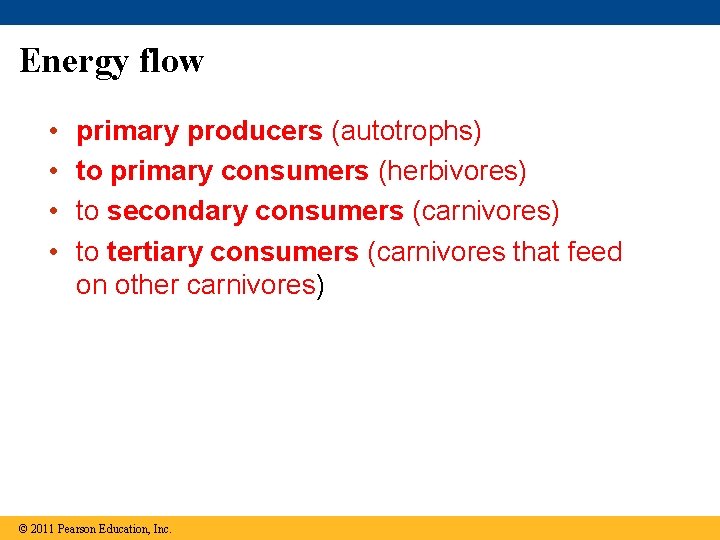
Energy flow • • primary producers (autotrophs) to primary consumers (herbivores) to secondary consumers (carnivores) to tertiary consumers (carnivores that feed on other carnivores) © 2011 Pearson Education, Inc.
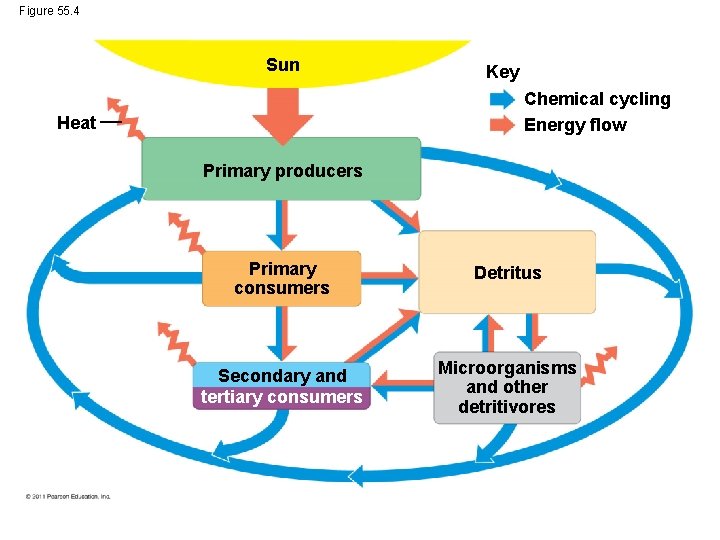
Figure 55. 4 Sun Key Chemical cycling Energy flow Heat Primary producers Primary consumers Detritus Secondary and tertiary consumers Microorganisms and other detritivores
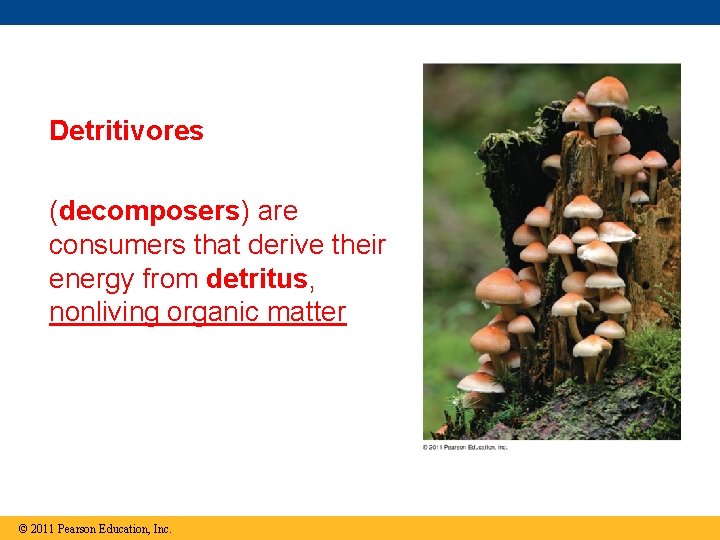
Detritivores (decomposers) are consumers that derive their energy from detritus, nonliving organic matter © 2011 Pearson Education, Inc.
Trophic Structure • the feeding relationships between organisms in a community • It is a key factor in community dynamics • Food chains link trophic levels from producers to top carnivores © 2011 Pearson Education, Inc.
Figure 54. 13 Carnivore Quaternary consumers Carnivore Tertiary consumers Carnivore Secondary consumers Carnivore Herbivore Primary consumers Zooplankton Plant Primary producers Phytoplankton A terrestrial food chain A marine food chain
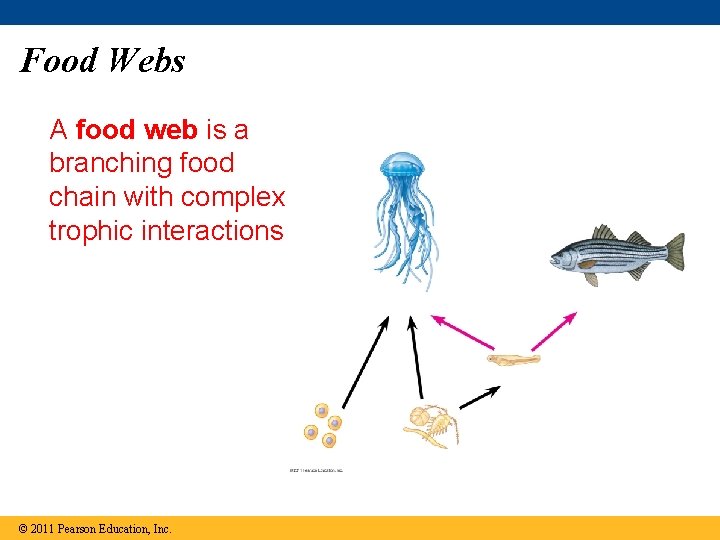
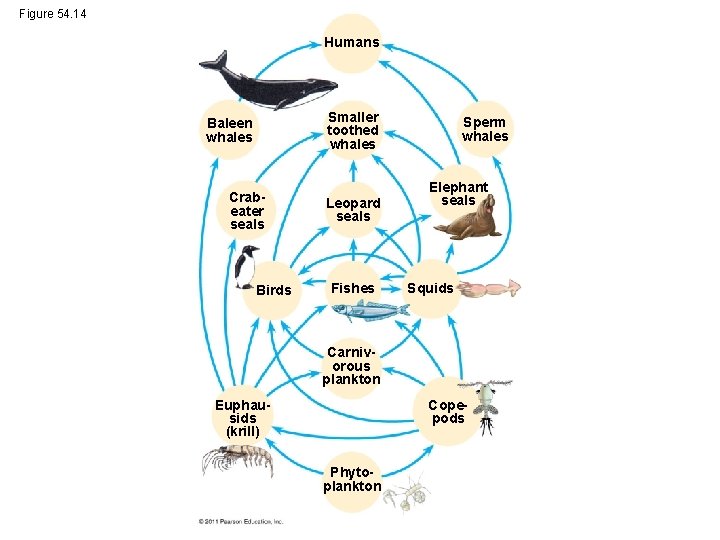
Food Webs A food web is a branching food chain with complex trophic interactions © 2011 Pearson Education, Inc.
Figure 54. 14 Humans Smaller toothed whales Baleen whales Crabeater seals Birds Leopard seals Fishes Sperm whales Elephant seals Squids Carnivorous plankton Euphausids (krill) Copepods Phytoplankton
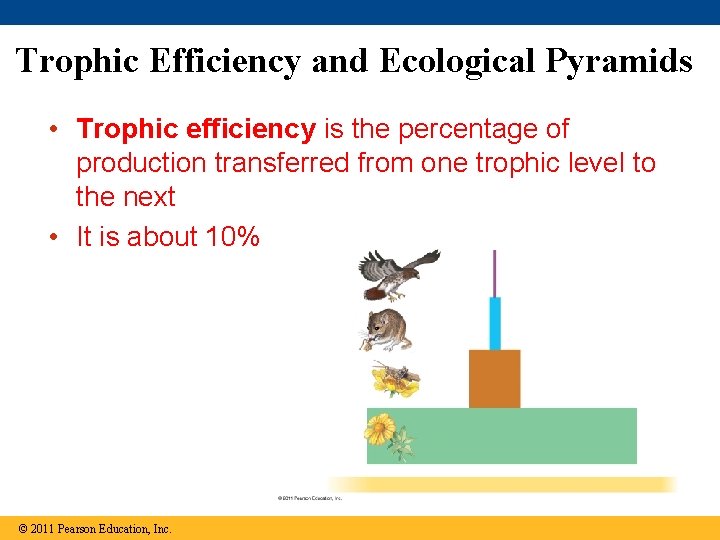
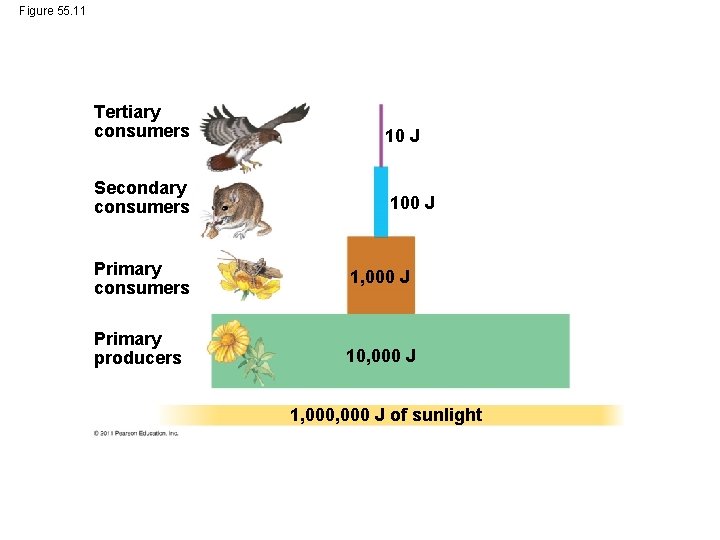
Trophic Efficiency and Ecological Pyramids • Trophic efficiency is the percentage of production transferred from one trophic level to the next • It is about 10% © 2011 Pearson Education, Inc.
Figure 55. 11 Tertiary consumers 10 J Secondary consumers 100 J Primary consumers 1, 000 J Primary producers 10, 000 J 1, 000 J of sunlight
Big ideas overview. • Clip Now – MN Food Webs