
02232017 Unit 9 The French Revolution LEQ What
- Slides: 19
02/23/2017 Unit 9: The French Revolution LEQ: What were the causes of the French Revolution? Adapted from: http: //www. mssavino. com /worldhistory. htm Bell work: What are the ‘ingredients’ of a Revolution? Standard: SS. 912. W. 5. 6 Summarize the important causes, events, and effects of the French Revolution including the rise and rule of Napoleon.
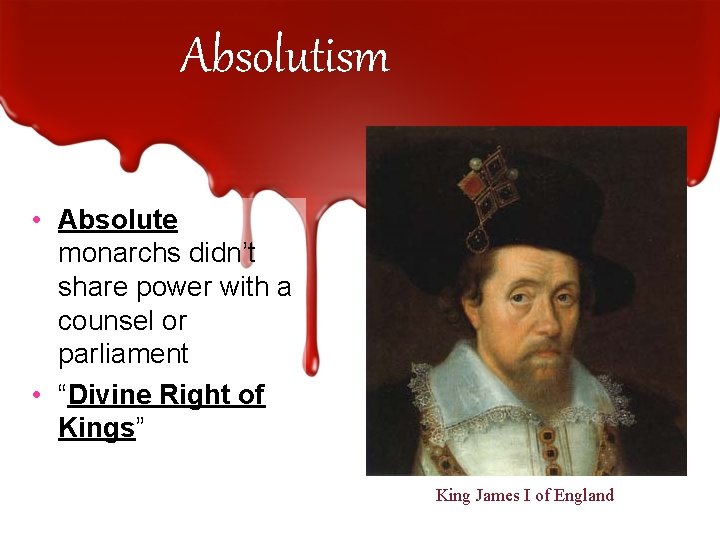
Absolutism • Absolute monarchs didn’t share power with a counsel or parliament • “Divine Right of Kings” King James I of England
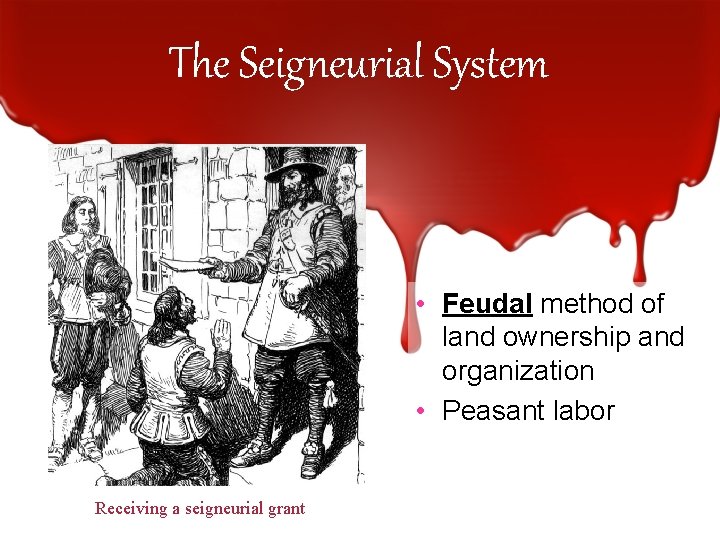
The Seigneurial System • Feudal method of land ownership and organization • Peasant labor Receiving a seigneurial grant
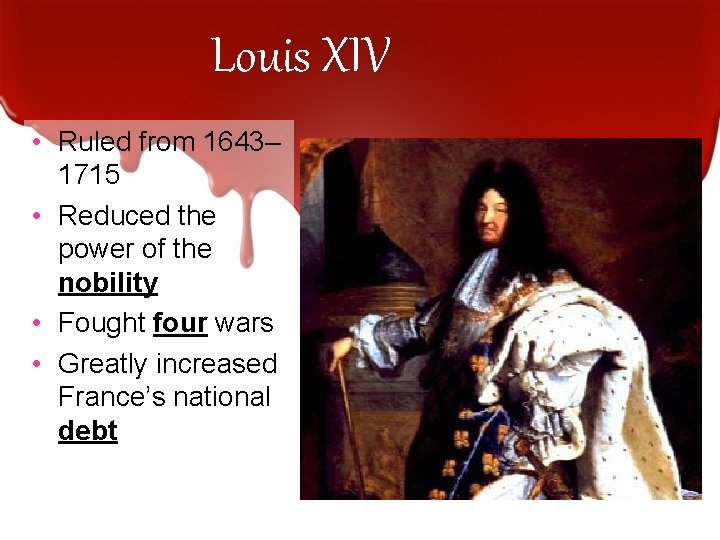
Louis XIV • Ruled from 1643– 1715 • Reduced the power of the nobility • Fought four wars • Greatly increased France’s national debt
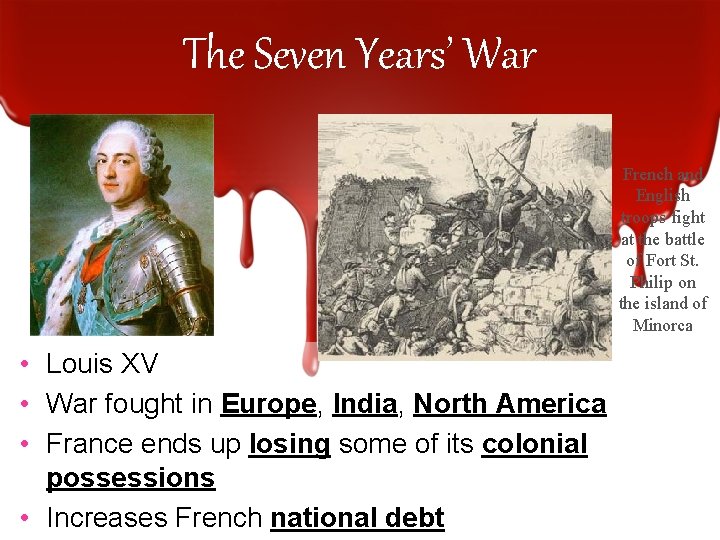
The Seven Years’ War French and English troops fight at the battle of Fort St. Philip on the island of Minorca • Louis XV • War fought in Europe, India, North America • France ends up losing some of its colonial possessions • Increases French national debt
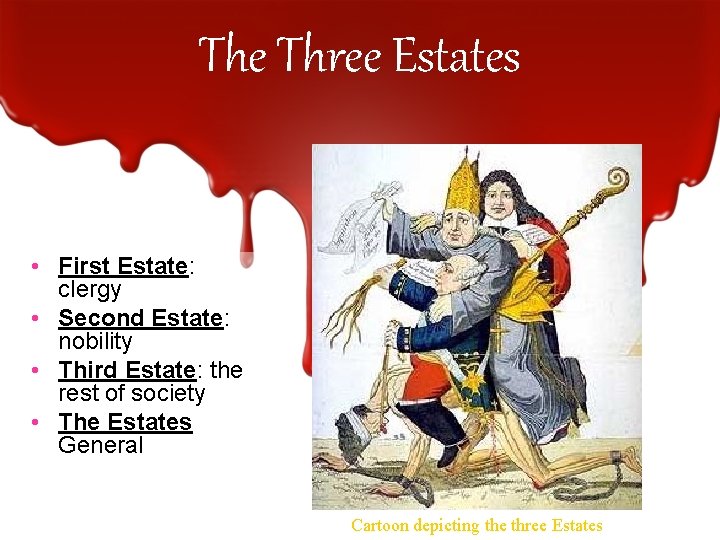
The Three Estates • First Estate: clergy • Second Estate: nobility • Third Estate: the rest of society • The Estates General Cartoon depicting the three Estates
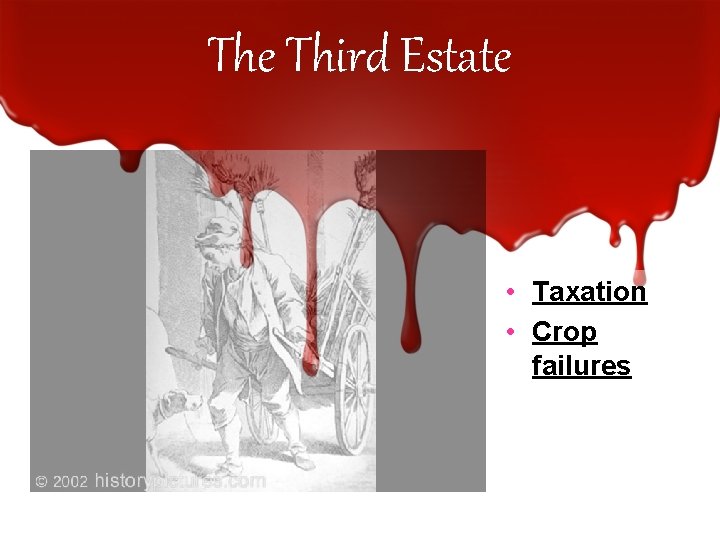
The Third Estate • Taxation • Crop failures
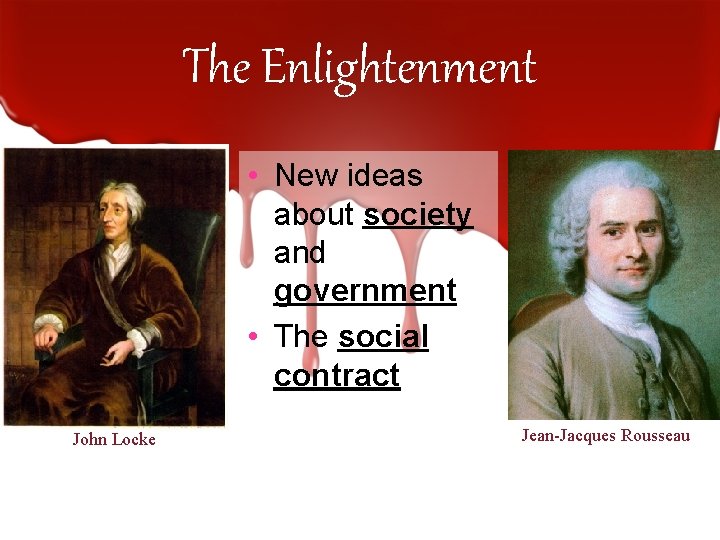
The Enlightenment • New ideas about society and government • The social contract John Locke Jean-Jacques Rousseau
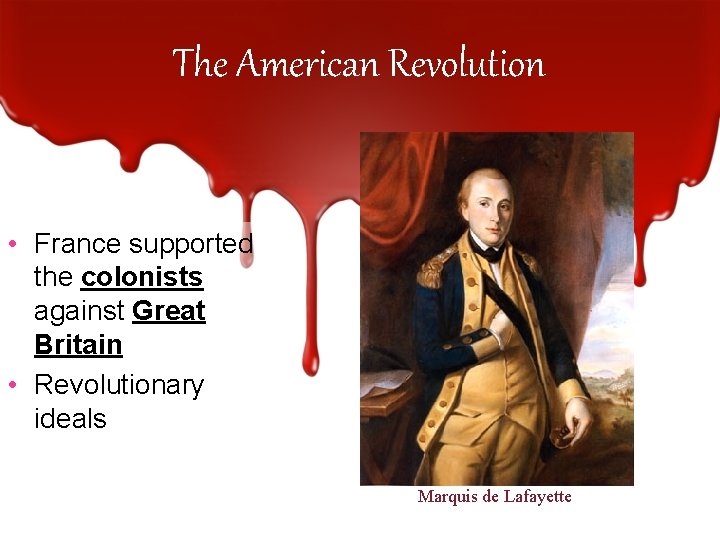
The American Revolution • France supported the colonists against Great Britain • Revolutionary ideals Marquis de Lafayette
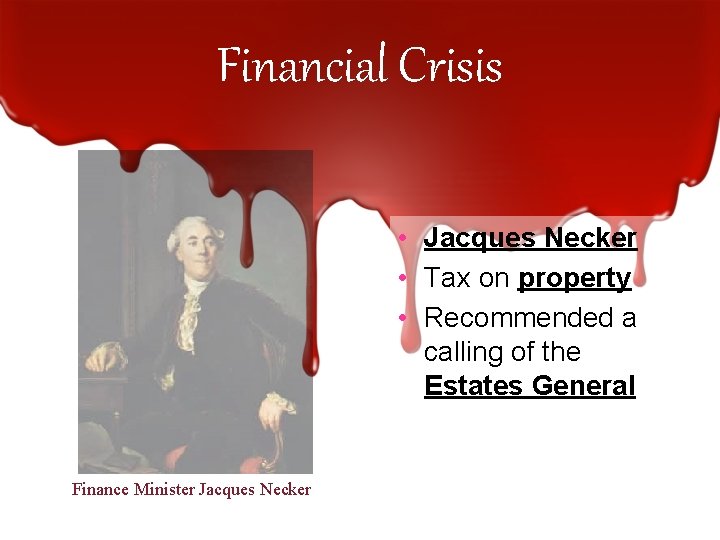
Financial Crisis • Jacques Necker • Tax on property • Recommended a calling of the Estates General Finance Minister Jacques Necker
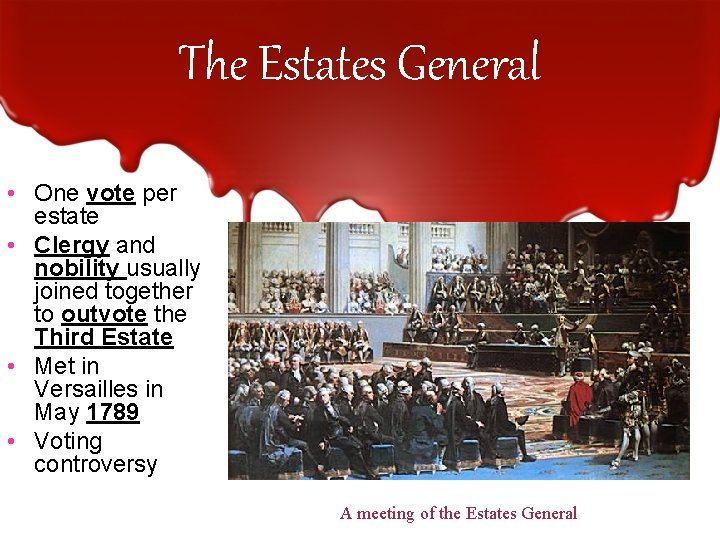
The Estates General • One vote per estate • Clergy and nobility usually joined together to outvote the Third Estate • Met in Versailles in May 1789 • Voting controversy A meeting of the Estates General
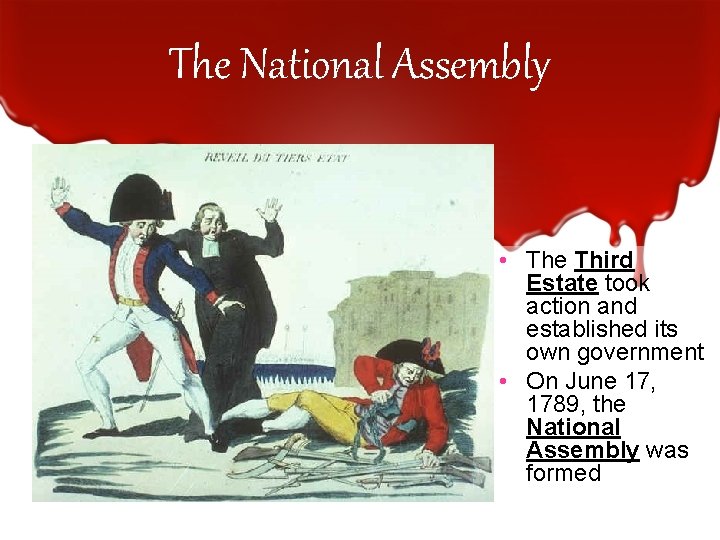
The National Assembly • The Third Estate took action and established its own government • On June 17, 1789, the National Assembly was formed
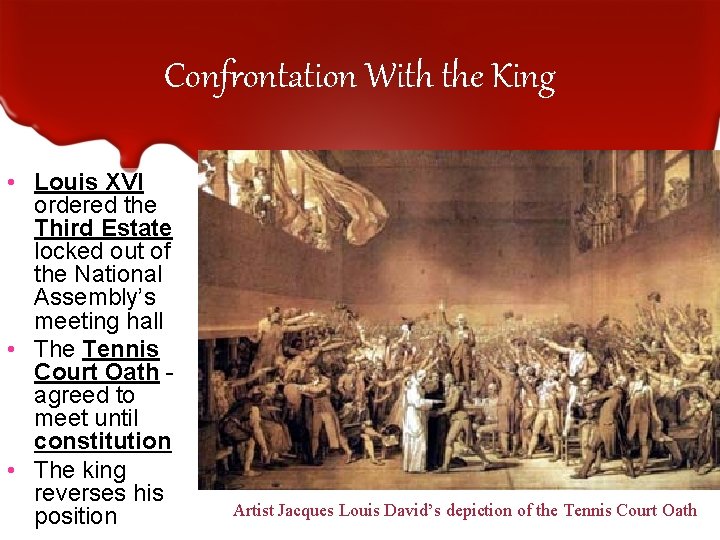
Confrontation With the King • Louis XVI ordered the Third Estate locked out of the National Assembly’s meeting hall • The Tennis Court Oath agreed to meet until constitution • The king reverses his position Artist Jacques Louis David’s depiction of the Tennis Court Oath
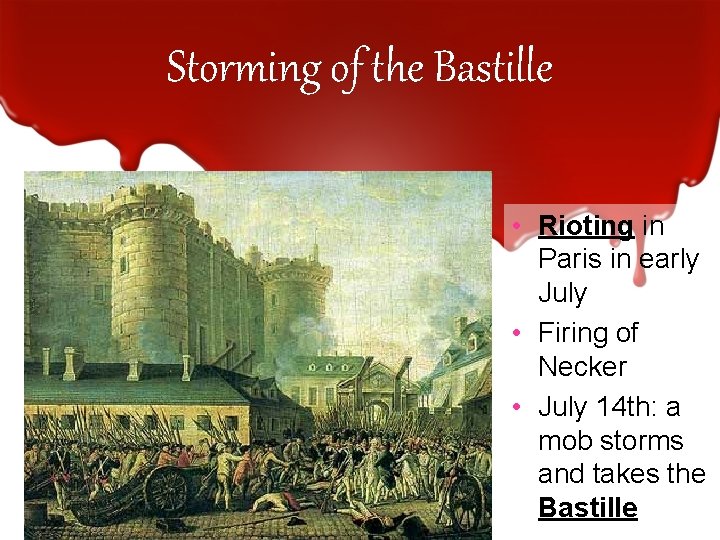
Storming of the Bastille • Rioting in Paris in early July • Firing of Necker • July 14 th: a mob storms and takes the Bastille
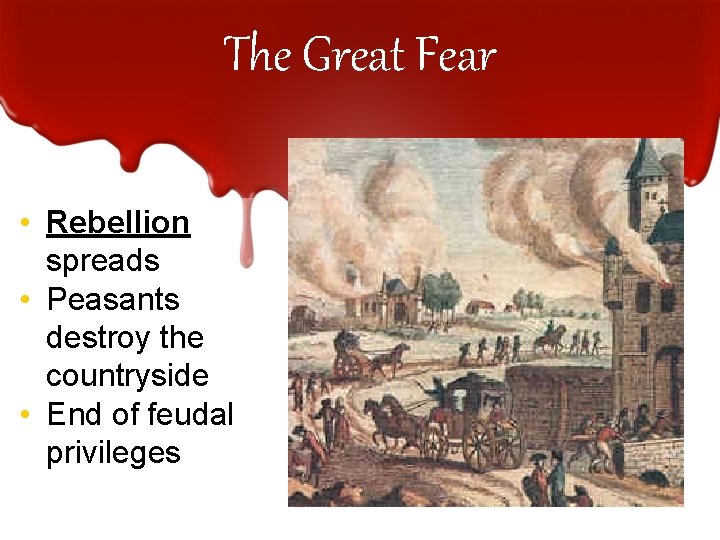
The Great Fear • Rebellion spreads • Peasants destroy the countryside • End of feudal privileges
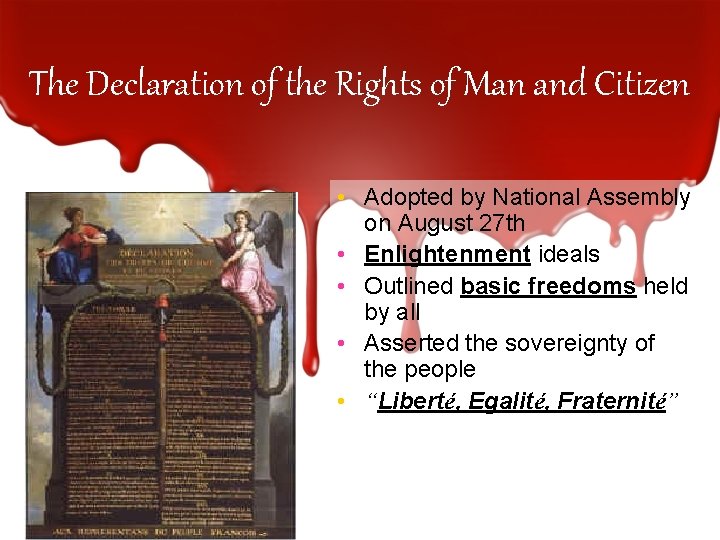
The Declaration of the Rights of Man and Citizen • Adopted by National Assembly on August 27 th • Enlightenment ideals • Outlined basic freedoms held by all • Asserted the sovereignty of the people • “Liberté, Egalité, Fraternité”
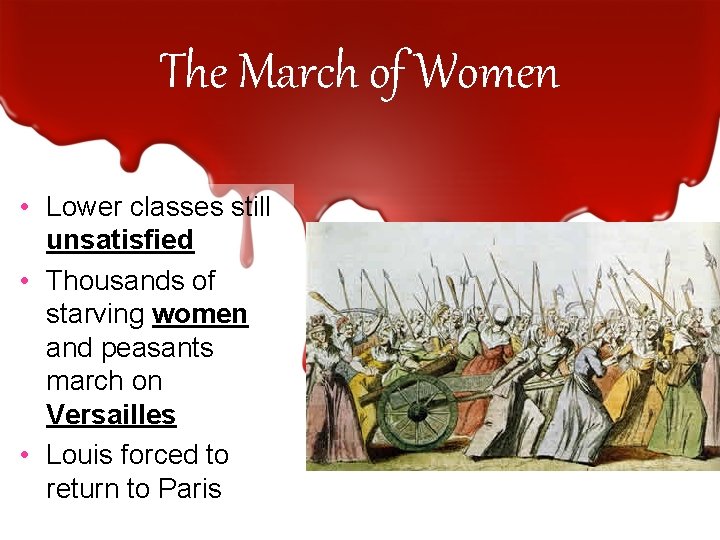
The March of Women • Lower classes still unsatisfied • Thousands of starving women and peasants march on Versailles • Louis forced to return to Paris
02/24/2017 Unit 9: On the Eve of Revolution Standard: “On the Eve of Revolution” SS. 912. W. 5. 6 Summarize the important causes, events, and effects of the French Revolution including the rise and rule of Napoleon. Pg. 466 to 472 • On pg. 1: As you read, write down the causes of the French Revolution in each arrow. Include one detail for each cause. (Continued from Friday) • On pg. 2: Include who was in each estate, power they had, troubles they faced, what % of the population they were, and their role in the Revolution. Be sure to name the Monarch at the top, too! LEQ: What were the causes of the French Revolution? Agenda: 1. Find the paper with the four arrows from Friday 2. Complete “On the Eve of Revolution” 3. Answer Q’s 6 and 7 on page 472
02/28/2017 Unit 9: Radical Days Standard: LEQ: What were the major events and effects of the French Revolution? Agenda: SS. 912. W. 5. 6 Summarize the important causes, events, and effects of the French Revolution including the rise and rule of Napoleon. 1. Bell Work -> 2. Complete “Radical Days” guided notes using p. 478 -483 3. Write a diary entry from the perspective of someone during one of the events on your timeline Bell Work: “The tree of liberty only grows when watered by the blood of tyrants. ” - Bertrand Barère de Vieuzac What do you think this quote means? Do you agree or disagree with it? Why?