
022310 Segmentation and Grouping Computer Vision CS 543

![Segmentation for efficiency [Felzenszwalb and Huttenlocher 2004] [Hoiem et al. 2005, Mori 2005] [Shi](https://slidetodoc.com/presentation_image_h2/1a91b4100be76c292ae5262434971c4c/image-19.jpg "Segmentation for efficiency [Felzenszwalb and Huttenlocher 2004] [Hoiem et al. 2005, Mori 2005] [Shi")
- Slides: 54
02/23/10 Segmentation and Grouping Computer Vision CS 543 / ECE 549 University of Illinois Derek Hoiem
Last week • Clustering • EM
Today’s class • More on EM • Segmentation and grouping – Gestalt cues – By boundaries (watershed) – By clustering (mean-shift)
EM
Gestalt grouping
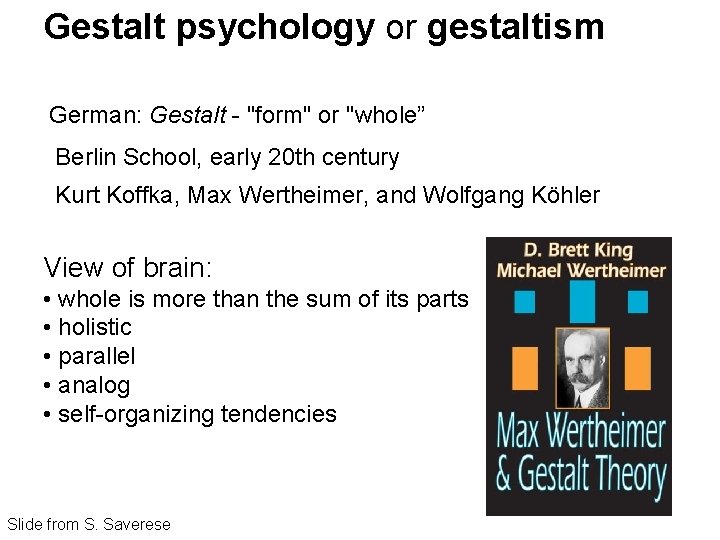
Gestalt psychology or gestaltism German: Gestalt - "form" or "whole” Berlin School, early 20 th century Kurt Koffka, Max Wertheimer, and Wolfgang Köhler View of brain: • whole is more than the sum of its parts • holistic • parallel • analog • self-organizing tendencies Slide from S. Saverese
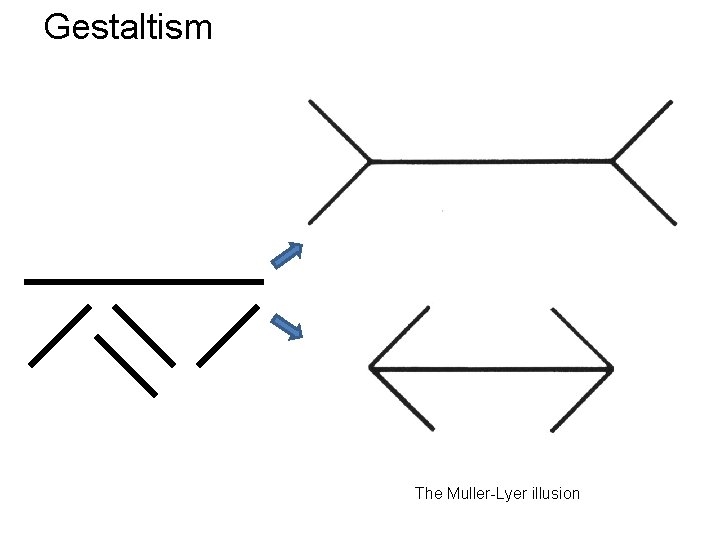
Gestaltism The Muller-Lyer illusion
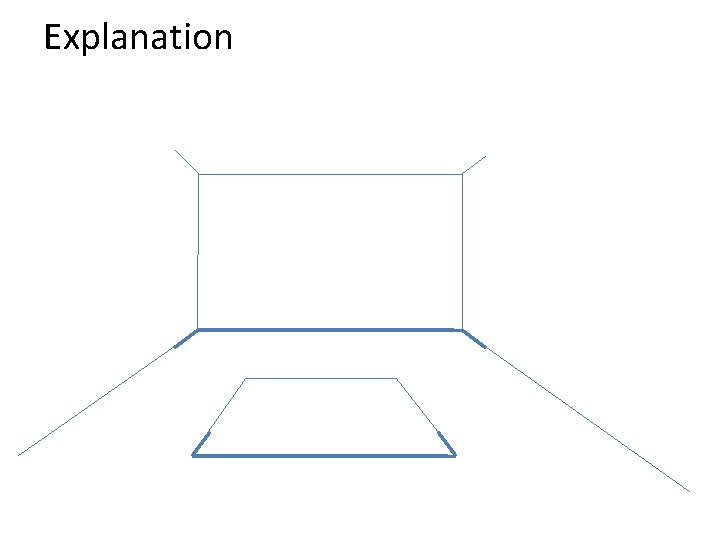
Explanation
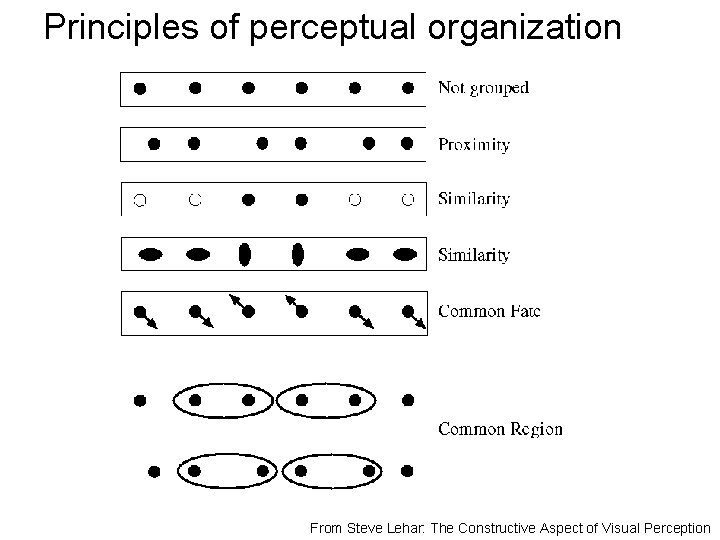
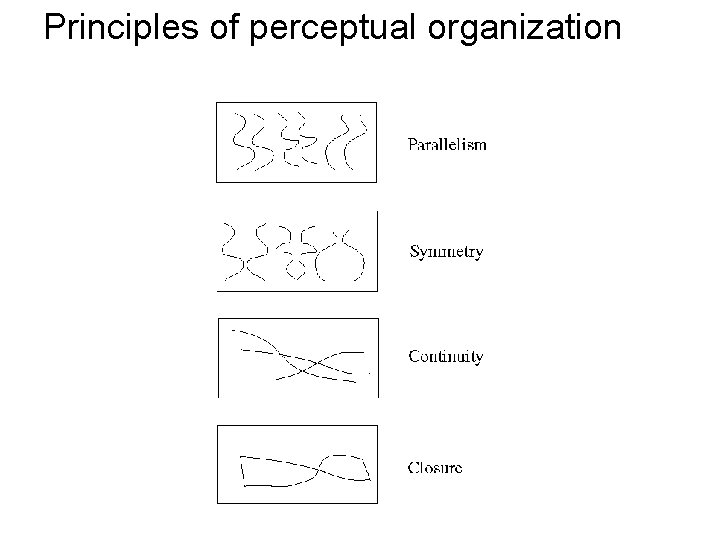
Principles of perceptual organization From Steve Lehar: The Constructive Aspect of Visual Perception
Principles of perceptual organization
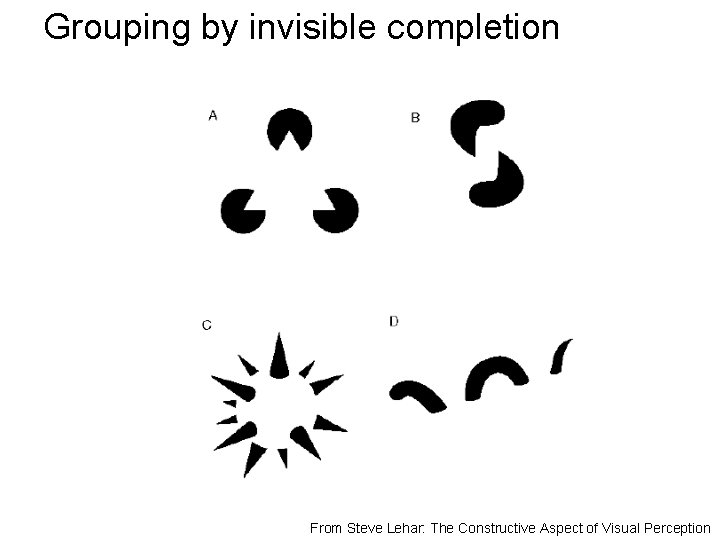
Grouping by invisible completion From Steve Lehar: The Constructive Aspect of Visual Perception
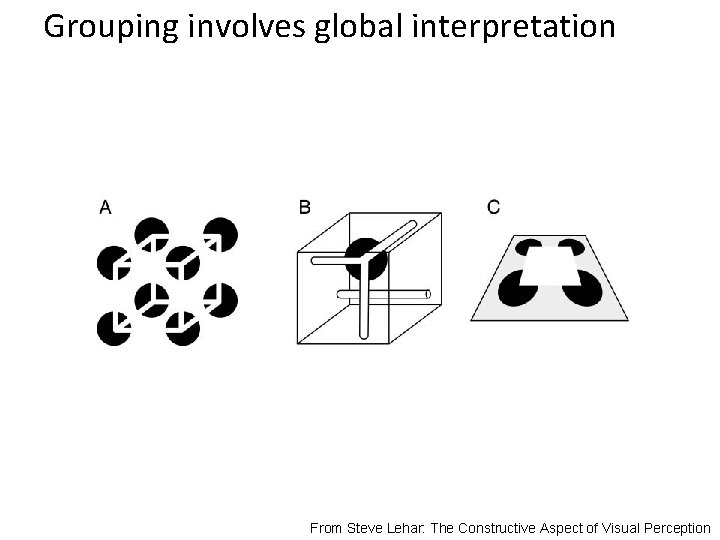
Grouping involves global interpretation From Steve Lehar: The Constructive Aspect of Visual Perception
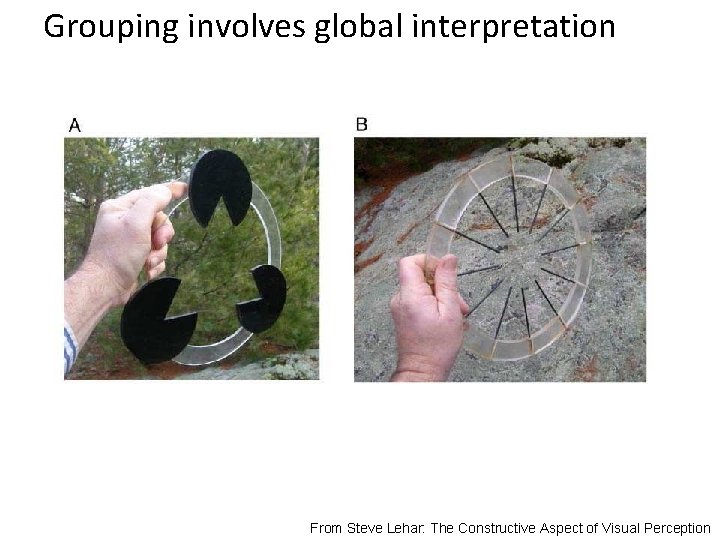
Grouping involves global interpretation From Steve Lehar: The Constructive Aspect of Visual Perception
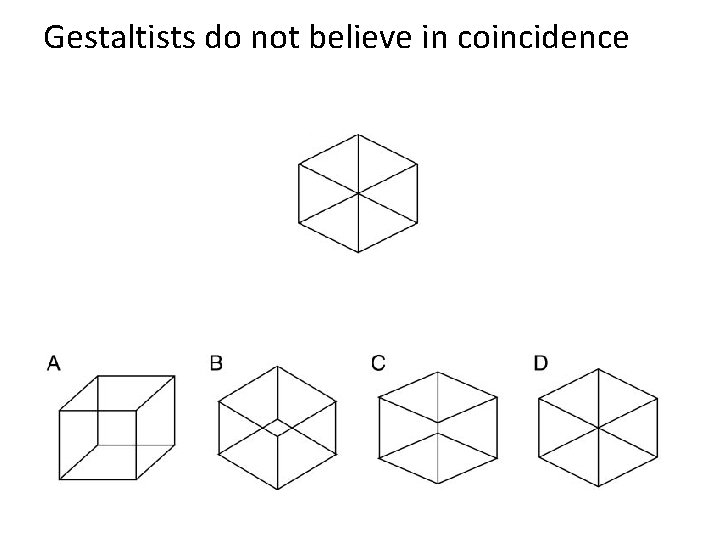
Gestaltists do not believe in coincidence
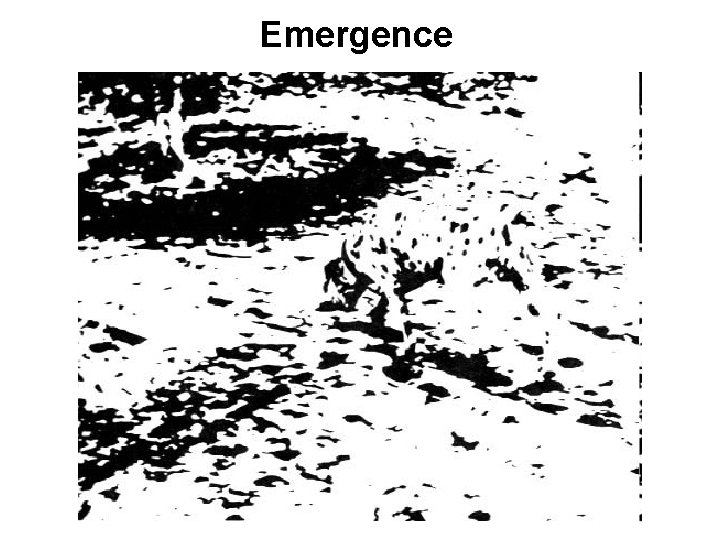
Emergence
Gestalt cues • Good intuition and basic principles for grouping • Difficult to implement in practice • Sometimes used for occlusion reasoning
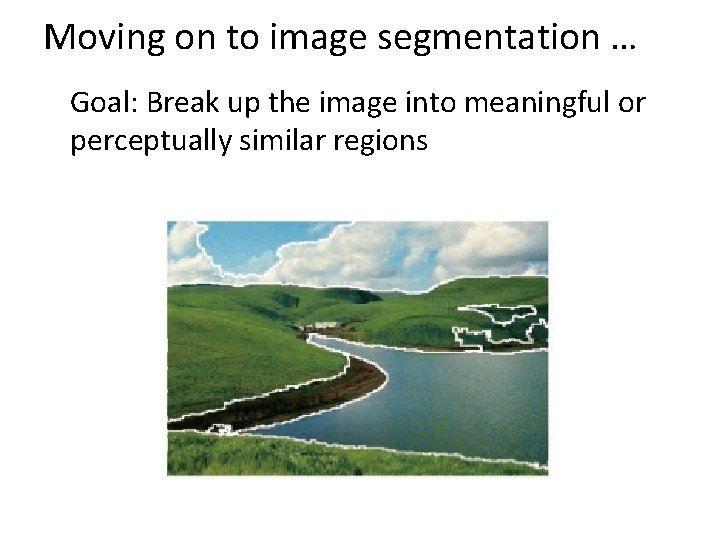
Moving on to image segmentation … Goal: Break up the image into meaningful or perceptually similar regions
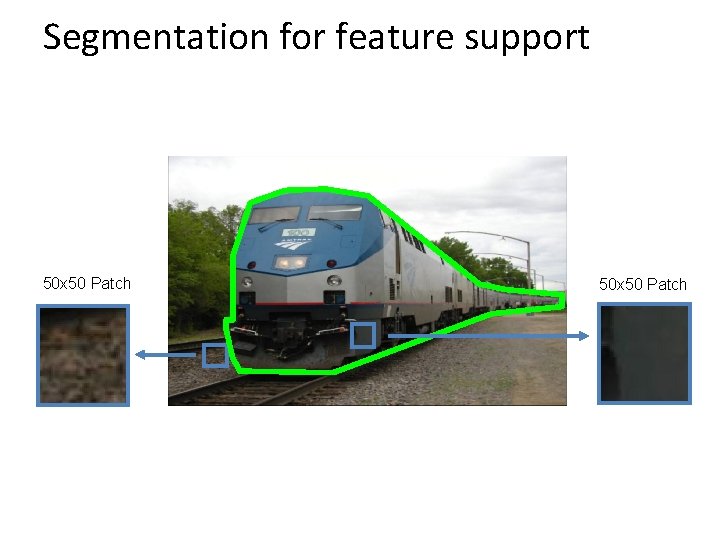
Segmentation for feature support 50 x 50 Patch
Segmentation for efficiency [Felzenszwalb and Huttenlocher 2004] [Hoiem et al. 2005, Mori 2005] [Shi and Malik 2001]
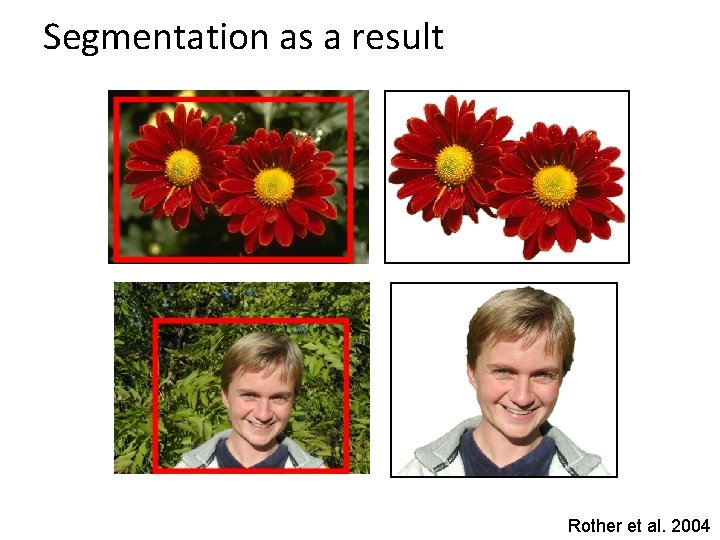
Segmentation as a result Rother et al. 2004
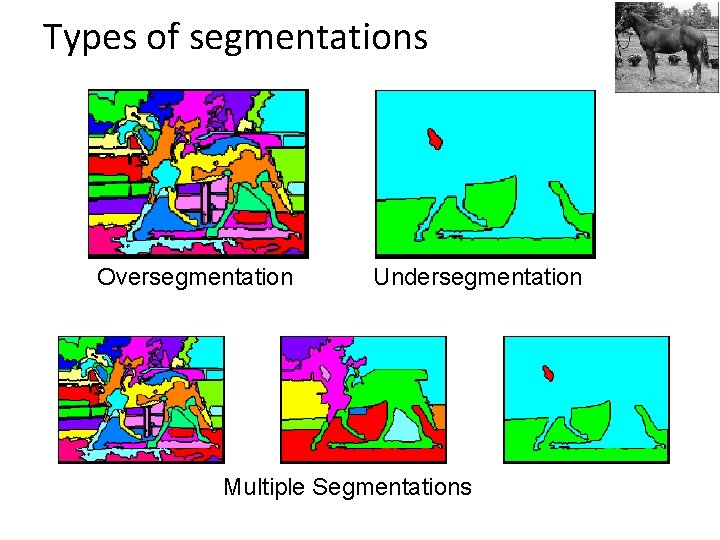
Types of segmentations Oversegmentation Undersegmentation Multiple Segmentations
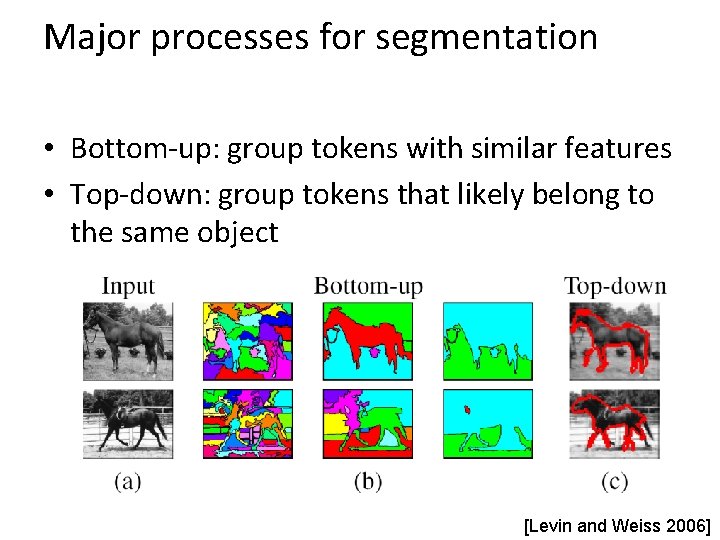
Major processes for segmentation • Bottom-up: group tokens with similar features • Top-down: group tokens that likely belong to the same object [Levin and Weiss 2006]
Segmentation using clustering • Kmeans • Mean-shift
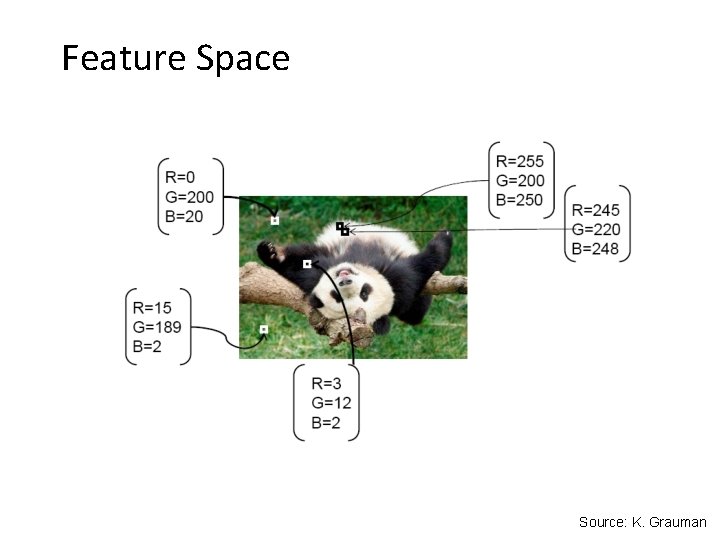
Feature Space Source: K. Grauman
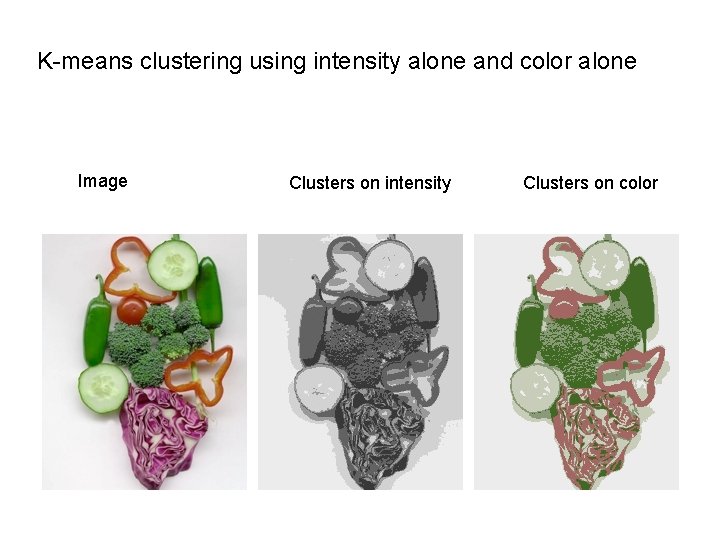
K-means clustering using intensity alone and color alone Image Clusters on intensity Clusters on color
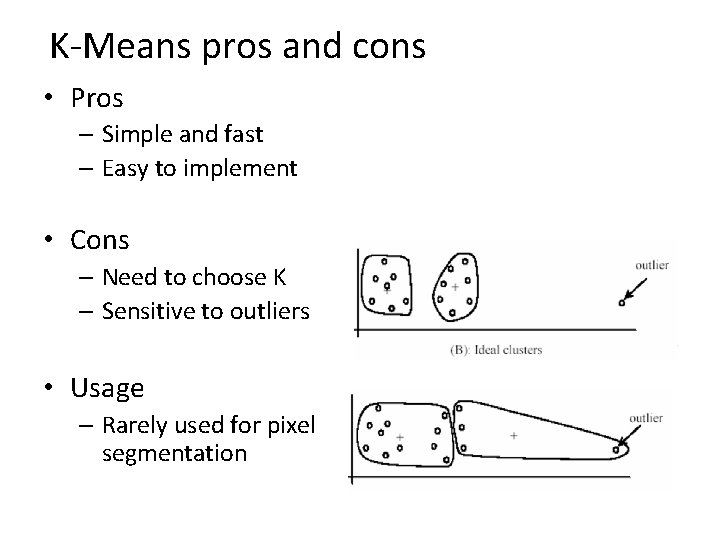
K-Means pros and cons • Pros – Simple and fast – Easy to implement • Cons – Need to choose K – Sensitive to outliers • Usage – Rarely used for pixel segmentation
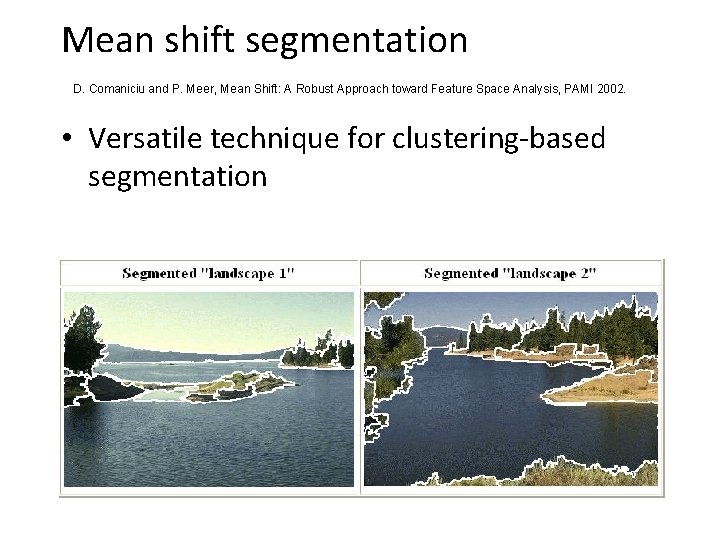
Mean shift segmentation D. Comaniciu and P. Meer, Mean Shift: A Robust Approach toward Feature Space Analysis, PAMI 2002. • Versatile technique for clustering-based segmentation
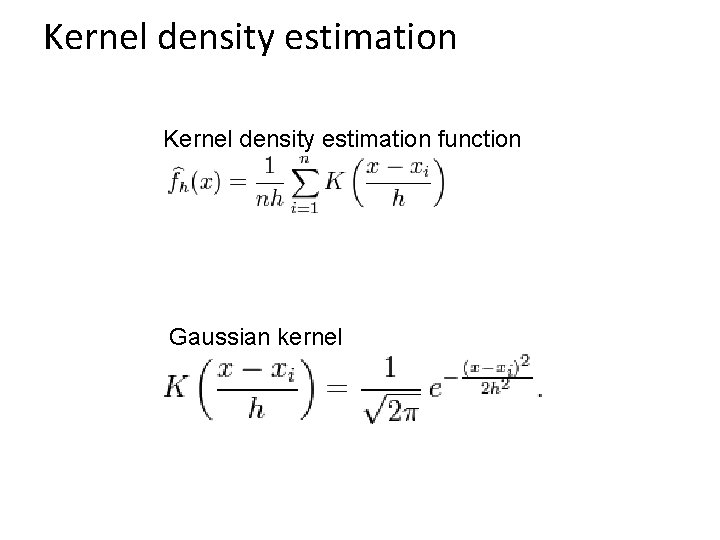
Kernel density estimation function Gaussian kernel
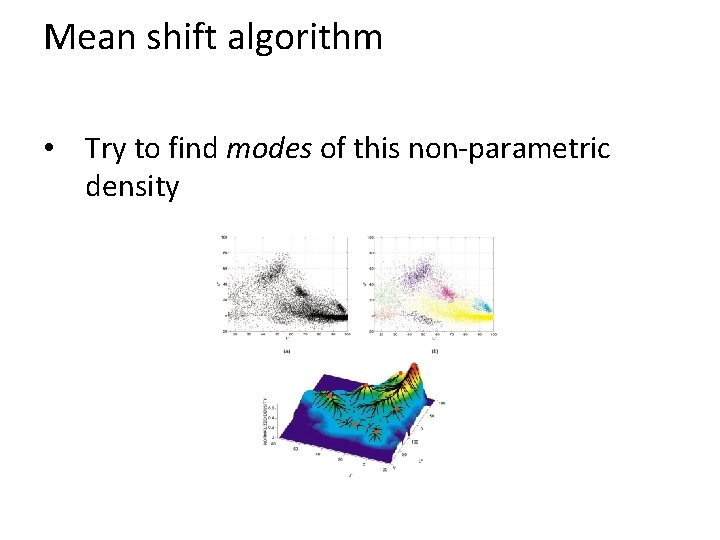
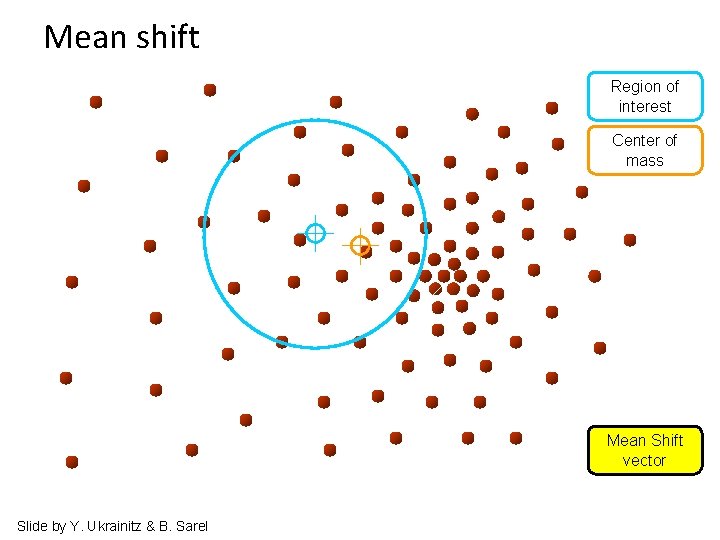
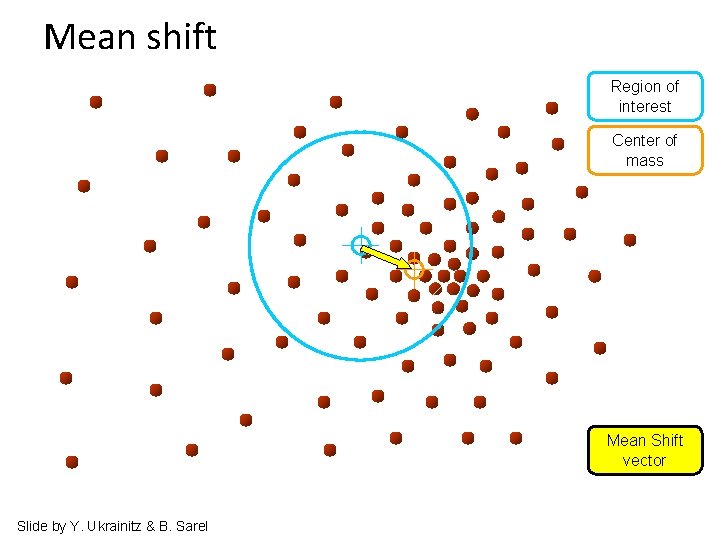
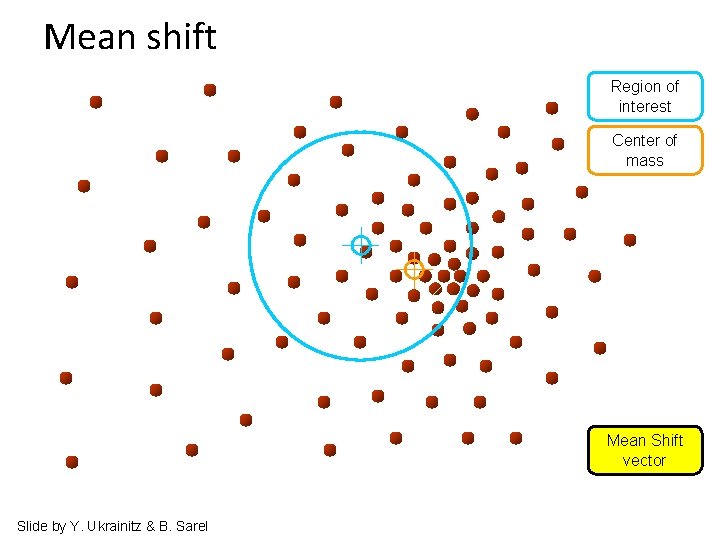
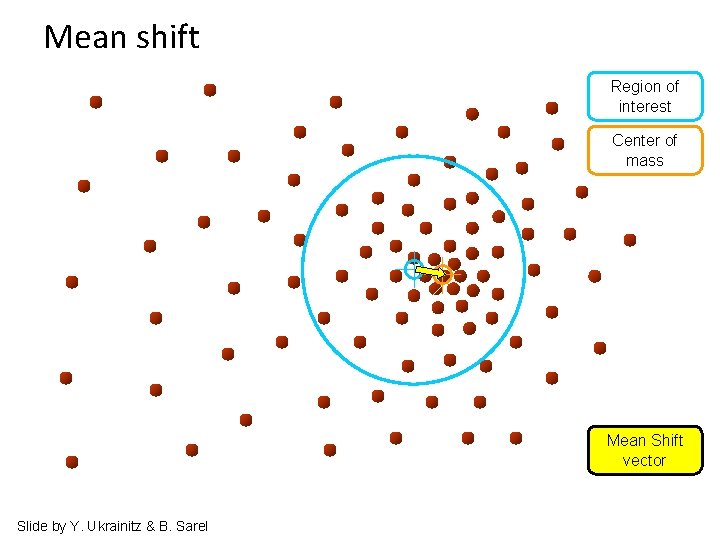
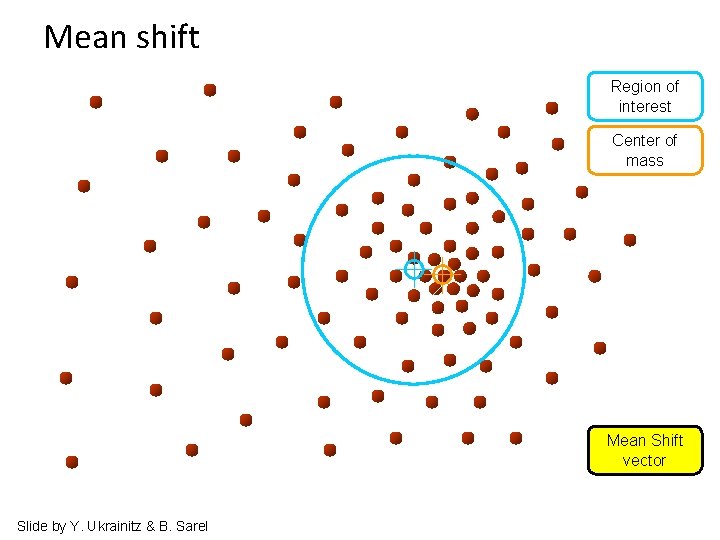
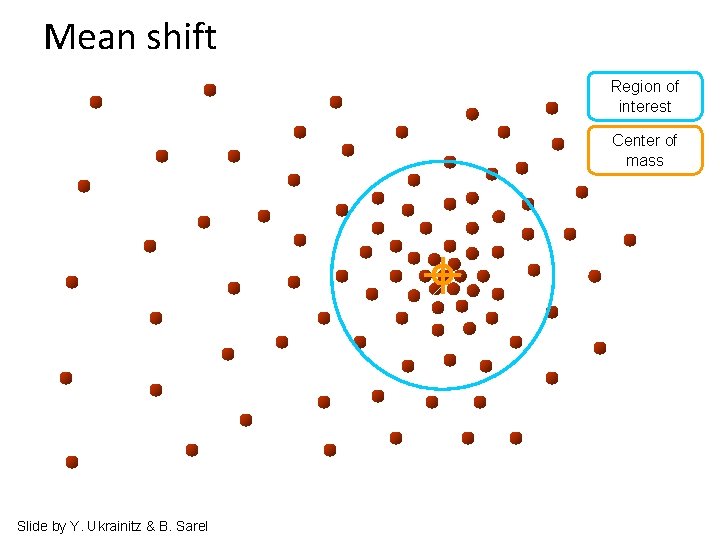
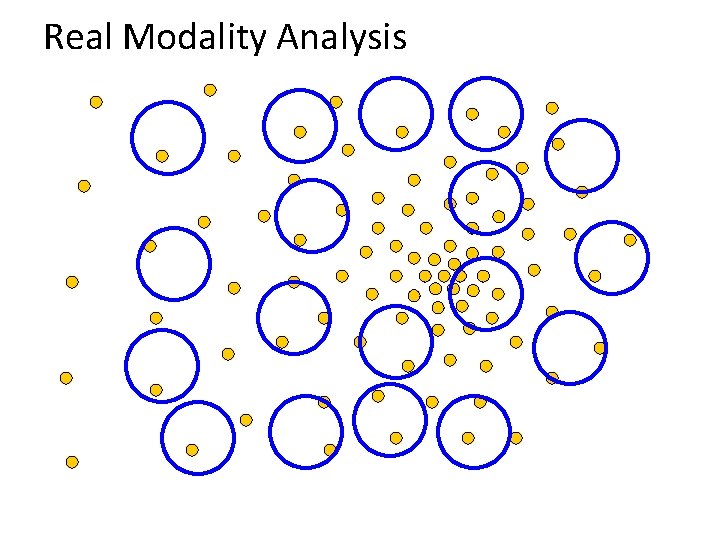
Mean shift algorithm • Try to find modes of this non-parametric density
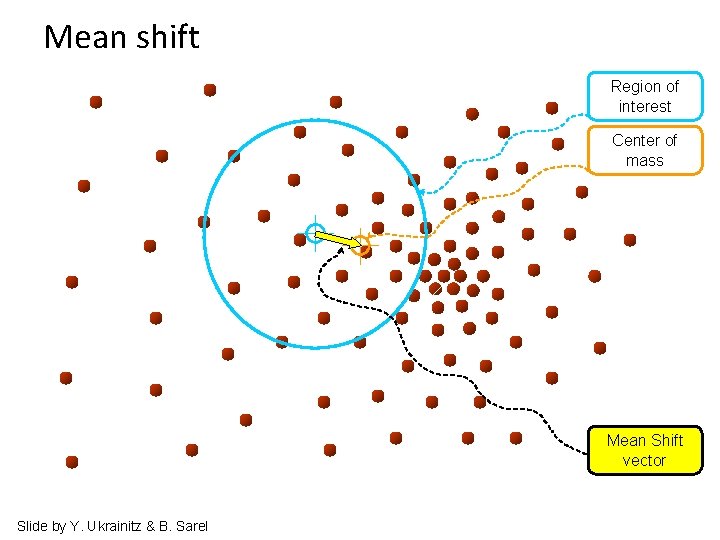
Mean shift Region of interest Center of mass Mean Shift vector Slide by Y. Ukrainitz & B. Sarel
Mean shift Region of interest Center of mass Mean Shift vector Slide by Y. Ukrainitz & B. Sarel
Mean shift Region of interest Center of mass Mean Shift vector Slide by Y. Ukrainitz & B. Sarel
Mean shift Region of interest Center of mass Mean Shift vector Slide by Y. Ukrainitz & B. Sarel
Mean shift Region of interest Center of mass Mean Shift vector Slide by Y. Ukrainitz & B. Sarel
Mean shift Region of interest Center of mass Mean Shift vector Slide by Y. Ukrainitz & B. Sarel
Mean shift Region of interest Center of mass Slide by Y. Ukrainitz & B. Sarel
Real Modality Analysis
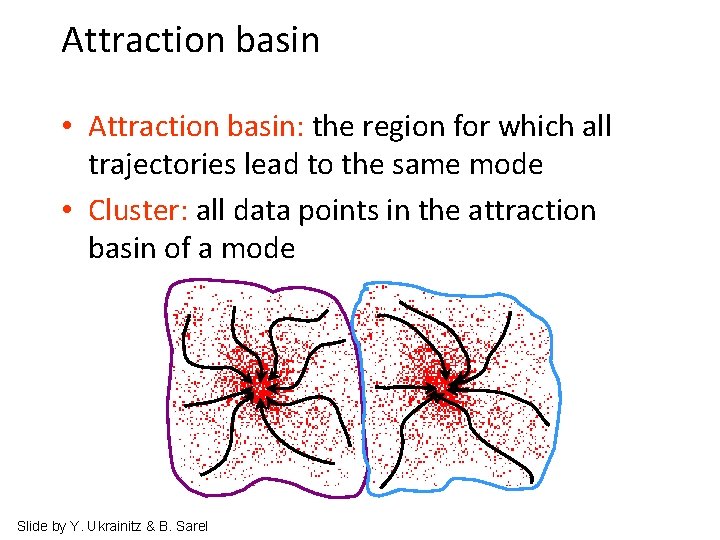
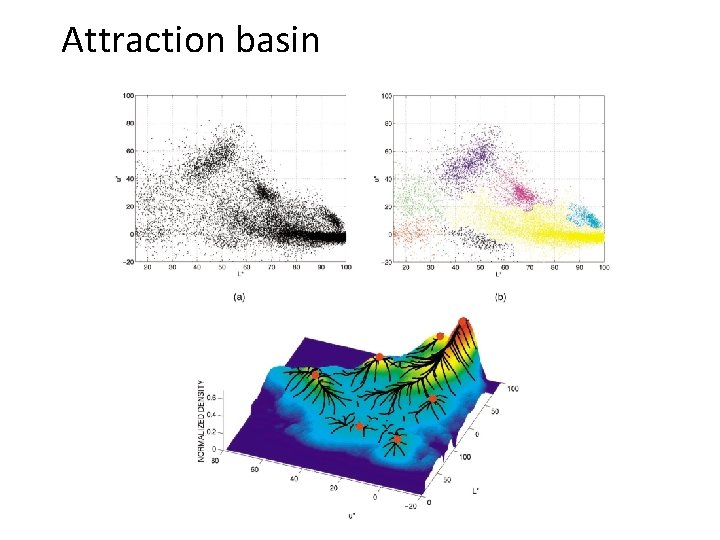
Attraction basin • Attraction basin: the region for which all trajectories lead to the same mode • Cluster: all data points in the attraction basin of a mode Slide by Y. Ukrainitz & B. Sarel
Attraction basin
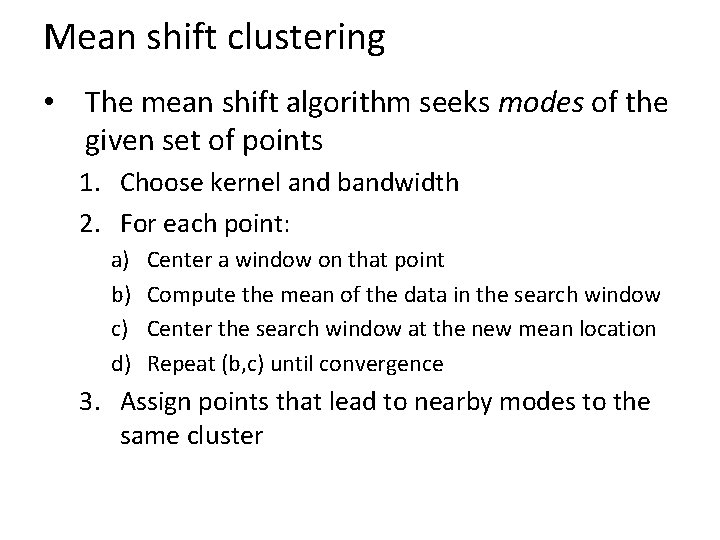
Mean shift clustering • The mean shift algorithm seeks modes of the given set of points 1. Choose kernel and bandwidth 2. For each point: a) b) c) d) Center a window on that point Compute the mean of the data in the search window Center the search window at the new mean location Repeat (b, c) until convergence 3. Assign points that lead to nearby modes to the same cluster
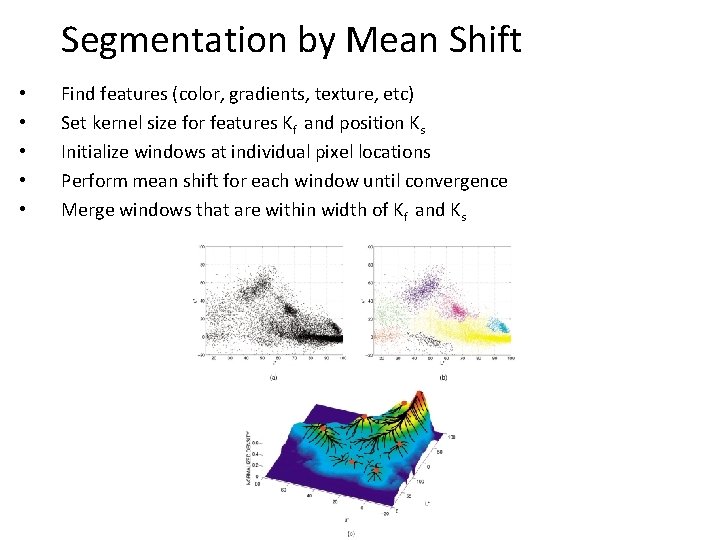
Segmentation by Mean Shift • • • Find features (color, gradients, texture, etc) Set kernel size for features Kf and position Ks Initialize windows at individual pixel locations Perform mean shift for each window until convergence Merge windows that are within width of Kf and Ks
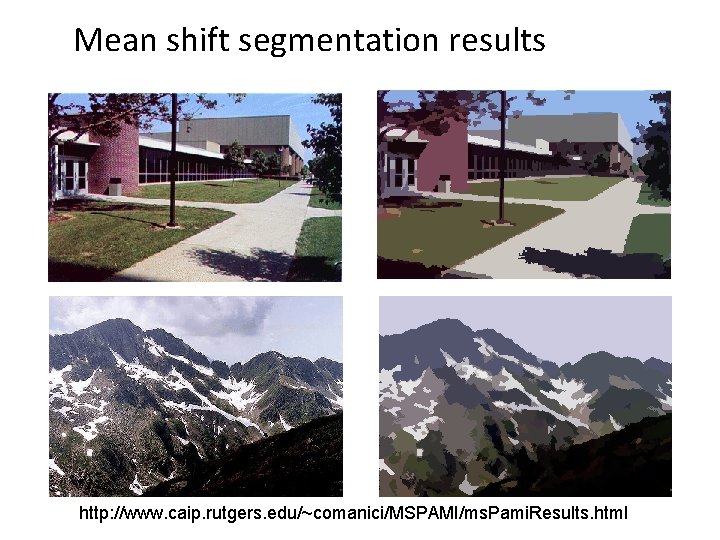
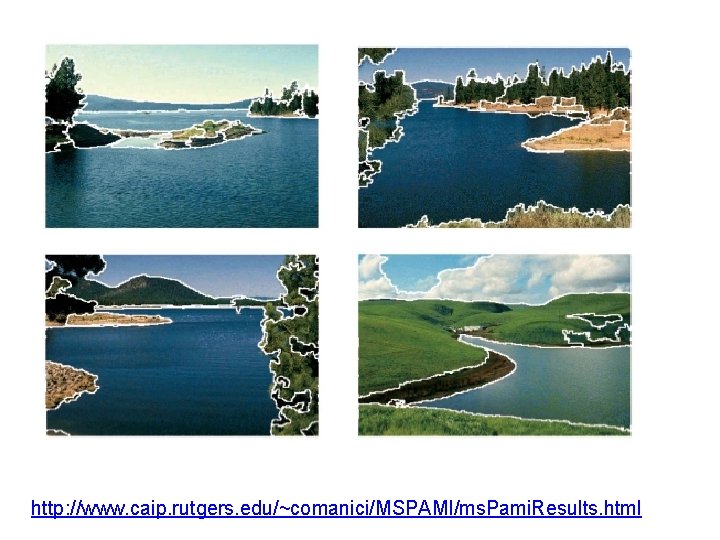
Mean shift segmentation results http: //www. caip. rutgers. edu/~comanici/MSPAMI/ms. Pami. Results. html
http: //www. caip. rutgers. edu/~comanici/MSPAMI/ms. Pami. Results. html
Mean-shift: other issues • Speedups – Uniform kernel (much faster but not as good) – Binning or hierarchical methods – Approximate nearest neighbor search • Methods to adapt kernel size depending on data density • Lots of theoretical support D. Comaniciu and P. Meer, Mean Shift: A Robust Approach toward Feature Space Analysis, PAMI 2002.
Mean shift pros and cons • Pros – Good general-practice segmentation – Finds variable number of regions – Robust to outliers • Cons – Have to choose kernel size in advance – Original algorithm doesn’t deal well with high dimensions • When to use it – Oversegmentatoin – Multiple segmentations – Other tracking and clustering applications
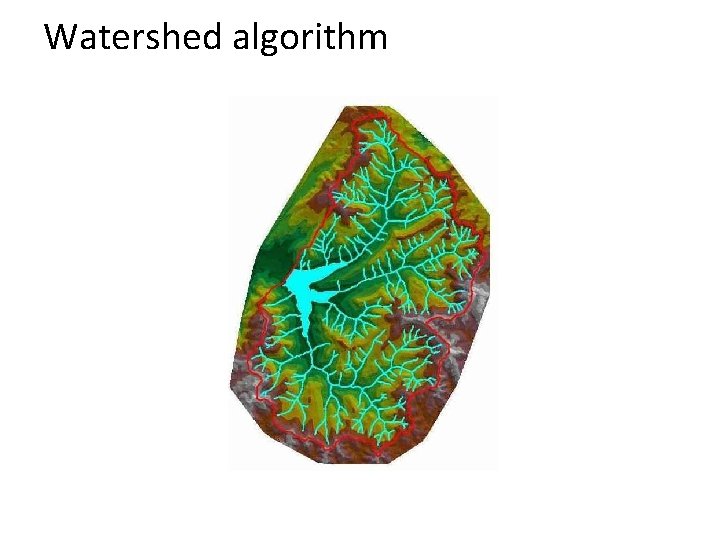
Watershed algorithm
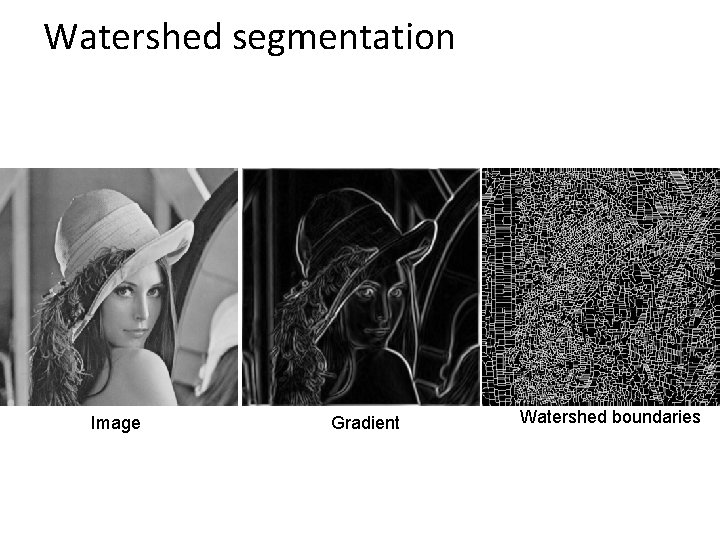
Watershed segmentation Image Gradient Watershed boundaries
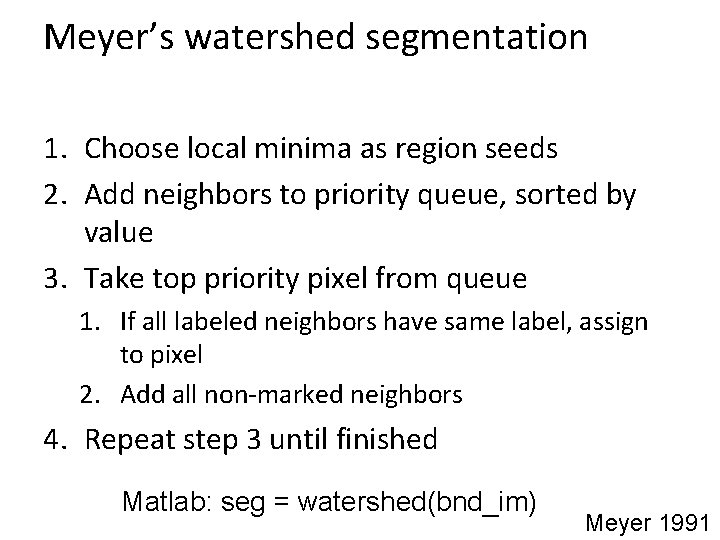
Meyer’s watershed segmentation 1. Choose local minima as region seeds 2. Add neighbors to priority queue, sorted by value 3. Take top priority pixel from queue 1. If all labeled neighbors have same label, assign to pixel 2. Add all non-marked neighbors 4. Repeat step 3 until finished Matlab: seg = watershed(bnd_im) Meyer 1991
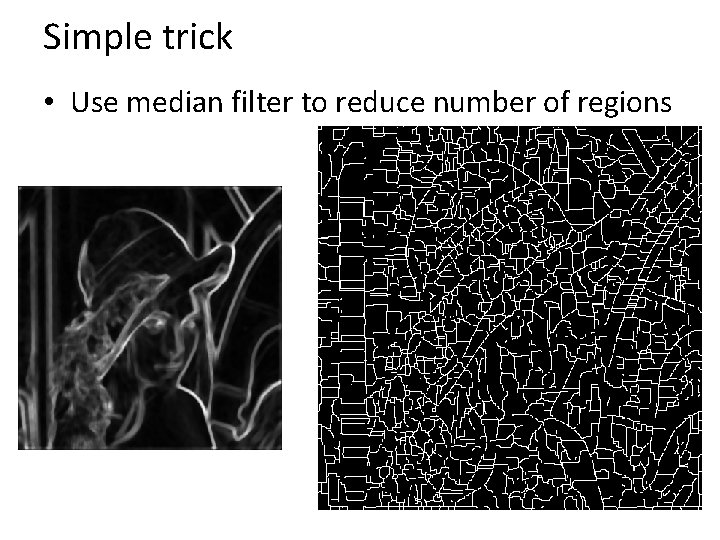
Simple trick • Use median filter to reduce number of regions
Watershed usage • Use as a starting point for hierarchical segmentation – Ultrametric contour map (Arbelaez 2006) • Works with any soft boundaries – Pb – Canny – Etc.
Watershed pros and cons • Pros – Fast (< 1 sec for 512 x 512 image) – Among best methods for hierarchical segmentation • Cons – Only as good as the soft boundaries – Not easy to get variety of regions for multiple segmentations – No top-down information • Usage – Preferred algorithm for hierarchical segmentation
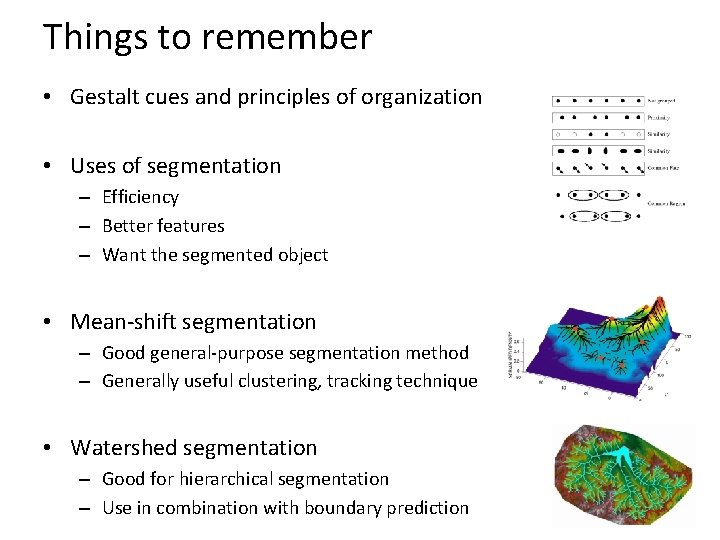
Things to remember • Gestalt cues and principles of organization • Uses of segmentation – Efficiency – Better features – Want the segmented object • Mean-shift segmentation – Good general-purpose segmentation method – Generally useful clustering, tracking technique • Watershed segmentation – Good for hierarchical segmentation – Use in combination with boundary prediction
Further reading • Mean-shift paper by Comaniciu and Meer http: //www. caip. rutgers. edu/~comanici/Papers/Ms. Robust. Approach. pdf • Adaptive mean shift in higher dimensions http: //mis. hevra. haifa. ac. il/~ishimshoni/papers/chap 9. pdf • Contours to regions (watershed): Arbelaez et al. 2009 http: //www. eecs. berkeley. edu/~arbelaez/publications/Arbelaez_Maire_Fowlkes_Malik_CVPR 2009. pdf
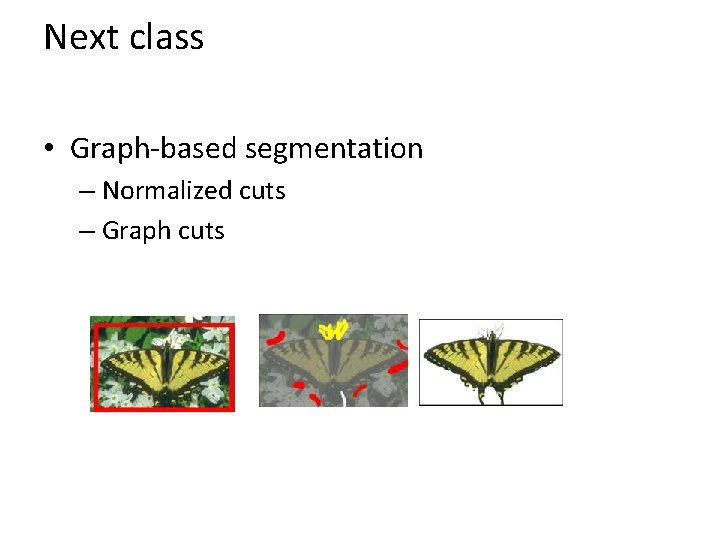
Next class • Graph-based segmentation – Normalized cuts – Graph cuts