
02 Define an Effective EndtoEnd Software Development Lifecycle

- Slides: 41
02 | Define an Effective End-to-End Software Development Lifecycle Steven Borg | Co-founder & Strategist, Northwest Cadence Anthony Borton | ALM Consultant, Enhance ALM
Module Overview • Understand the value of an end-to-end view of Application Lifecycle Management (ALM) tools and practices • Explain the benefits of fast feedback • Implement strategies to reduce end-to-end cycle time • Implement strategies to improve software quality • Implement strategies to reduce waste • Create a process improvement plan
Tips • This section is all about attitude and mindset, not knowing specific details. • Having the right mindset will get you through nearly all of the questions, without having to focus on specific technical details.
Understand the value of an end-to-end view of Application Lifecycle Management (ALM) tools and practices Microsoft Virtual Academy
What the Study Guide says… • Understand the value of an end-to-end view of Application Lifecycle Management (ALM) tools and practices. – understanding that an observable problem may be indicative of a more general process issue – explaining the difference between optimizing a piece of the ALM process such as manual testing and optimizing the entire ALM process
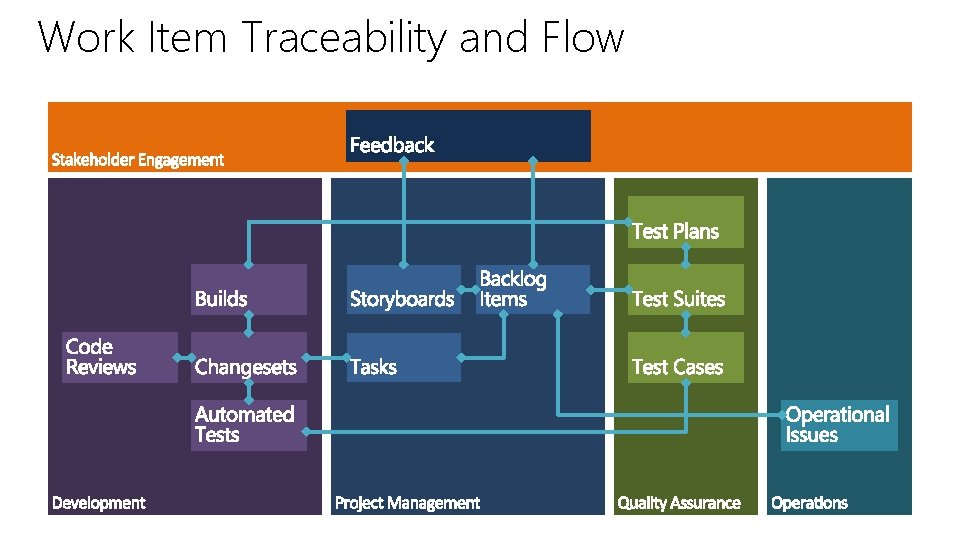
Work Item Traceability and Flow
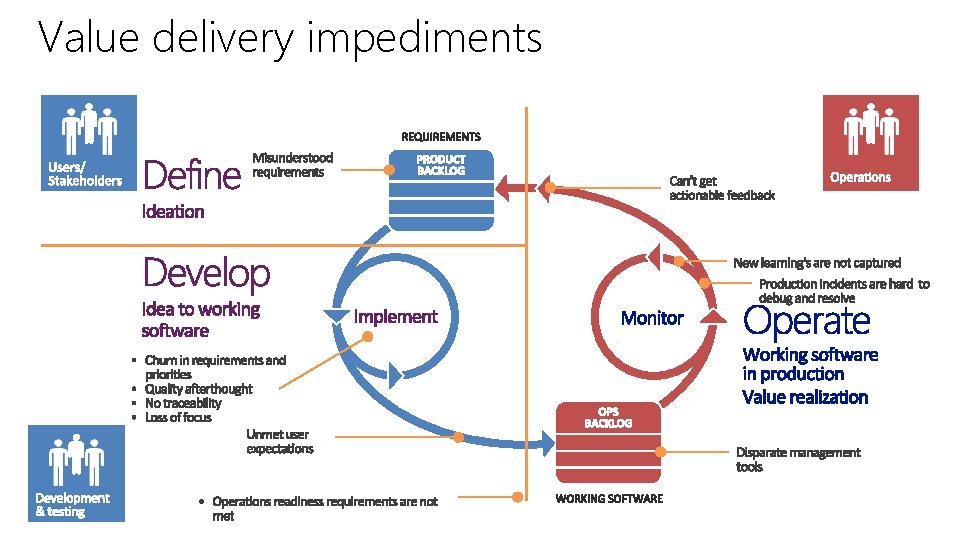
Value delivery impediments
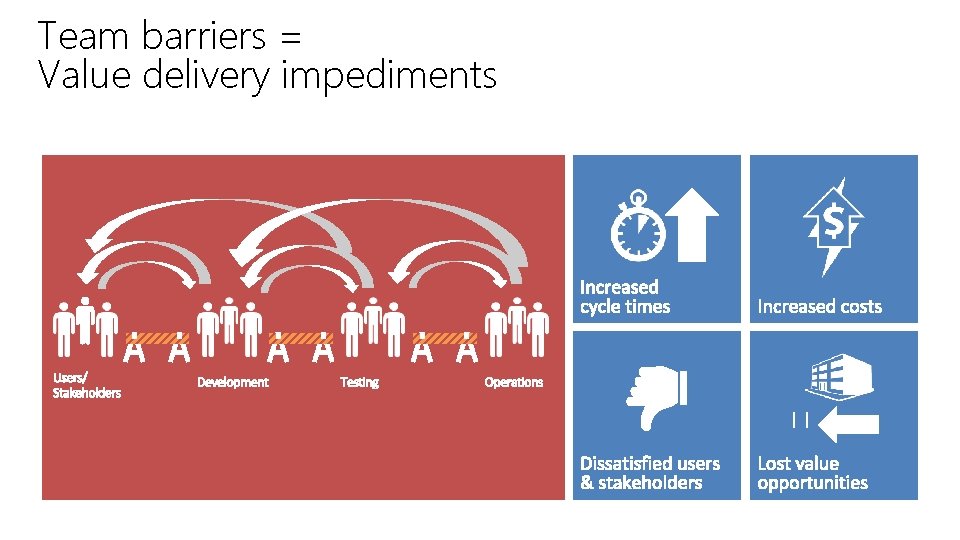
Team barriers = Value delivery impediments ||
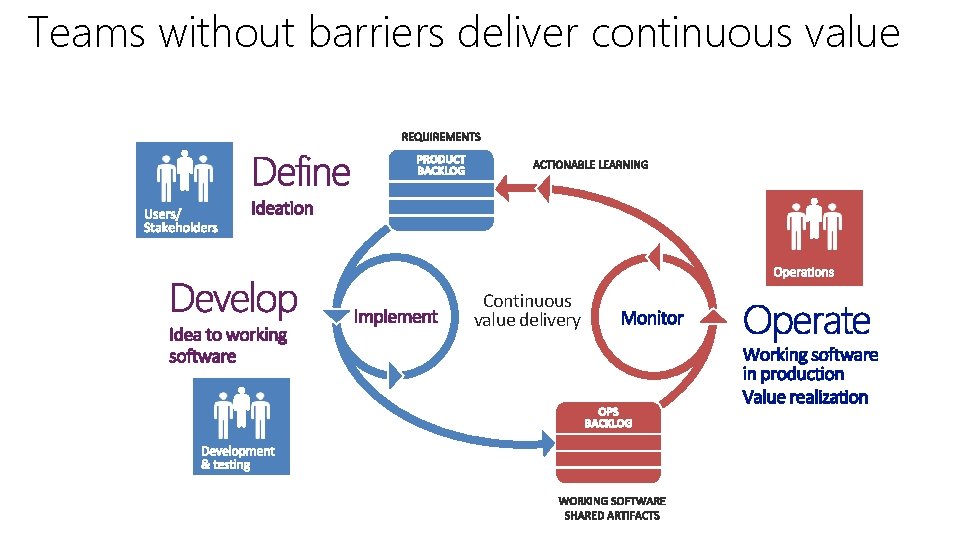
Teams without barriers deliver continuous value Continuous value delivery
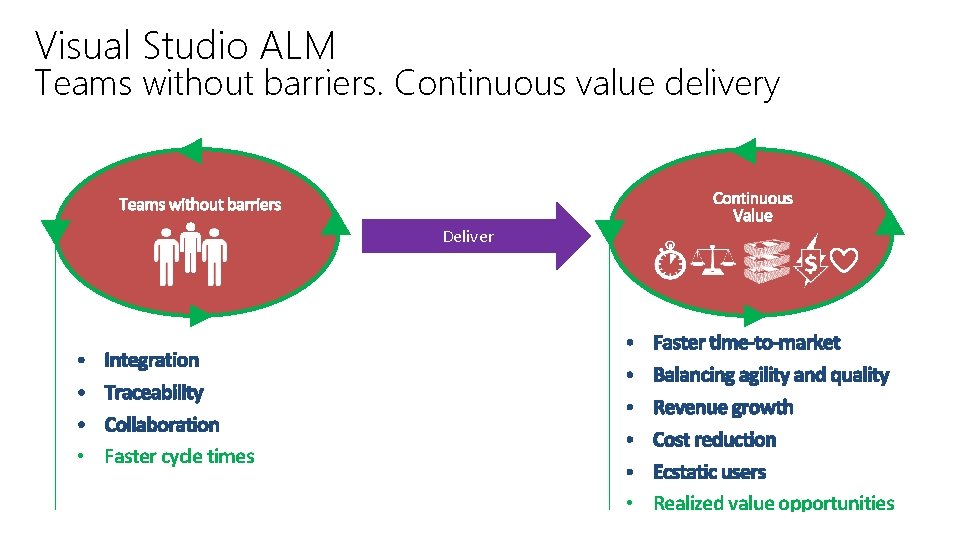
Visual Studio ALM Teams without barriers. Continuous value delivery Deliver • Faster cycle times • Realized value opportunities
Microsoft Virtual Academy Explain the benefits of fast feedback
What the Study Guide says… • Explain the benefits of fast feedback. – explaining the importance of fast feedback related to communicating requirements – explaining the benefits of end customer feedback to early software iterations
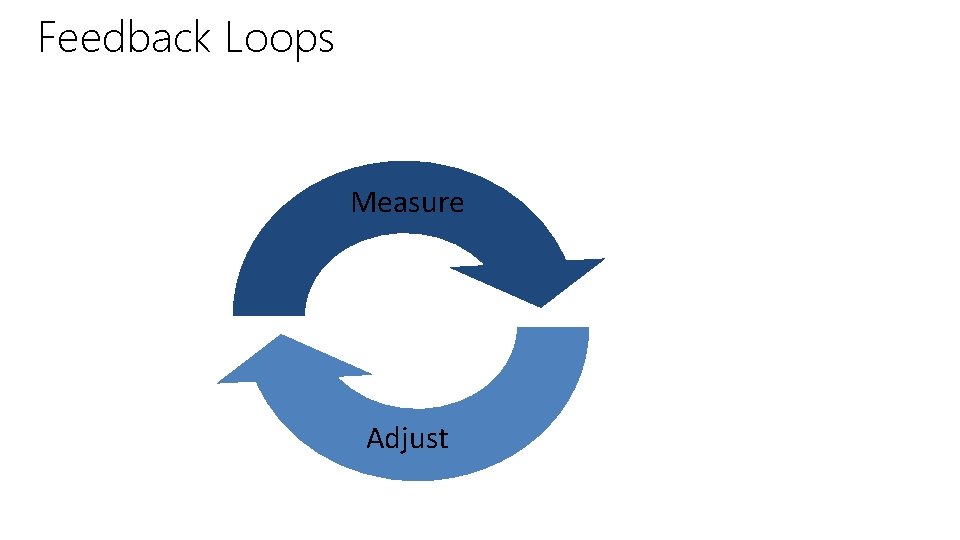
Feedback Loops Measure Adjust
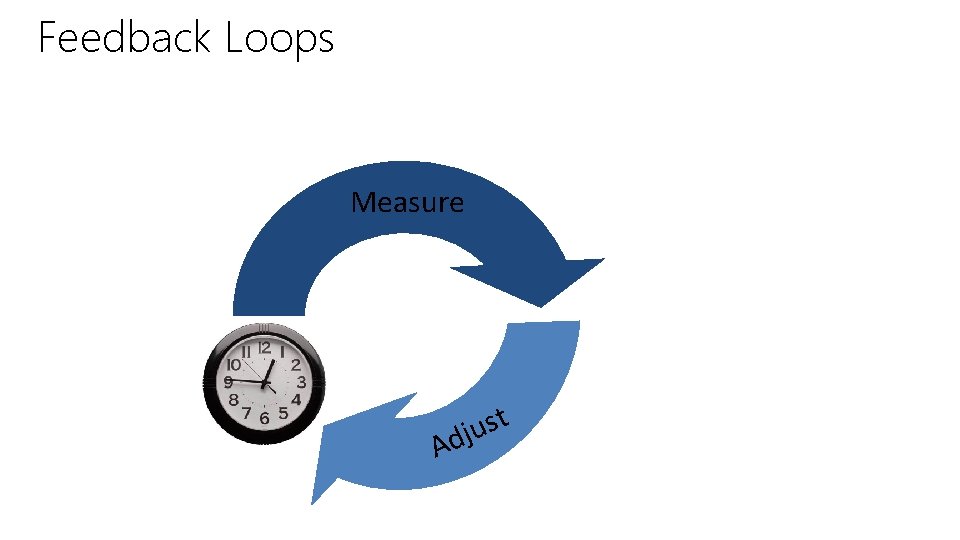
Feedback Loops Measure t s u j d A
Problems with Slow Feedback • Introduce more work into the system – Long time between code and bug fix makes it harder for developer – Long time between bug find and bug fix verification makes it harder for the tester – Added complexity – More context switching • Lowers overall productivity
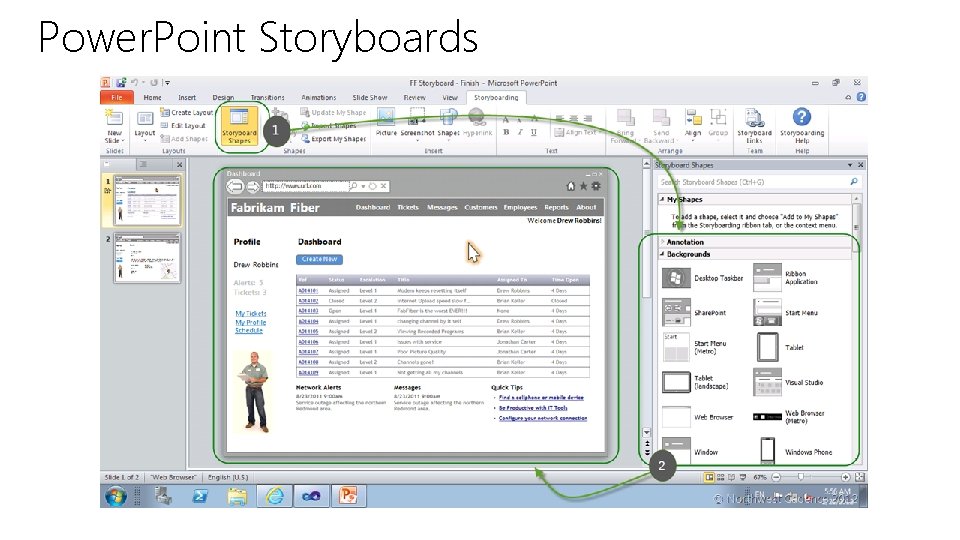
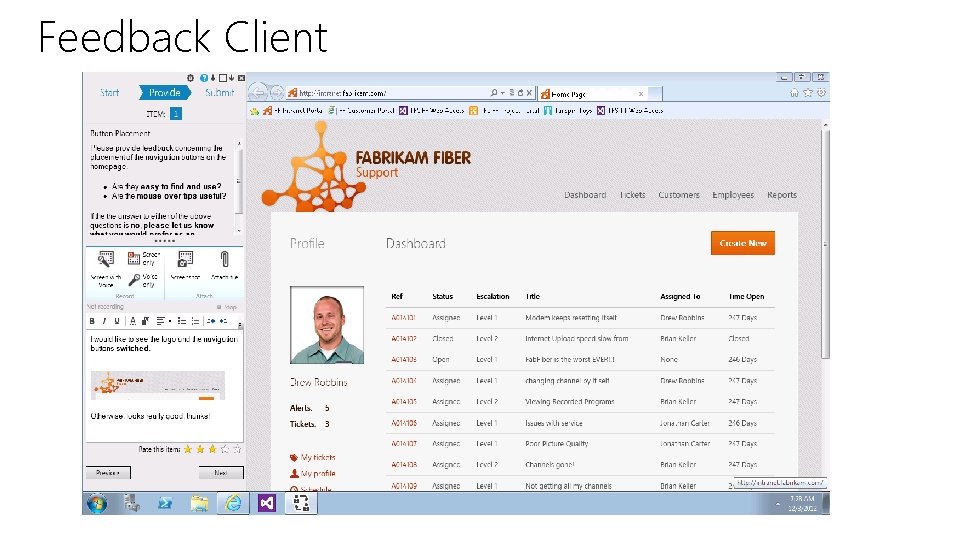
New Tools to speed feedback • Requirements - Power. Point Storyboarding • Customer Feedback - Feedback Client
Power. Point Storyboards
Feedback Client
Microsoft Virtual Academy Implement strategies to reduce end-toend cycle time
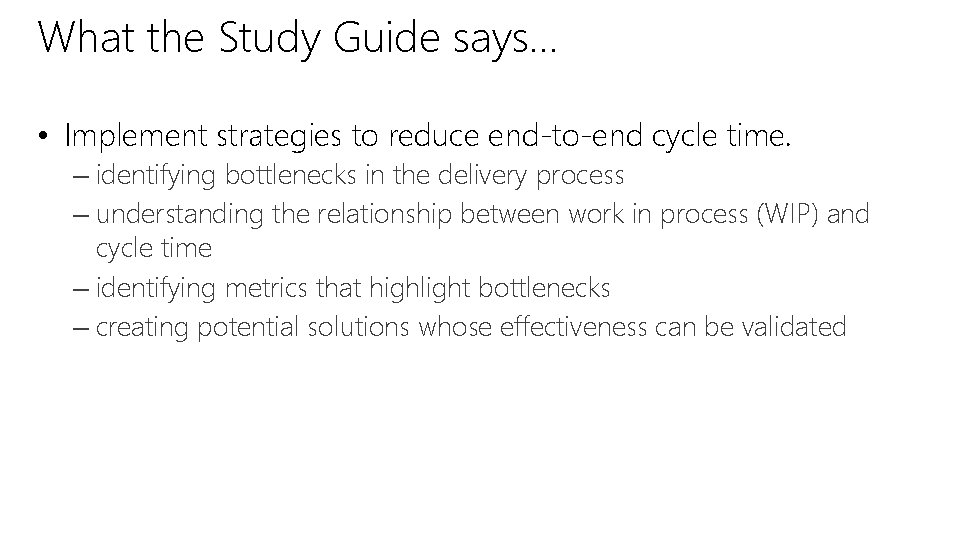
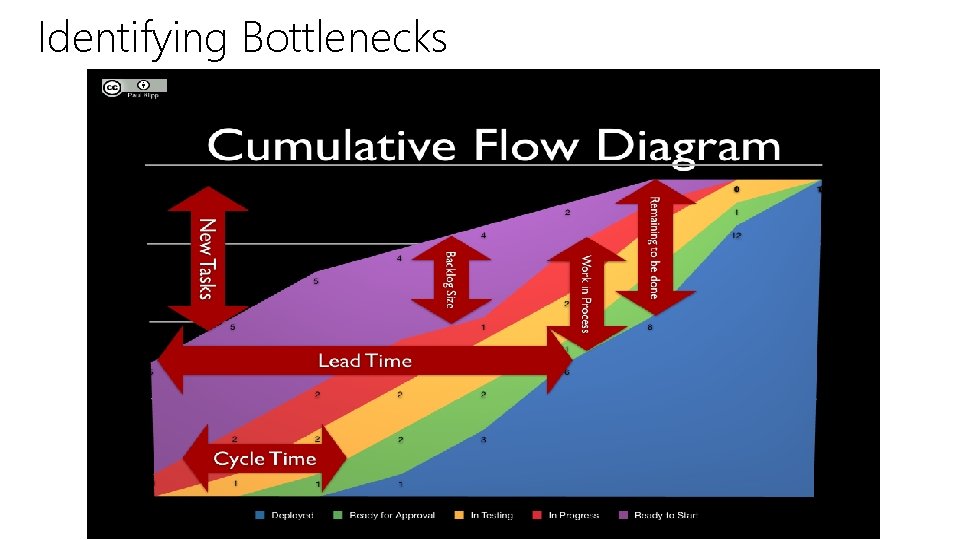
What the Study Guide says… • Implement strategies to reduce end-to-end cycle time. – identifying bottlenecks in the delivery process – understanding the relationship between work in process (WIP) and cycle time – identifying metrics that highlight bottlenecks – creating potential solutions whose effectiveness can be validated
Identifying Bottlenecks
Microsoft Virtual Academy DEMO Relationship between Work in Process and Cycle Time
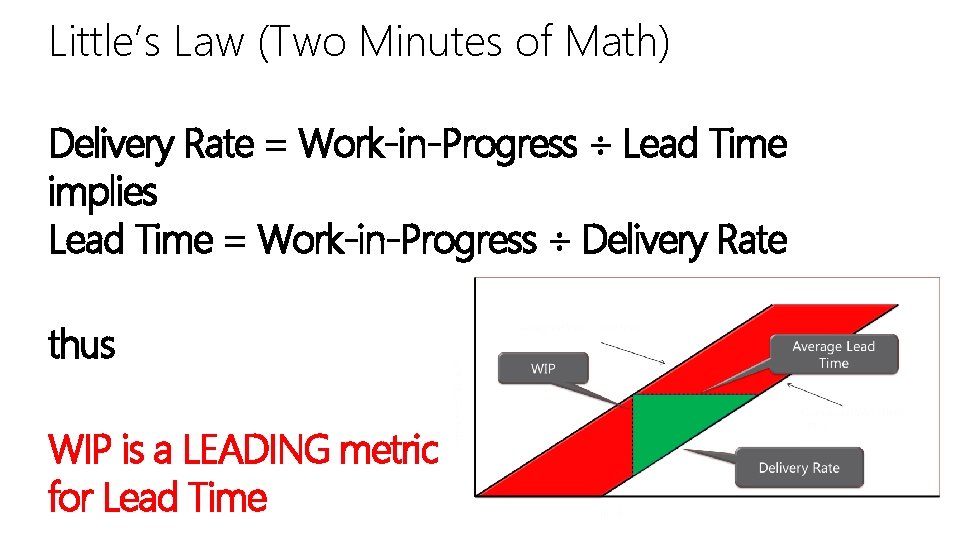
Little’s Law (Two Minutes of Math) Delivery Rate = Work-in-Progress ÷ Lead Time implies Lead Time = Work-in-Progress ÷ Delivery Rate thus WIP is a LEADING metric for Lead Time
Key metrics for identifying bottlenecks • Leading indicators – Queue sizes – Batch Sizes • Lagging indicators – Velocity • Other metrics: – Rework costs – Bug trends
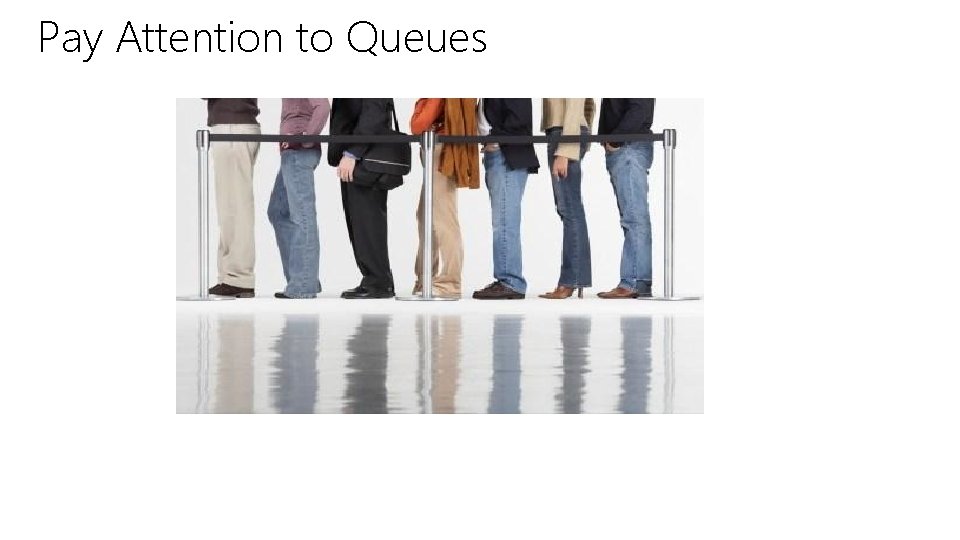
Pay Attention to Queues
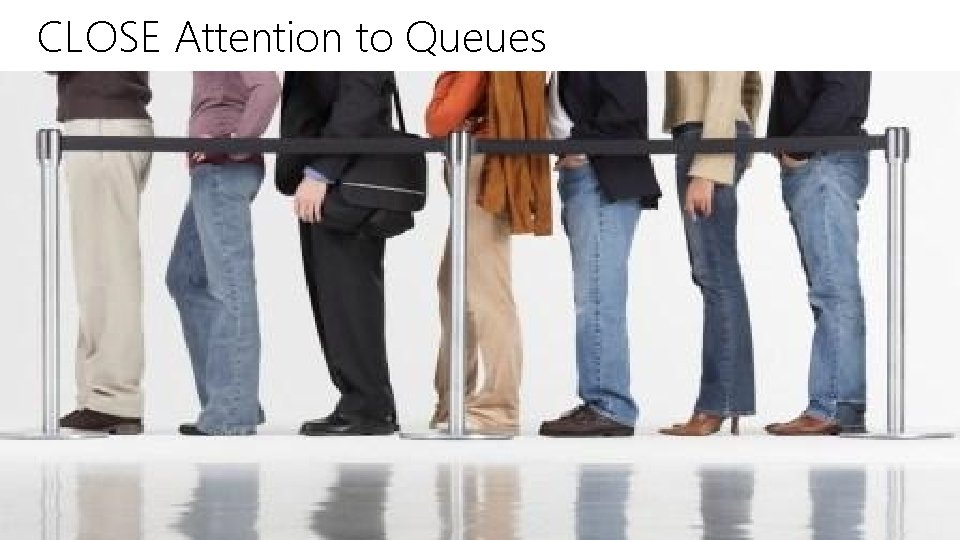
CLOSE Attention to Queues
Microsoft Virtual Academy Implement strategies to improve software quality
What the Study Guide says… • Implement strategies to improve software quality. – identifying process steps that introduce defects – understanding the end-to-end quality process – bringing quality efforts early in the development cycle
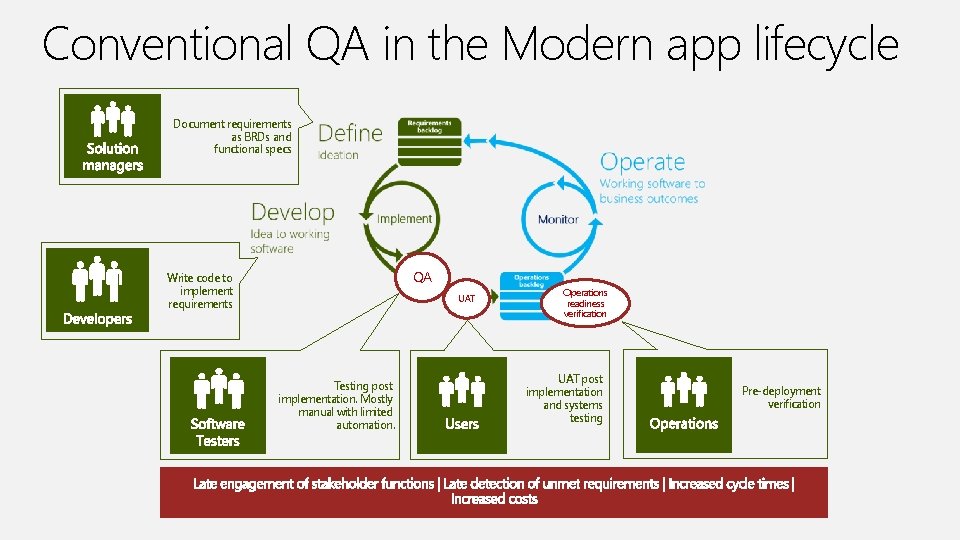
Conventional QA in the Modern app lifecycle Document requirements as BRDs and functional specs QA Write code to implement requirements UAT Testing post implementation. Mostly manual with limited automation. Operations readiness verification UAT post implementation and systems testing Pre-deployment verification
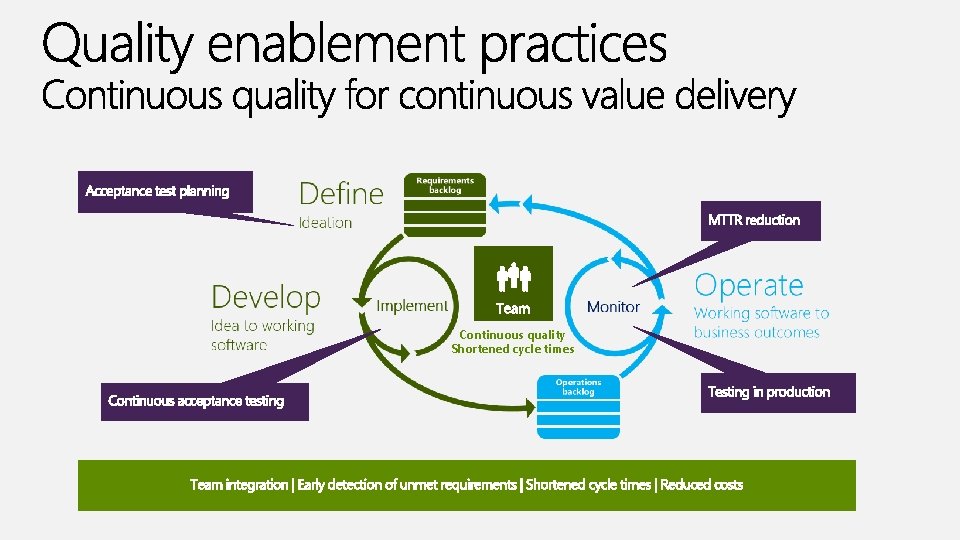
Continuous quality Shortened cycle times
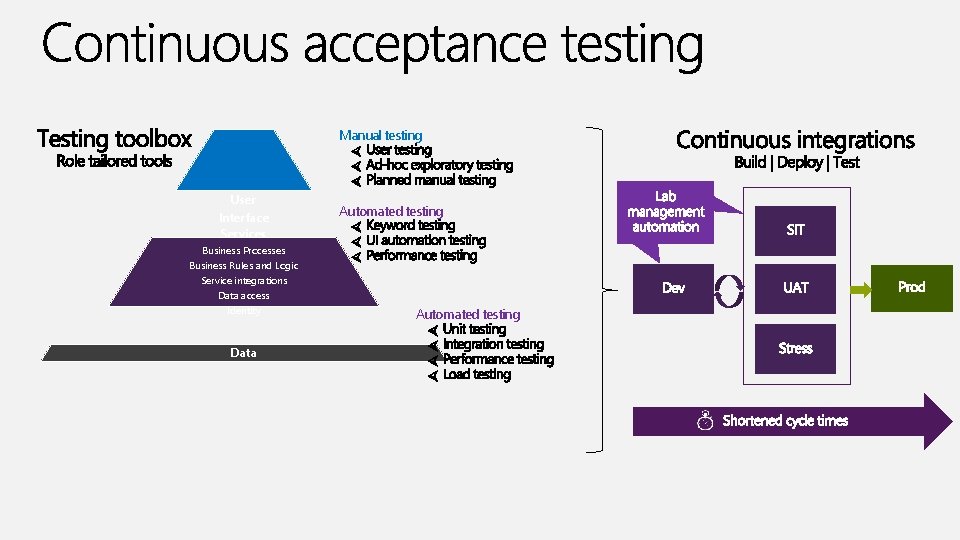
Manual testing User Interface Services Automated testing Business Processes Business Rules and Logic Service integrations Data access Identity Data Automated testing
Microsoft Virtual Academy Implement strategies to reduce waste
What the Study Guide says… • Implement strategies to reduce waste. – identifying wasteful activities – creating strategies to eliminate waste – measuring the effectiveness of waste removal activities
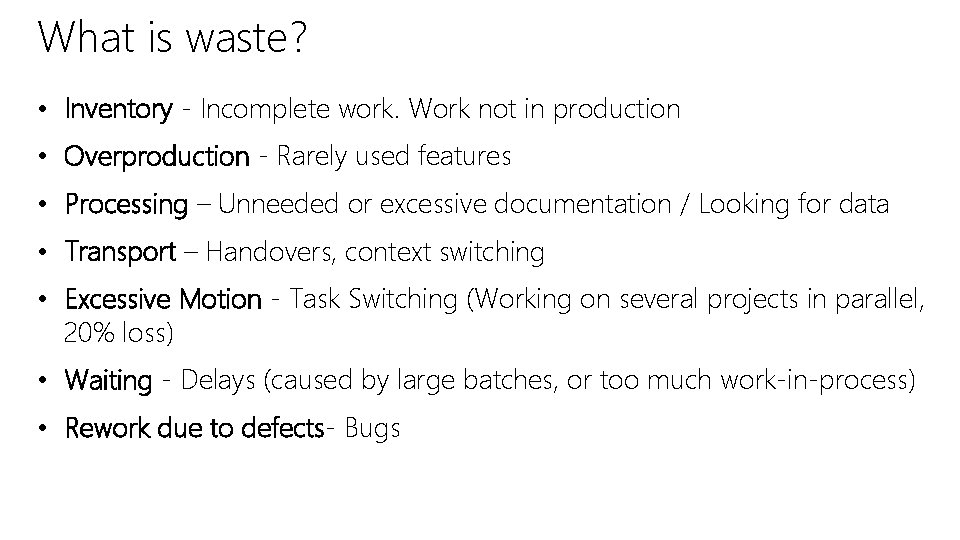
What is waste? • Inventory - Incomplete work. Work not in production • Overproduction - Rarely used features • Processing – Unneeded or excessive documentation / Looking for data • Transport – Handovers, context switching • Excessive Motion - Task Switching (Working on several projects in parallel, 20% loss) • Waiting - Delays (caused by large batches, or too much work-in-process) • Rework due to defects- Bugs
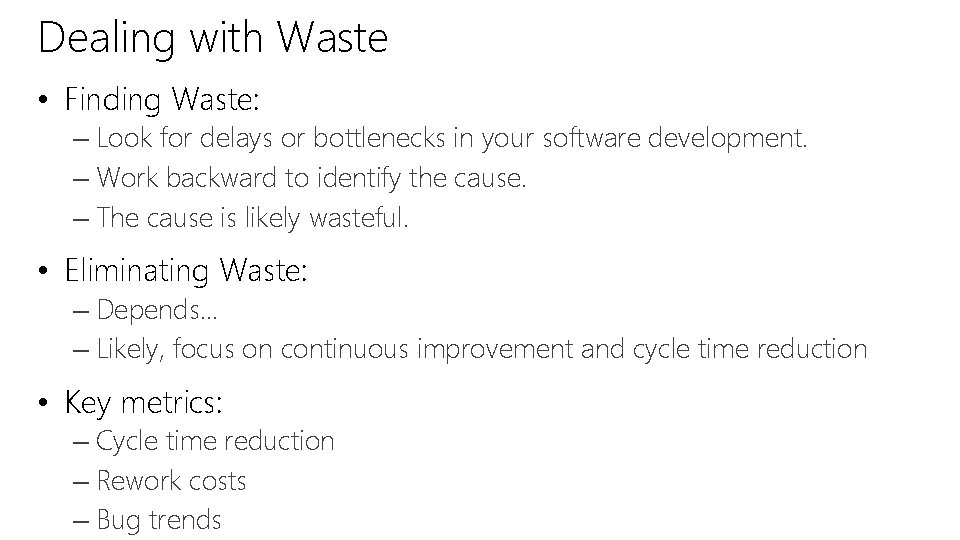
Dealing with Waste • Finding Waste: – Look for delays or bottlenecks in your software development. – Work backward to identify the cause. – The cause is likely wasteful. • Eliminating Waste: – Depends… – Likely, focus on continuous improvement and cycle time reduction • Key metrics: – Cycle time reduction – Rework costs – Bug trends
Microsoft Virtual Academy Create a process improvement plan
What the Study Guide says… • Create a process improvement plan. – creating strategies for implementing organizational change – identifying key metrics to be tracked during the improvement effort – creating consensus for the change
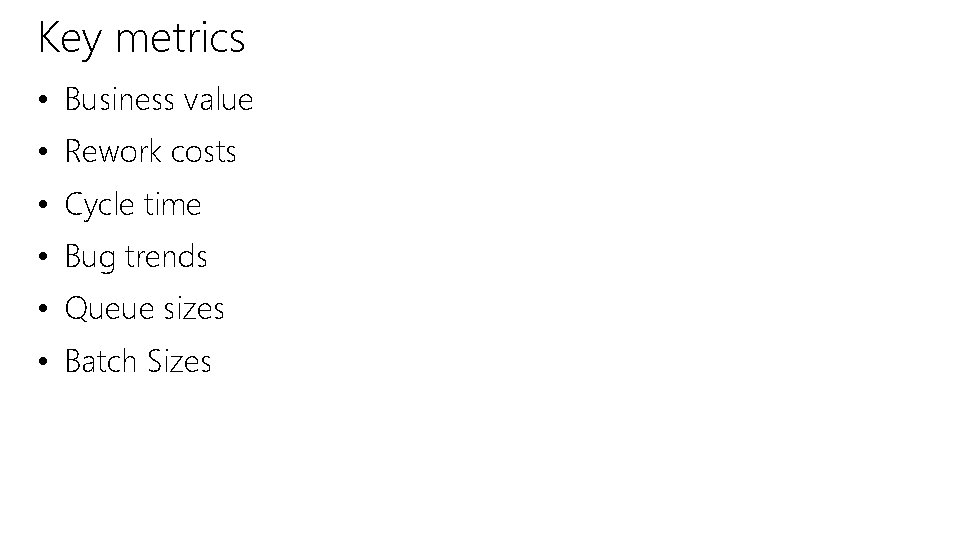
Key metrics • Business value • Rework costs • Cycle time • Bug trends • Queue sizes • Batch Sizes
• Visit http: //www. visualstudio. com/alm for an overview of theory, and how theory aligns with the Visual Studio tools • Focus on reducing cycle time, speeding feedback, small batch sizes, breaking down barriers, fast communication, minimally viable products and building quality in • If you’re not convinced focusing on completing things faster with high quality is the most important thing, fake it for the test. • For tools, understand Storyboarding and the Feedback Client
© 2013 Microsoft Corporation. All rights reserved. Microsoft, Windows, Office, Azure, System Center, Dynamics and other product names are or may be registered trademarks and/or trademarks in the U. S. and/or other countries. The information herein is for informational purposes only and represents the current view of Microsoft Corporation as of the date of this presentation. Because Microsoft must respond to changing market conditions, it should not be interpreted to be a commitment on the part of Microsoft, and Microsoft cannot guarantee the accuracy of any information provided after the date of this presentation. MICROSOFT MAKES NO WARRANTIES, EXPRESS, IMPLIED OR STATUTORY, AS TO THE INFORMATION IN THIS PRESENTATION.