
01 November 2020 Preventing and Defusing Hostility and

01 November 2020 Preventing and Defusing Hostility and Anger 1
~What You’ll Take Away~ • Ideas for preventing/defusing angry escalation • Self-Awareness about your own triggers • Awareness that anger can be a product of feeling powerless, and • Communication skills that are key to helping others de-escalate 2
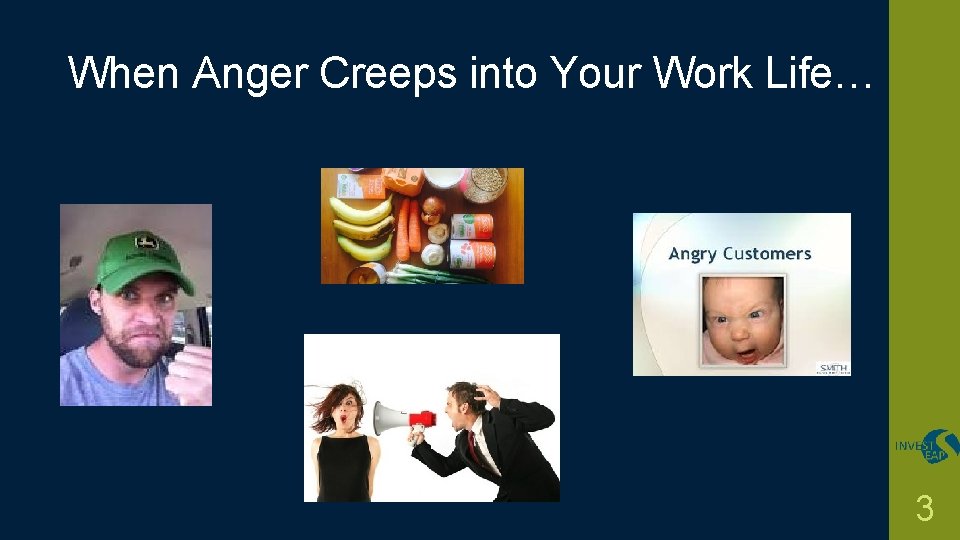
When Anger Creeps into Your Work Life… 3
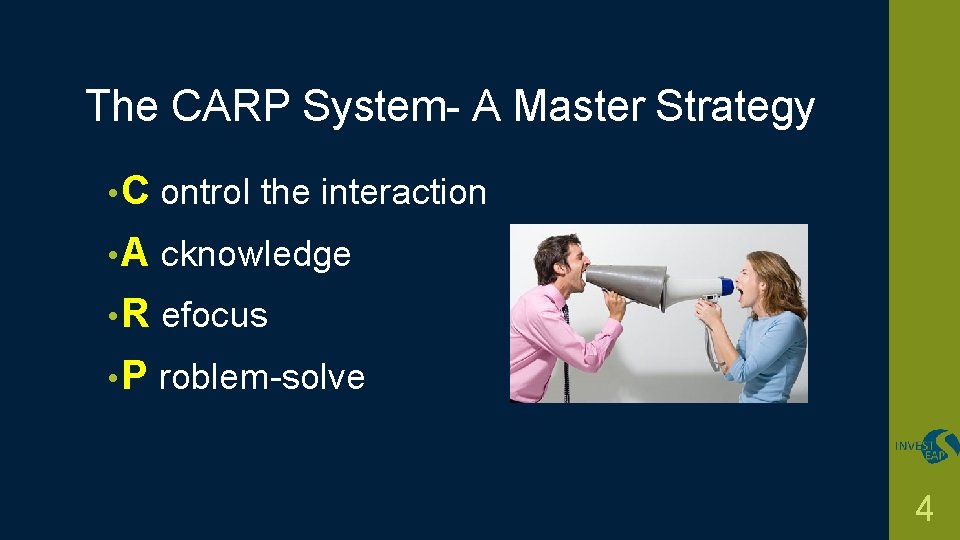
The CARP System- A Master Strategy • C ontrol the interaction • A cknowledge • R efocus • P roblem-solve 4
What Escalates Hostility and Anger? • Insecurity • Lack of choices • Asymmetrical power • Disrespectful behavior: Perceived or real 5

Anger helps us feel in control Anger: Secondary Emotion Primary Emotions d e t c e j Re d e t a r t Frus Hurt Scared Disapp ointed Threat ened 6
C: Control A R P Know Your Hot-Buttons With a partner, discuss what triggers your anger or fear. ØTone r e t r Sta s a e d I of Voice ØSpecific words ØActions ØExpressions 7
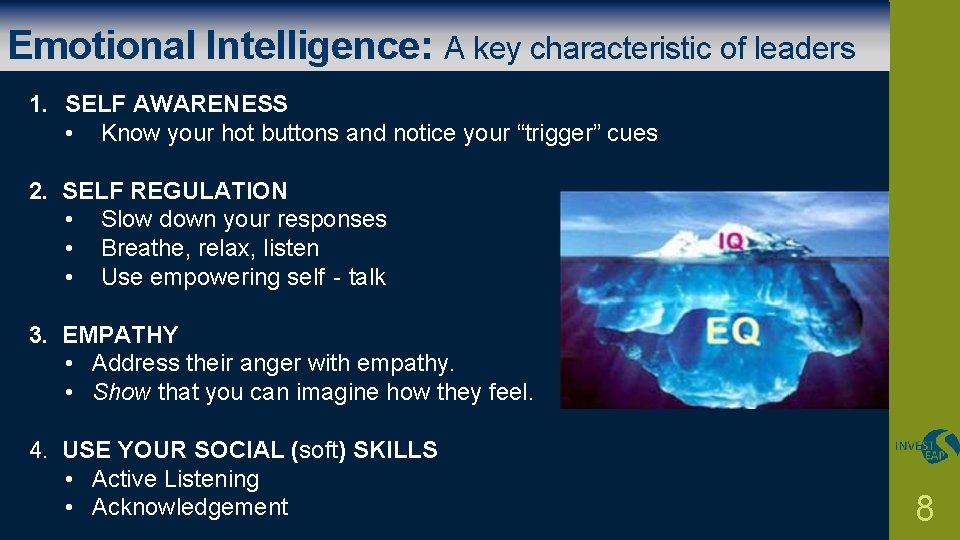
Emotional Intelligence: A key characteristic of leaders 1. SELF AWARENESS • Know your hot buttons and notice your “trigger” cues 2. SELF REGULATION • Slow down your responses • Breathe, relax, listen • Use empowering self‐talk 3. EMPATHY • Address their anger with empathy. • Show that you can imagine how they feel. 4. USE YOUR SOCIAL (soft) SKILLS • Active Listening • Acknowledgement 8
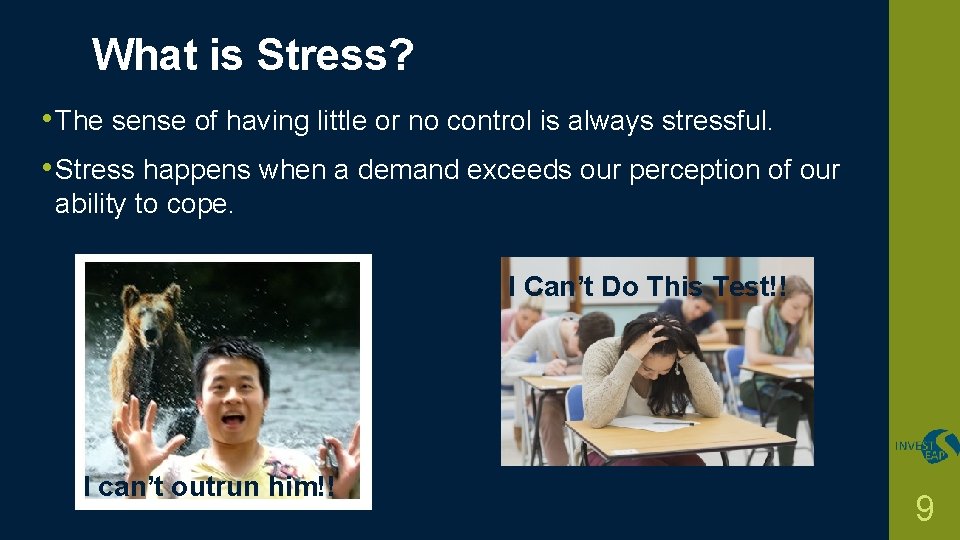
What is Stress? • The sense of having little or no control is always stressful. • Stress happens when a demand exceeds our perception of our ability to cope. I Can’t Do This Test!! I can’t outrun him!! 9
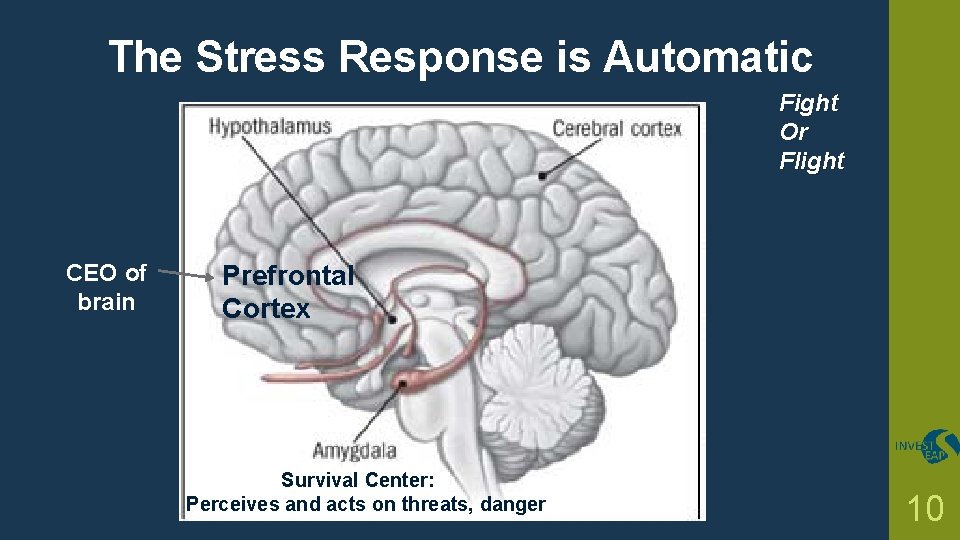
The Stress Response is Automatic Fight Or Flight CEO of brain Prefrontal Cortex Survival Center: Perceives and acts on threats, danger 10
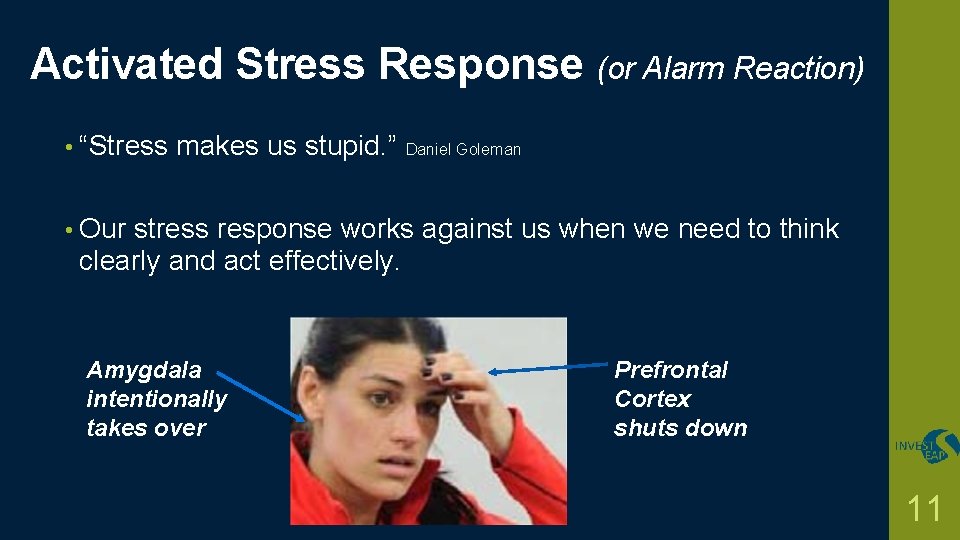
Activated Stress Response (or Alarm Reaction) • “Stress makes us stupid. ” Daniel Goleman • Our stress response works against us when we need to think clearly and act effectively. Amygdala intentionally takes over Prefrontal Cortex shuts down 11
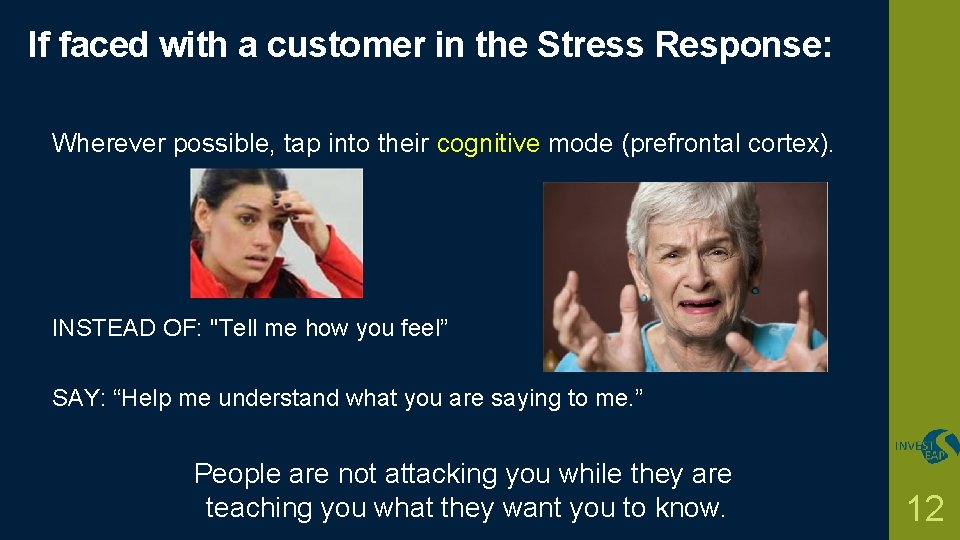
If faced with a customer in the Stress Response: Wherever possible, tap into their cognitive mode (prefrontal cortex). INSTEAD OF: "Tell me how you feel” SAY: “Help me understand what you are saying to me. ” People are not attacking you while they are teaching you what they want you to know. 12
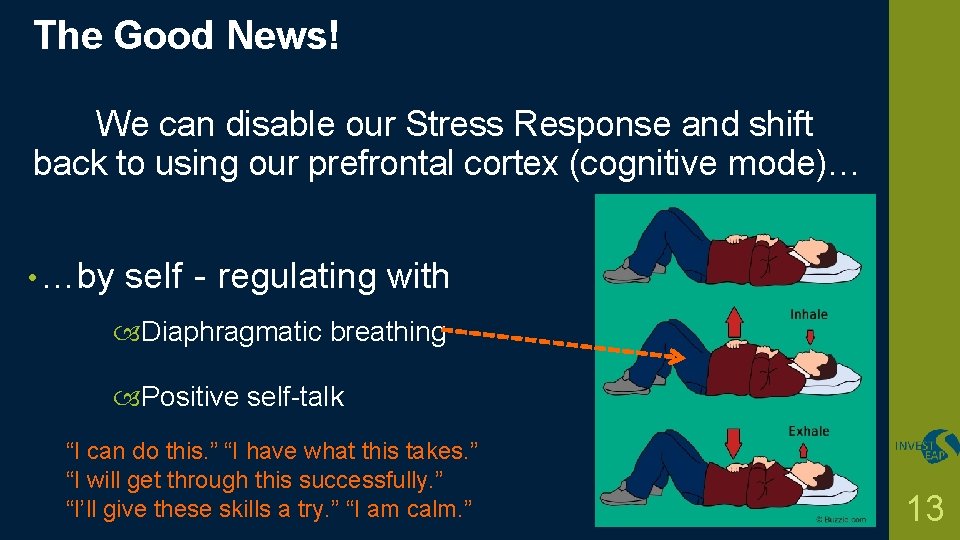
The Good News! We can disable our Stress Response and shift back to using our prefrontal cortex (cognitive mode)… • …by self‐regulating with Diaphragmatic breathing Positive self-talk “I can do this. ” “I have what this takes. ” “I will get through this successfully. ” “I’ll give these skills a try. ” “I am calm. ” 13
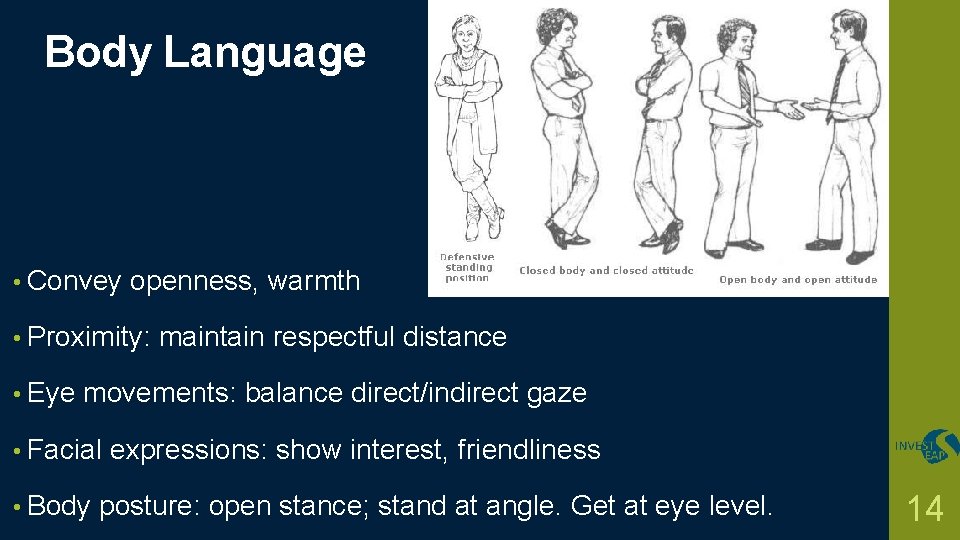
Body Language • Convey openness, warmth • Proximity: • Eye maintain respectful distance movements: balance direct/indirect gaze • Facial • Body expressions: show interest, friendliness posture: open stance; stand at angle. Get at eye level. 14

The Stand‐up Shuffle: Confrontational & Cooperative Stances • If person is “in your face, ” shuffle feet, break eye contact & move to a more cooperative stance. • Don’t turn your back. 15
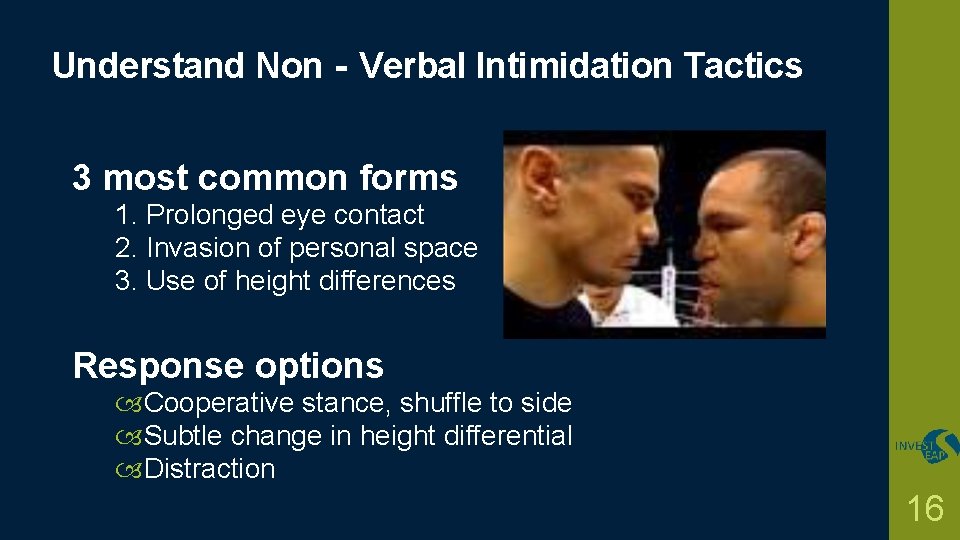
Understand Non‐Verbal Intimidation Tactics 3 most common forms 1. Prolonged eye contact 2. Invasion of personal space 3. Use of height differences Response options Cooperative stance, shuffle to side Subtle change in height differential Distraction 16
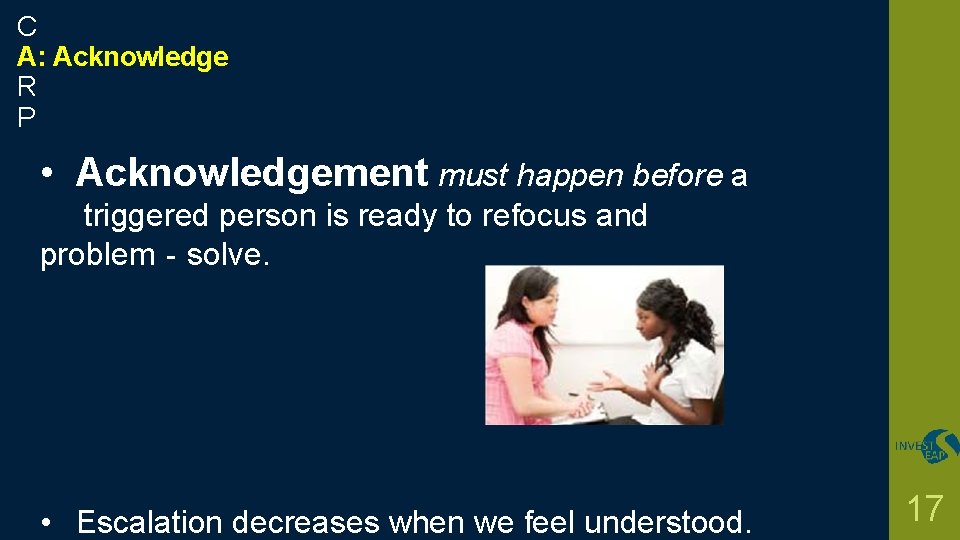
C A: Acknowledge R P • Acknowledgement must happen before a triggered person is ready to refocus and problem‐solve. • Escalation decreases when we feel understood. 17
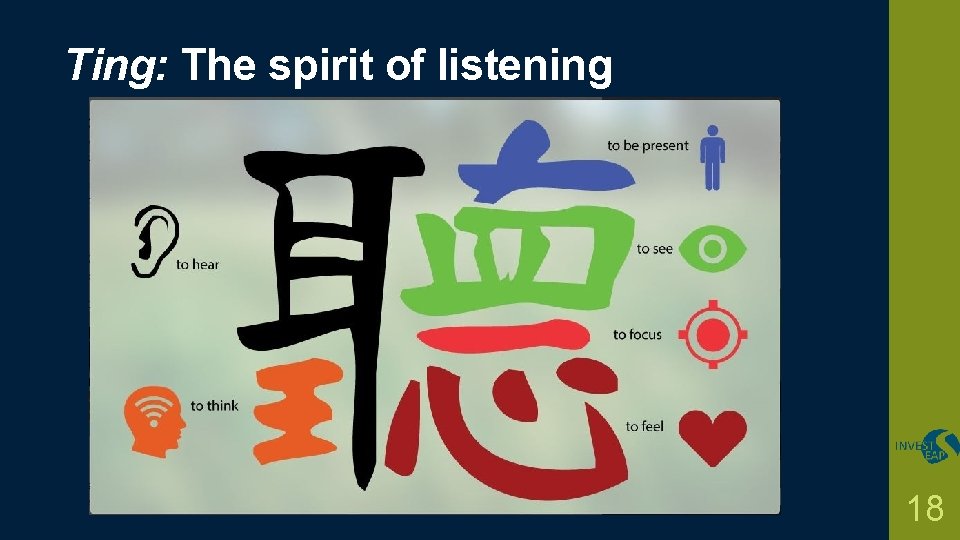
Ting: The spirit of listening 18
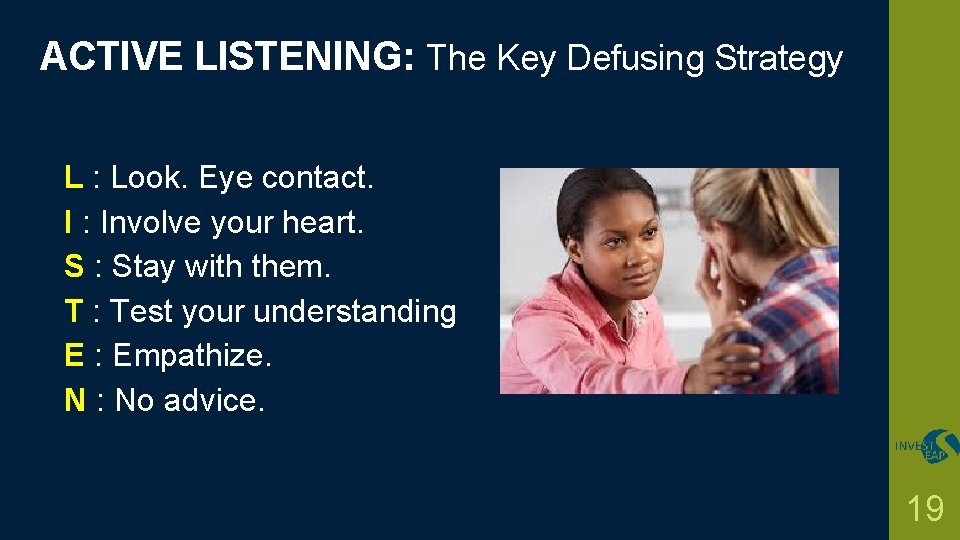
ACTIVE LISTENING: The Key Defusing Strategy L : Look. Eye contact. I : Involve your heart. S : Stay with them. T : Test your understanding E : Empathize. N : No advice. 19
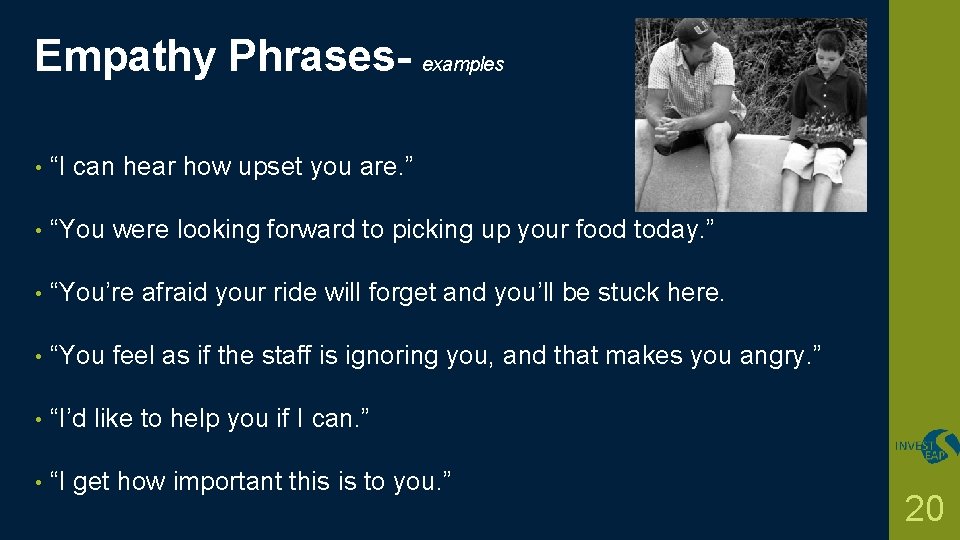
Empathy Phrases- examples • “I can hear how upset you are. ” • “You were looking forward to picking up your food today. ” • “You’re afraid your ride will forget and you’ll be stuck here. • “You feel as if the staff is ignoring you, and that makes you angry. ” • “I’d like to help you if I can. ” • “I get how important this is to you. ” 20
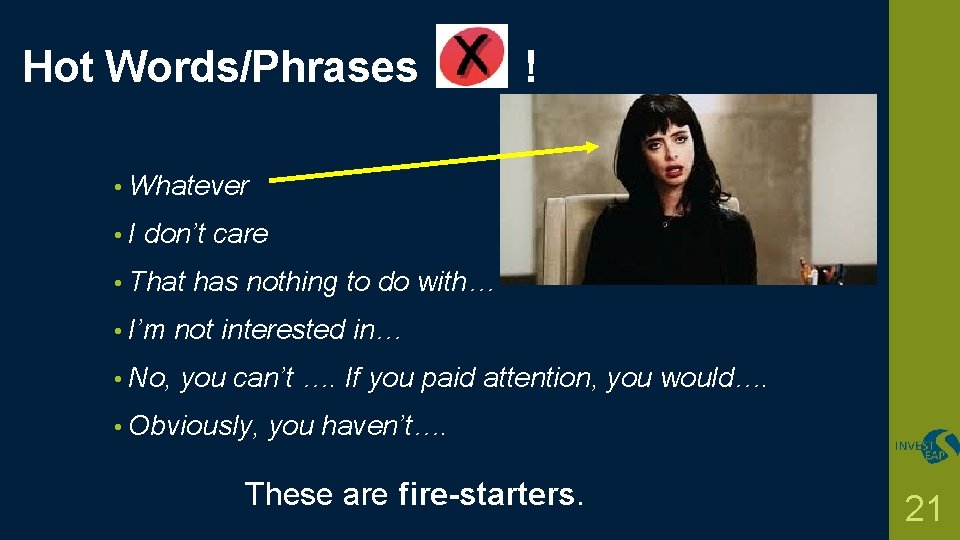
Hot Words/Phrases ! • Whatever • I don’t care • That has nothing to do with… • I’m not interested in… • No, you can’t …. If you paid attention, you would…. • Obviously, you haven’t…. These are fire-starters. 21
Practice Connecting: Acknowledge CONNECTION tends to defuse… • Goal: for other to feel heard; convey that you get it! • Dyads: • 4 -5 Take turns (1 listen, 1 talk) minutes each • Practice listening with heart, acknowledging, showing empathy, listen, ask for clarification, listen, be curious 22
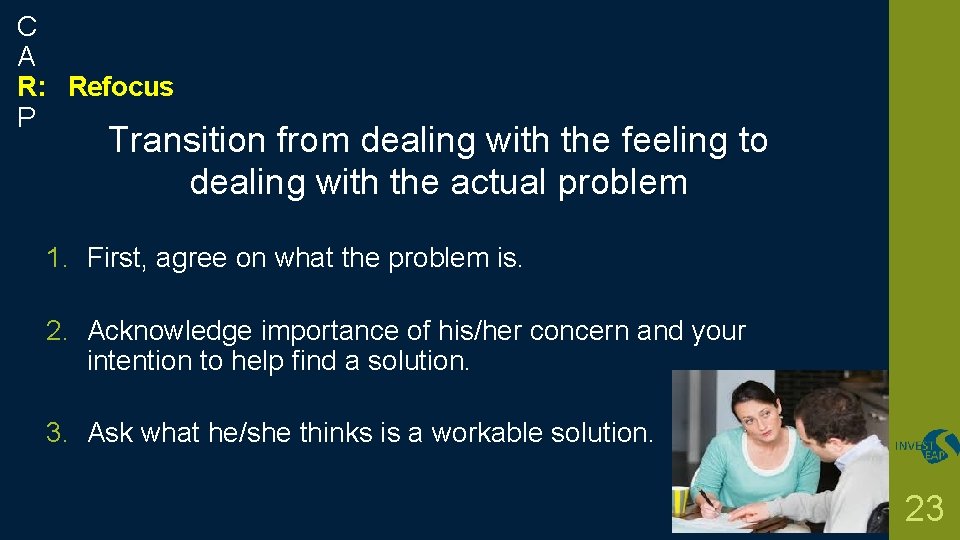
C A R: Refocus P Transition from dealing with the feeling to dealing with the actual problem 1. First, agree on what the problem is. 2. Acknowledge importance of his/her concern and your intention to help find a solution. 3. Ask what he/she thinks is a workable solution. 23
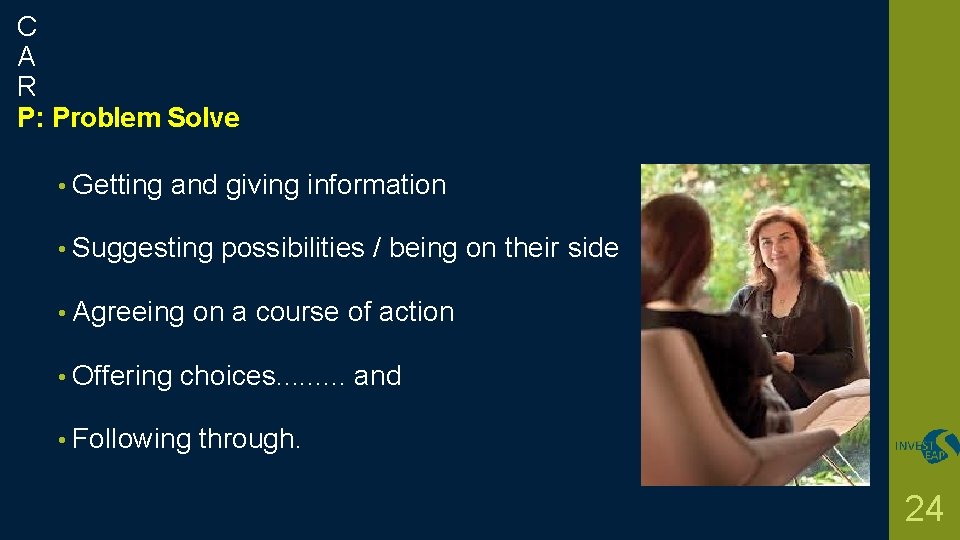
C A R P: Problem Solve • Getting and giving information • Suggesting • Agreeing • Offering possibilities / being on their side on a course of action choices. . and • Following through. 24
Special Circumstances • Irate Phone Callers • Person in Psychotic State 25
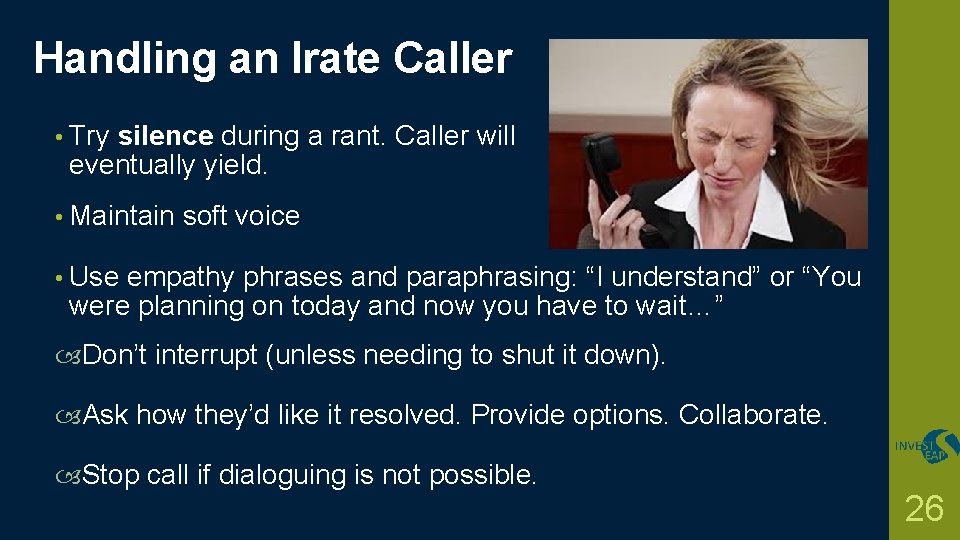
Handling an Irate Caller • Try silence during a rant. Caller will eventually yield. • Maintain soft voice • Use empathy phrases and paraphrasing: “I understand” or “You were planning on today and now you have to wait…” Don’t interrupt (unless needing to shut it down). Ask how they’d like it resolved. Provide options. Collaborate. Stop call if dialoguing is not possible. 26
Psychotic Symptoms: Go with the Flow • Meet them where they are: do not resist or debate their delusions • Align with their delusional beliefs (ex. : as an advocate who will investigate their accusations) • Establish • They • Get a relationship first need to feel heard before moving to cooperation assistance from colleagues who understand these tools 27
Summing up: Self-Awareness • Be aware of… Your hot-buttons Remember to breathe through a trigger/ slow yourself down When you tend to take the bait • Plan in advance to Avoid these situations Self-regulate Do what you need to stay calm, defuse yourself and prevent escalation 28
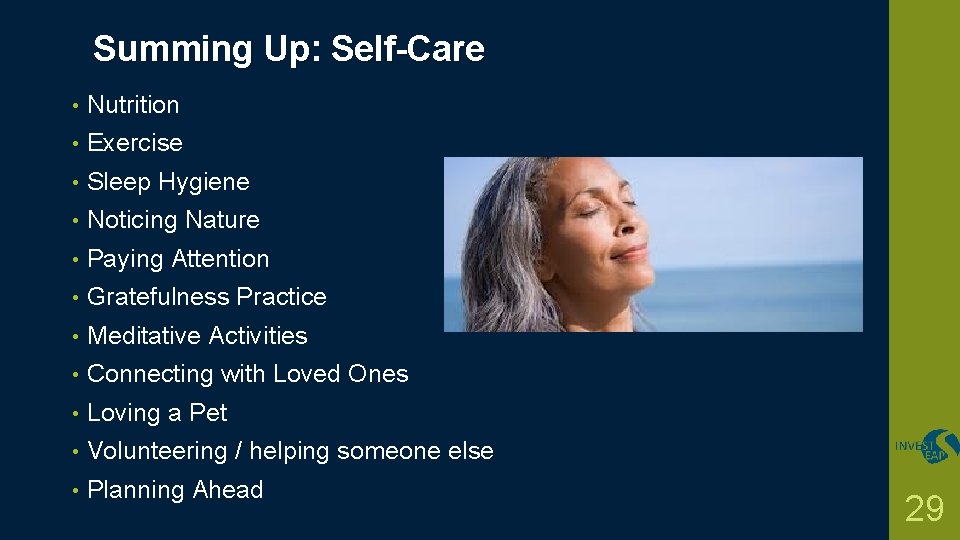
Summing Up: Self-Care • Nutrition • Exercise • Sleep Hygiene • Noticing Nature • Paying Attention • Gratefulness Practice • Meditative Activities • Connecting with Loved Ones • Loving a Pet • Volunteering / helping someone else • Planning Ahead 29
Thank you! 30
- Slides: 30