
00101 09 Safety Safety is a learned behavior
00101 -09 Safety
Safety is a learned behavior and attitude. Safety is a way of working that must be incorporated into the company as a culture.
A safe culture is created when the whole company sees the value of a safe work environment.
A strong safety culture can lower your company's experience modification rate or employee turn over (EMR).
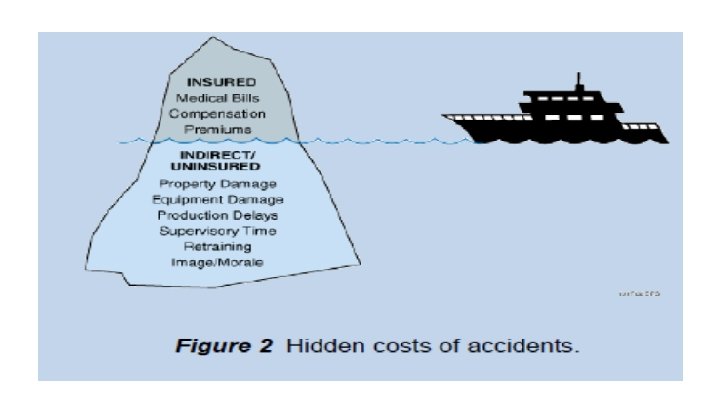
Accident cost are classified as direct or indirect. Direct cost include medical bills, workers compensation insurance benefits, liability and property damage insurance payments. Indirect cost could be training for replacement workers, accident investigation, lost productivity, and damage repair. Studies have shown that the indirect cost can be anywhere from 2 to 7 times the direct cost.
Several examples of unsafe conditions are: Congested workplace Defective tools Poor lighting Inadequate warning systems Poor ventilation Poor housekeeping Excessive noise
The major goal of good housekeeping is to prevent accidents.
The mission of OSHA is to save lives, prevent injuries, and protect the health of American workers.
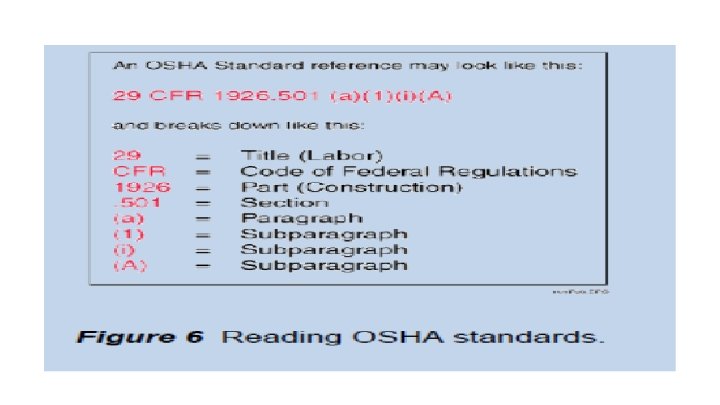
The General Duty Clause may be invoked if an OSHA standard does not specifically address a hazard.
If you feel you have been discriminated against for contacting OSHA you have the right to file a complaint. You have 30 days to file the discrimination complaint and the time limit is strictly enforced.
Your employer is required by OSHA 29 CRF 1926. 33 and OSHA 29 CFR 1910. 1020 to maintain your medical records for 30 years after you leave employment.
Catastrophe inspections - Performed after an accident that requires hospitalization of 3 or more workers. Employers are required to report fatalities and catastrophes to OSHA within 8 hours.
A competent person is someone who is capable of identifying existing and predictable hazards or working conditions, and who has the authorization to take prompt corrective measures to eliminate them.
An incident is anything that could have caused an injury or damage but , because it was caught in time, did not.
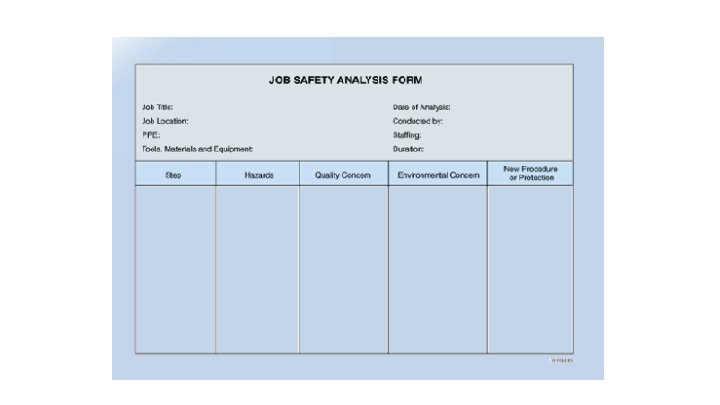
In a Job Safety Analysis, the task at hand is broken down into its individual parts or steps and then each step is analyzed for its potential hazards.
Risk is a measure of the probability, consequences, and exposure related to an event. Probability is the chance that a given event will occur.
You should have your personal fall arrest system inspected monthly by a competent person.
Safety harnesses have a D-ring attached to one end of a short section of rope called a lanyard. The D-ring or support point on a safety harness should be placed to the rear, between your shoulder blades.
The distance between the foot of a ladder and the structure it is leaning against must be 1/4 of the distance between the ground and the point where the ladder touches the structure.
If you are going to step off a ladder onto a platform or roof, the top of the ladder should extend at least 3 feet above the point where the ladder touches the roof or platform.
Never stand above the highest safe standing level on a ladder. The highest safe standing level on an extension ladder is the fourth rung from the top.
Look to the rear and sound a horn before backing up. If your rear vision is blocked, get a signaler to direct you.
When working near moving vehicles and equipment always wear reflective or high visibility vests or other suitable garments.
When performing overhead work, be sure all tools, equipment, and material are secured. Use protective measures such as toeboards, debris nets, and catch platforms.
Cave-ins are the most common and deadly hazard in excavation work. To be safe treat soil as if it is Type C soil unless proven otherwise. It is better to overprepare for a stronger soil than to not prepare enough for a weaker one.
Benching system for soil is similar to sloping but instead of smooth inclines the sides are stepped. It is important to know that benching systems cannot be used in Type C soils. They will not hold the bench properly and could collapse.
Almost all tools and machines used in construction are equipped with guards that protect workers from rotating parts.
Use three-wire cords for portable power tools. The three-wire system is one of the most common safety grounding systems used to protect you from electrical shock.
Always be sure to use a ground fault circut interrupter (GFCI) or an assured grounding program with every tool you use.
A lockout/tagout system safeguards workers from hazardous energy while they work with machines and equipment.
Welders must use tinted goggles or welding hoods. The tinted lenses protect the eyes from bright welding arc or flame. Welders should use lenses of not less than a #10 shade.
Electricians use special rubber-insulated gloves when they work on or around live circuits. They should test them regularly. Part of the test is to trap air in the glove, squeeze, and check for air leaks, thin areas or other defects.
Exposure to loud noise over a long period of time can cause hearing loss, even if the noise is not loud enough to cause pain. One type of hearing protection is earplugs. You must clean your ear plugs with soap and water to prevent ear infections.
A full facepiece mask with chemical canisters is used to protect against brief exposure to dangerous gases or fumes.
A Material Safety Data Sheet (MSDS) must accompany every shipment of a hazardous substance and must be available to you on the job site.
The procedure to provide emergency first -aid related to specific hazardous of a substance is provided in the MSDS.
Information on how to contact the manufacturer is also included in the MSDS.

Asbestos is a hazardous material that can be harmful to your lungs. Prolonged exposure can cause lung cancer, asbestosis (scarring of the lung tissue) and a cancer called mesothelioma.
Heat stroke is life threatening. The body's temperature-control system, which produces sweat to cool the body, stops working. The body temperature can rise so high that brain damage and death may result if the body is not cooled quickly.
When welding always use the proper hose. The fuel gas hose is usually red (sometimes black) and has a left hand threaded nut for connecting to the torch. The oxygen hose is green and has a right hand threaded nut for connecting to the torch.
Hoses with leaks, burns, worn places or other defects must be repaired or replaced. Look for charred sections near the torch, these may have been caused by flashback.
- Slides: 44